
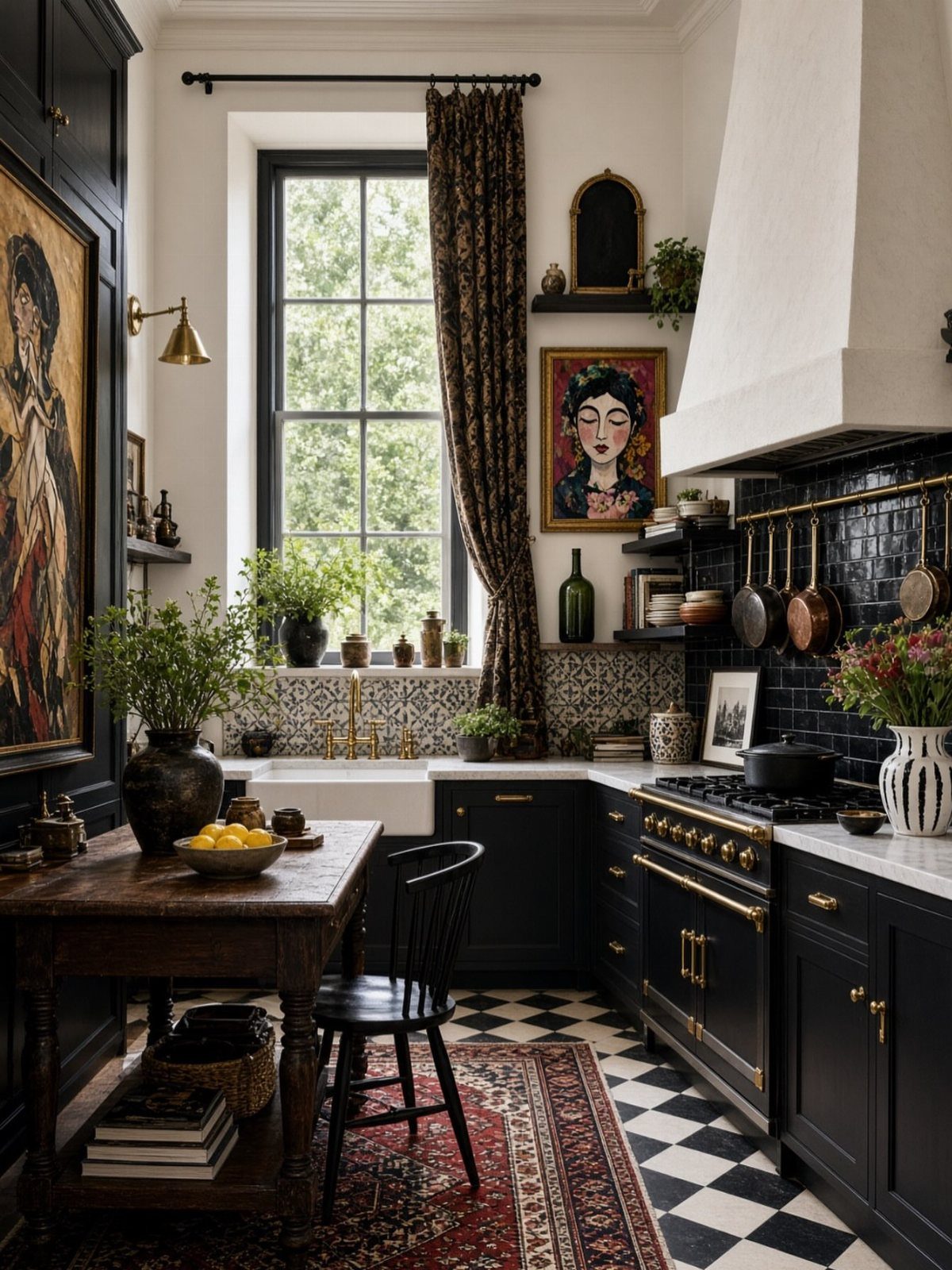
A black rustic kitchen can come together in a weekend or stretch across months, and the gap between them is how much existing structure you keep: paint and hardware on one end, beams and full cabinet orders on the other.
Before you commit, check your light: a single small window swallows black whole, but decent natural light or enough task lighting lets the color read as warm and deliberate.
The 19 ideas below run from matte black faucets and brass pulls to exposed beams and hammered copper sinks, with the details that matter for each: weight limits for live-edge counters, sealer schedules for butcher block, and the hinge specs that keep frameless black cabinets from sagging.
1. Black Cabinetry

Black cabinetry is the move if you want the kitchen to feel grounded rather than busy. Textured wood grain still visible through the finish keeps the black from reading as flat paint.
I would check the light in my own space first: a room with one small window turns these cabinets into a black hole, but in a kitchen with decent natural light or plenty of task lighting, the same cabinets read as rich and intentional.
The copper backsplash and hammered sink warm the whole thing up, so I would plan the surrounding materials before I commit. If my walls and floors also ran dark, I would soften the plan somewhere else.

Packaging & Sizes - Appearance color: black; material: cast iron; size: 90 x 37 mm/3.5 x 1.46 inches; hole diameter: 4 mm/0.16 inches; package weight: 125 grams; package content: 4 hinges with mounting screws.

【Durable Material】Made from high-quality iron, these H-shaped hinges have a smooth surface that offers great hardness and wear resistance, ensuring long-lasting performance without easy breakage.
2. Butcher Block Countertops

Butcher block countertops give black lower cabinets something to lean against.
The grain runs warm against the cool tone of the paint, and the surface only gets better as it ages if you oil it twice a year and sand out the occasional scorch mark.
I like the thick profile, which reads handmade rather than builder-grade. The open grain of oak takes oil well; maple is tighter and stains less but shows fewer of the marks that make butcher block feel alive.
I would keep a cutting board handy anyway; direct knife work gouges any surface over time.

Upgraded Durability & Safety: Crafted from SUS 304 stainless steel, featuring leak-resistant ceramic cartridges and high-temperature PEX hoses—certified to cUPC, NSF 61/372, and Lead-Free standards for superior performance you can trust.
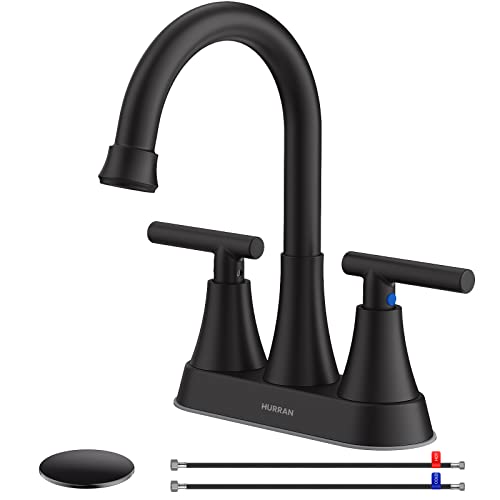
UNIQUE PATENTED DESIGN 4 INCH BATHROOM FAUCETS: Bathroom sink faucet body constructed from stainless steel, meets lead-free standards. 2 pcs H/C 24-in bathroom faucet water supply lines. Matching-finish pop-up bathroom sink drain with overflow and built-in strainer, easy for daily cleaning.

CERTIFIED BUILD FOR CONFIDENCE — Certified to cUPC & NSF/ANSI/CAN 61 standards and built to meet lead-free requirements, this kitchen faucet uses SUS304 stainless steel, heat-resistant PEX lines, and a drip-free ceramic cartridge for steady operation
3. White Subway Tile Backsplash

White subway tile behind dark countertops and a dark sink gives the eye somewhere to rest. The standard rectangle stacks without fighting the other materials, and the grout line spacing is forgiving if my walls are not perfectly flat.
I would run it to the ceiling behind open shelves or a range hood rather than stopping at cabinet height; the extra vertical line stretches the room.
Gloss finish bounces light around a dim kitchen, but matte hides the smears that show up on gloss every single time I fry anything.

SOLID COPPER, NOT A SURFACE COATING: Unlike copper-toned stainless sinks that develop dull, peeling finishes over time, the Lange is solid 17-gauge copper through and through. It develops a rich, living patina over years of use, an aging process that improves the sink rather than degrading it. Backed by Sinkology's lifetime Everyday Promise.

Size & Fit: 25" x 22" x 8" - designed for farmhouse installation with a spacious single-bowl layout

DOUBLE-BOWL SOLID COPPER FARMHOUSE APRON SINK: Solid 17-gauge hand-hammered copper meets a double-bowl layout no other apron-front farmhouse sink in this category offers. One bowl for washing, one for rinsing or food prep - two workflows running at the same time. And this is genuine solid copper, not a copper-tone coating over stainless steel.
4. Brass Hardware

Brass hardware on black cabinets is the detail that keeps the room from feeling like a rental flip. Cremone bolts are more ornate than I would choose for my own kitchen, but the principle holds: warm metal against cool paint.
I would look for solid brass rather than plated zinc if my budget allows; the plating wears through at the edges with daily use, while solid brass just tarnishes to a softer color you can polish back if you want.
The long bar handles need careful placement; I would measure my cabinet stiles before ordering, since a handle too long for the frame looks like a mistake.

Revitalizing blend prevents drying and cracking of hardwoods and bamboo
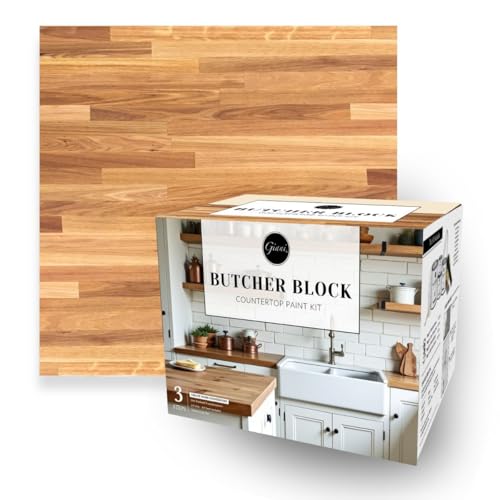
Authentic Woodgrain Finish: Transform your countertops with rich, warm tones and a realistic woodgrain design that brings the natural beauty of hardwood into your kitchen.

NSF CERTIFIED FOOD GRADE - This premium mineral oil is NSF certified and lab-tested to meet the strictest food safety standards. Colorless, odorless, tasteless, and gluten-free — perfect for cutting boards, butcher blocks, and all food-contact surfaces.
5. Exposed Wood Beams

Exposed beams overhead do the work of a rug on the floor: they define the room’s scale and make the ceiling feel finished rather than leftover.
Heavy timbers with real grain and checking carry the look, not the hollow box beams that contractors sometimes substitute.
I would verify what my ceiling can actually carry; a solid timber this size weighs more than drywall and paint, and the structural work to support it runs into real money.
If my ceiling is flat and low, I would skip this entirely. Faux beams exist, but up close the seam gives them away, and in a kitchen people stand near and study.

2-3 Times Thickness: Each tile is 2mm-2.5mm thick, offering durability and solidity, providing a high-quality alternative to soft sticker tiles

✿ 1.4 Times Coverage Area: 10 sheets thickened self-adhesive tiles, 12" X 12" each (The small piece is 3.3" X 1.8"), which covers 40% more area than 10"x10" tile

Premium Performance: Our peel and stick wall tiles are designed with high-performance PVC polymer material, offering waterproof, heat-resistant, stain-resistant, anti-scratch, and fadeless properties. Rest assured, the super-strong adhesive ensures the tiles stay securely in place!
6. Open Shelving

Open shelving above black lower cabinets keeps the upper half of the wall from closing in.
Thick floating shelves need solid blocking inside the wall; standard drywall anchors will sag or pull out once I load them with plates and jars.
I would plan what sits on them before I drill, since a cluttered open shelf reads as messy where a cluttered cabinet is invisible.
The wood tone should relate to something else in the room, the countertops or a beam, or the shelf looks like an afterthought. I would keep daily dishes here and hide the mismatched stuff below.

Dimension: Standard 3/8 inch overlay inset hinges designed for 3/8" inset cabinets, ideal replacements for original 3/8" doors Overall hinge wing length is 2-3/4" (70mm), with a hole center of 2-1/8" (54mm)

UPGRADE YOURS TODAY: These semi-concealed, exposed hinges for cabinets work perfectly on your classic American cabinets. The finish on the black hinges for cabinet doors matches your style of cabinet pulls perfectly.

Size & Compatibility: Cabinet door hinge is 3-1/2” x 1-1/2” x 0.27” H-Type flush hinge, designed exclusively for flat parallel surfaces. NOT compatible with beveled/angled doors, recessed indented door edges or raised protruding cabinet faces
7. Reclaimed Wood Countertops

Reclaimed wood countertops carry the marks of their previous life: nail holes, saw kerfs, and grain weathered by decades of use. That history is the point; a pristine sanded surface misses it.
I would check the source and the treatment, since old barn wood can harbor grit that dulls blades and chemicals that food safety rules would not allow near a kitchen surface.
A reputable mill will hit it with a metal detector and kiln-dry it before reselling. A slab that thick needs a cabinet built to take the weight.

Product Specifications: The kitchen faucets has an overall height of 18.9 inches and a spout height of 6.89 inches. Its larger size is designed to meet the needs of kitchens with spacious sink. Certified to cUPC, NSF 61/372 and lead-free standards

Waterfall Spout : The black bathroom faucet provides a clear and steady laminar stream, that provides a beautiful water presentation. Lever handle is designed for ease of use for water flow and temperature adjustment

VERSATILE DUAL-MODE SPRAYER WITH EASY TOGGLE: Effortlessly switch between two water modes with a single flick of the rocker switch. Use the splash-free aerated Stream Mode for quick, quiet filling of pots and glasses, or switch to the high-pressure Spray Mode for wide-area rinsing and blasting away stubborn food residue. Streamlines your daily kitchen chores from quick food prep to heavy-duty dishwashing.
8. Industrial Lighting

Industrial lighting with bare Edison bulbs and cloth-wrapped cord suits the rougher edges of rustic style without pretending to be old. The exposed filaments throw a warm amber light that softens black cabinets rather than spotlighting every fingerprint.
I would check the cord length against my ceiling height; too short and the bulbs glare, too long and they swing into sight lines.
Dimmable bulbs matter here, since full brightness on these filaments is harsh after dark. The hardware in the ceiling needs a junction box rated for the weight; a standard ceiling mount will not hold a cluster of metal shades.

Covered under Signature Hardware's 25 year limited warranty

Covered under Signature Hardware's 25 year limited warranty

Includes: Copper farmhouse sink, basket strainer drain
9. Patterned Cement Tile Backsplash
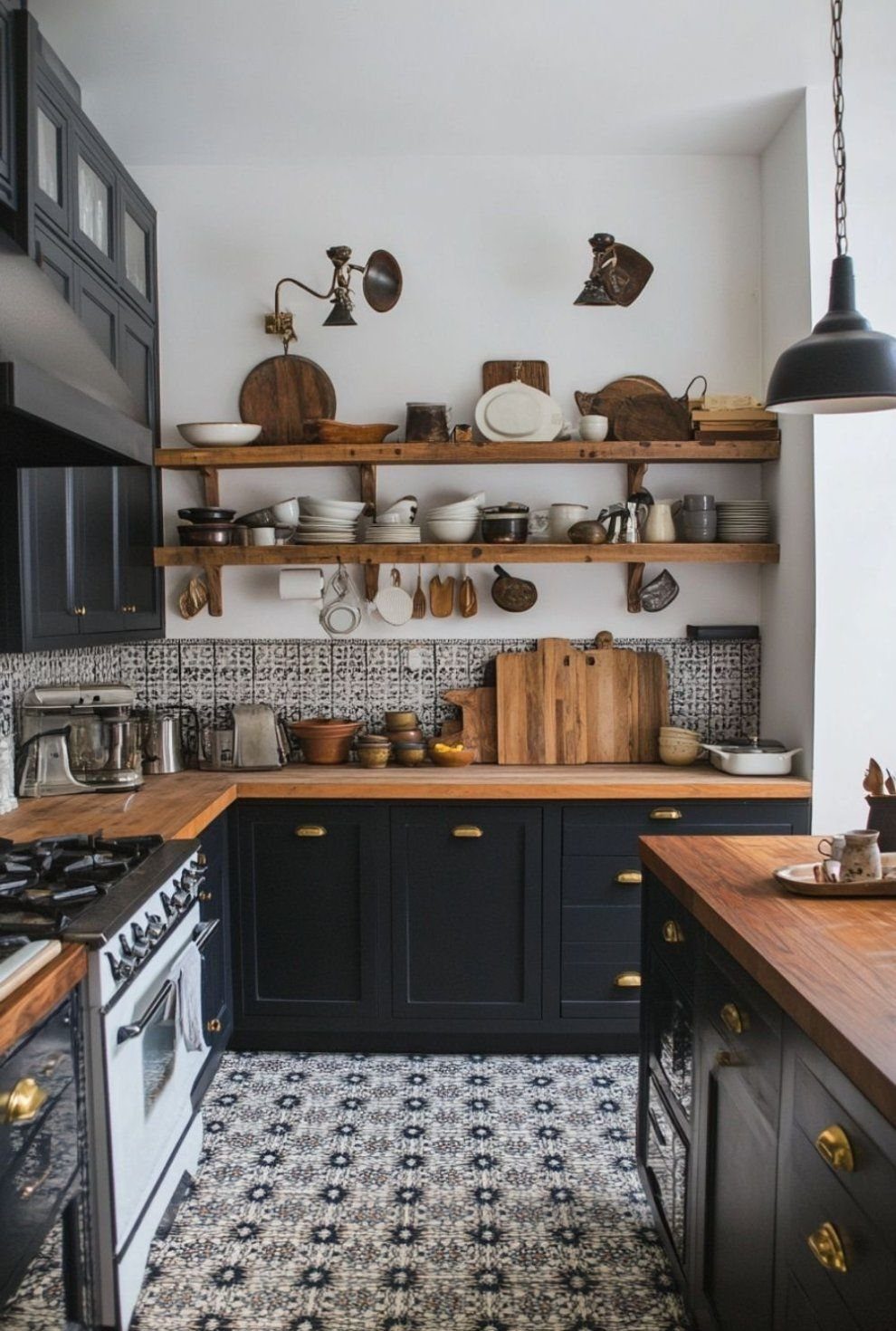
Patterned cement tile backsplashes bring the floor up the wall, which only works if the pattern can take that much attention.
A geometric repeat this busy works better stopped at cabinet height than run to the ceiling; open shelves above give a visual break that saves the room from feeling like a tile showroom.
Cement tile is porous before sealing, so grease splatter near the range will stain fast if the sealer is skipped or worn.
I would reseal yearly in a kitchen that sees real use, same as I would with a stone countertop.

NSF CERTIFIED FOOD GRADE - This premium mineral oil is NSF certified and lab-tested to meet the strictest food safety standards. Colorless, odorless, tasteless, and gluten-free — perfect for cutting boards, butcher blocks, and all food-contact surfaces.

Convenient Cleaning Kit: Includes Cutting Board Wood Spray 8oz, scraper, and microfiber cloth
10. Copper Pots

Copper pots on display are a commitment to polishing or a decision to let them go dark.
That warm rose-gold is hours of work with a copper cleaner; left alone, they oxidize to a brown-black that some prefer but most do not plan for.
I would hang only what I use weekly, since dust settles in the interiors and requires washing before the next meal.
A wall-mounted rail needs studs or heavy toggle anchors; the loaded weight of solid copper pieces adds up fast. A black rail against black tile reads as intentional, not hardware-store default.

𝐏𝐫𝐞𝐦𝐢𝐮𝐦 𝐌𝐚𝐭𝐞𝐫𝐢𝐚𝐥𝐬:Made of PVC composite laminate, anti-scratch, high impact, color fadeless, more durable and stronger than other plastic self-adhesive tiles. Glossy/Poished surface finishing with realistic ceramic look, high waterproof and stain-resistant performance, protect the walls from splash and iol.

100 sheets solid PVC tiles, 2.95"x5.9"x0.12" each, cover 12.11 square feet. This simple subway pattern is easier to install and plans the layout freely to your imagination.

【EASY PEEL AND STICK INSTALL】: Transform any room in minutes with peel and stick wall tiles. Peel the backing and press onto a clean, smooth surface, then interlock each backsplash tile peel and stick sheet one by one. No grout, mortar; cut it with a utility knife.
11. Black Lower Cabinets with Wood Uppers
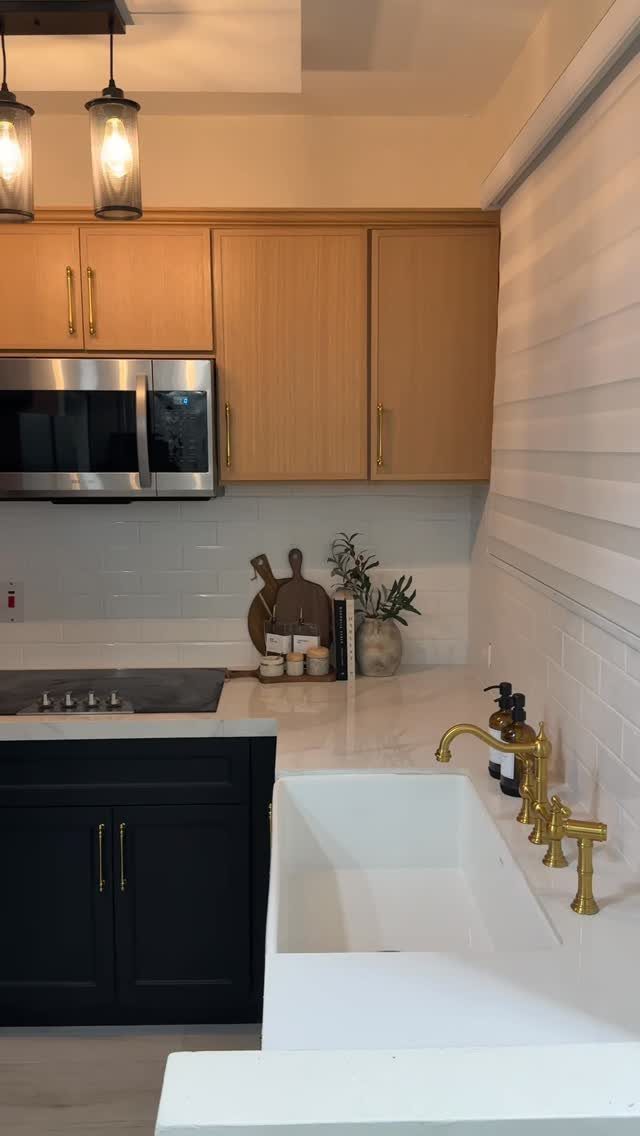
Black lower cabinets with wood uppers split the room at waist height, which keeps the darkness from swallowing the whole space.
Light uppers against white tile read as floating, an effect that needs consistent interior lighting since shadows underneath would flatten them.
I would match the wood tone to a floor or a beam if one exists; the pale oak here works because nothing else competes with it.
The white countertop and sink bridge the 2 cabinet colors, so I would not add a third strong tone nearby.
This layout suits a kitchen with decent natural light; in a dim room the uppers still help but the contrast feels less deliberate.
12. Black Farmhouse Sink

Black farmhouse sinks carry the same front-facing apron as white ones but hide water spots and scuffs that lighter colors show by Wednesday afternoon.
That matte finish is cast iron or fireclay, both heavy enough that I would verify my cabinet can take the load before ordering; a standard base may need reinforcement or a modified front frame to accommodate the apron.
The concrete countertops here butted straight to the sink edge, which requires precise templating since the sink ships before the counters and cannot be moved.
I would plan the faucet placement early; an apron sink sits forward and may conflict with a window sill that a standard sink would clear.
13. Dark Stone Countertops

Dark stone countertops on an island give the kitchen a single heavy anchor that the lighter cabinets around it can orbit.
The veining and variation in the stone catch light differently than a painted surface would, so the black reads as depth rather than void.
I would check the slab in my own lighting before ordering; showroom fluorescents lie about how warm or cool the tone runs.
Sealing matters with any natural stone, and dark colors show etching from lemon or vinegar more subtly than white, which means I might notice the damage later than I should.
14. Live-edge Wood Countertops

A live-edge slab with its bark line still curving along one side turns a kitchen counter into something that grew rather than something that was built.
The single board here is thick enough to feel substantial against the black cabinets, and the pale wood keeps the room from going fully cave-like.
I would ask the mill whether the slab was kiln-dried; air-dried wood can move seasonally and crack a finish.
The voids and cracks common in live-edge pieces need filling with epoxy or CA glue before food gets near them. This is a statement piece, so I would keep the surrounding materials quieter than this kitchen does.
15. Matte Black Faucets

Matte black faucets hide water spots better than chrome or nickel, which matters when the sink sits in front of a window that throws light at every angle.
A gooseneck this tall clears a stockpot, but I would measure my own tallest pot against the window sill before buying; the forward curve of an apron sink plus a high arc can get crowded.
Matte finishes scratch to a lighter color, so I would wipe with a soft cloth rather than an abrasive pad. The single-handle mixing valve is easier to clean around than a two-handle setup, which collects grime at the base rings.
16. Exposed Brick Walls

Exposed brick behind a kitchen work area gives the wall a texture that tile and paint cannot fake, but the reality is dust and occasional mortar grit.
I would seal it with a matte masonry sealer so grease from the range does not darken one patch permanently; unsealed brick is thirsty and stains fast.
If the wall is an interior partition rather than exterior masonry, I would check whether the "exposure" is just a veneer; real structural brick carries weight, veneer does not and needs different support.
17. Hammered Copper Farmhouse Sink

Hammered copper sinks carry hand-worked dimples that catch light in small bright points across the apron front, which is the reason to choose this over a smooth basin.
I would decide whether I am willing to maintain it or ready to let it age. The hammering hardens the metal slightly, but copper is still softer than stainless; dropping a heavy cast-iron skillet can dent the bowl.
A dark stone counter and wood cabinets frame it well, so I would not add another competing metal nearby.
18. Warm Lighting with Dark Cabinetry

Warm pendant lights over a black island give the eye a place to land that is not the darkness below. The glow here is amber, not daylight-white, which keeps the marble from reading as cold.
I would put these on a dimmer since full brightness after sunset feels like a stage set; the point is to pool light on the work surface and let the rest of the room fall off.
The scale of the 3 pendants relates to the island length, so I would measure my own surface and divide center-to-center to get the spacing right.
In a kitchen with lower ceilings, I would shorten the cords or choose flush mounts rather than let them hang into sight lines.
19. Vintage-style Appliances

A black vintage-style range with rounded edges and chrome trim reads as found object rather than reproduction, which is the trick of it.
The towel-bar handle and enamel surface echo vintage stoves, but the interior needs modern specs: verify whether the oven is convection, whether the burners run on gas or induction, and whether the broiler actually works or is decorative.
I would measure the cutout carefully; these units often sit wider or deeper than standard slots, and the white cabinets here are built around it.
The black finish ties to lower cabinets or a farmhouse sink without requiring every appliance to match.
Choosing the Right Black Cabinets
Matte, satin, and high-gloss black cabinets each catch light differently, and that changes how the color reads in your kitchen at 7 a.m. versus 7 p.m.
A distressed or aged finish adds character that reads as found rather than factory-fresh, which suits the rustic side of this style.
I would look at how the distressing was done: hand-scraped edges and worn-through spots at handles feel authentic, while a single machine pattern repeats and reads as printed.
Glass-front upper doors lighten the wall visually, but they commit you to order inside. I would plan what sits behind them before I order, since a mismatched stack of cereal boxes defeats the point.
Construction matters for weight. A solid wood door with a textured finish carries more than a thermofoil wrap, and the hinges need to match.
Sample doors let you test whether the hinges can take the weight of a full-height pantry before you commit to the whole order.
Maintaining Black Kitchen Cabinets
I would clean with soft microfiber cloths and mild soap and water. Scrubbing with steel wool or spraying ammonia cleaner strips the top coat for good; on painted cabinets, that means a full respray, not a wipe-down fix.
A small bottle of touch-up paint stashed in the junk drawer saves a Saturday when the handle screws wear through near the sink.
Most manufacturers include care instructions for their specific painted finish, so I would check that paperwork before switching to any new product. The wrong cleaner can void a warranty or leave a haze that does not buff out.
Color Pairings for Black Cabinets
Crisp white, soft gray, and warm wood tones all pair well with black cabinetry.
I would use the white as a hard contrast on walls or tile, the gray as a softer transition on flooring, and the wood tone as a literal bridge on countertops or open shelves.
Chrome reads cooler and more modern, which can work but shifts the kitchen away from rustic.
One metal finish throughout keeps the hardware from looking like hardware store leftovers; I would choose either warm brass or cool nickel and repeat it on every pull and hinge.
A runner with a quiet pattern on pale stone floors gives the eye something to land on without shouting over the cabinets.
I would keep the pattern scale small in a kitchen, since large geometrics fight the cabinet lines. Cream subway tile behind the stove softens the contrast just enough so the kitchen feels lived-in, not staged for a catalog.
Frequently Asked Questions
Are black cabinets in style in 2026?
Trend reports for 2026 show black cabinets climbing steadily, and I get why: they act like a neutral without going beige, and they do not date as fast as the color of the year.
They read as a niche choice rather than the dominant trend, which suits the rustic style well since it avoids looking like a passing fad.
I would choose them for a kitchen I plan to live with for years, not for resale timing.
Do black cabinets make a small kitchen feel smaller?
They can, but the effect depends on what surrounds them.