These 19 kitchen storage ideas run from a few dollars for adhesive hooks to full-gut alcove shelving that needs an electrician, and the right pick depends on whether you are working inside existing cabinets or have the framing open.
Toe-kick drawers need planning from the start; retrofitting them after cabinets are in means cutting into finished faces and hoping the floor is flat enough for the slide hardware to clear.
I would put them in new builds every time, and retrofitting is harder but possible with a specialty drawer kit if the toekick is already hollow.
1. Floating Shelves

Floating shelves turn wall space into reachable storage without the bulk of a full cabinet box.
I would check 2 things before mounting: whether your wall has studs where you want them, since these shelves carry real weight, and whether you can live with dusting what sits open.
Thick floating shelves need a metal bracket hidden inside; thinner ones use a different system. Either way, level matters more than with bracket shelves because you cannot hide a tilt behind hardware.

【Standard 90° bending】In order to ensure that each shelf bracket can be at 90° to the maximum extent possible, we add a rigorous picking process before the shelf brackets are packaged. The standardized 90-degree design is so important that it’ s the objective factor in ensuring that items remain level and do not tip over after being placed on the board(board is not included).

✓ HIGH-QUALITY METAL MATERIALS: Our shelf support is made of thick and heavy duty iron materials.Features a thick black matte surface coating that delivers enhanced water resistance and effective anti‑rust performance for long‑term daily use.

Heavy Duty design, maxium support weight of 100lb for a pair of this L bracket. Matte black powder coat finish. Creating a rustic, reclaimed, salvaged look,perfect for your home, office, garage, work space or anywhere else
2. Top of Kitchen Cabinets Storage Area

I would skip this if your ceilings are under 8 feet; the visual weight starts to crowd the room.
Wicker reads as texture, not clutter, but anything smaller than a large basket tends to look like you forgot to put it away.
Measure your gap before you shop: a basket that fits tight reads intentional, one that floats looks temporary.
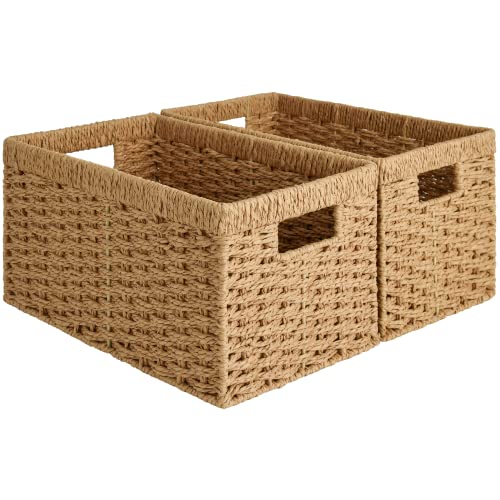
Handwoven Craftsmanship: Handwoven by skilled artisans with tight, even braiding, each pantry basket offers a neat, elegant look that showcases its high-quality craftsmanship.
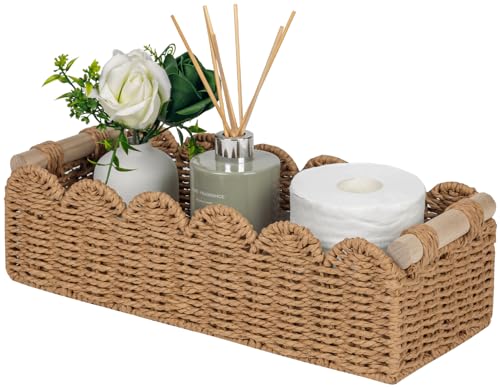
MULTIPURPOSE USE: Our scalloped edge paper rope decor basket adds personality and charming addition to bedroom, living room, bathroom, nursery and space-floating shelves, over toilet storage shelf, end table, nightstand, storage cabinet, bookcase and more, also serves well for small items, beauty products, cleaning supplies, and more

ECO-CHIC STORAGE BASKETS SET: Embracing the strength of FSC-certified recycled paper rope, each captivating storage basket is adorned with the refined elegance of vegan leather trimmings, the large basket also features graceful circular handles on each side. This seamless fusion of style and utility not only enhances your living space but also showcases our commitment to sustainability in a trendy, modern way
3. Clear Storage Containers

Clear containers let you see pasta levels at a glance and keep dry goods uniform inside a drawer or shelf.
I prefer rectangular over round; they tile flat and waste no space between. White lids give a clean line when containers sit at counter height, but any lid color works if it matches across the set.
One practical check: make sure your hand fits inside for washing, since narrow-necked ones grow sticky residue you cannot reach.

Versatile Storage: Clear plastic bin with lid for organizing pantry, office, bathroom, and kitchen items.

✅Functional Storage for Any Space: You can use these pantry bins for various things throughout your home to organize and make your life easier. They are fit to pantry organization,ideal for cabinet, kitchen, fridge, bathroom,under sink, closet,laundry room and RV.The clear organizing bins to store drinks, snacks, cans, meat,body face wash, cleaning supplies and daily necessities.

✅Functional Storage for Any Space: You can use these pantry bins for various things throughout your home to organize and make your life easier. They are fit to pantry organization,ideal for cabinet, kitchen, refrigerator, bathroom, sink, bedroom and other scenes.The clear organizing bins to store drinks, snacks, canned goods, meat body wash, face wash, cleaning supplies and daily necessities.
4. Spice Racks

A pull-out spice rack fills the narrow gap beside a stove or refrigerator that most kitchens leave dead.
A vertical spice rack stores more jars per inch than a drawer, and labels face forward so you read them at a glance.
I would mount this where the pull path stays clear; a rack that swings past a hot burner handle is a burn waiting to happen.
Check your jar heights against the shelf spacing before you buy, since oversize bottles defeat the whole purpose.

4 Tier Slim Pull out Wire Basket: The slide out design of OCG 4 tier pull out slim storage baskets can easily reach for items in narrow spaces.
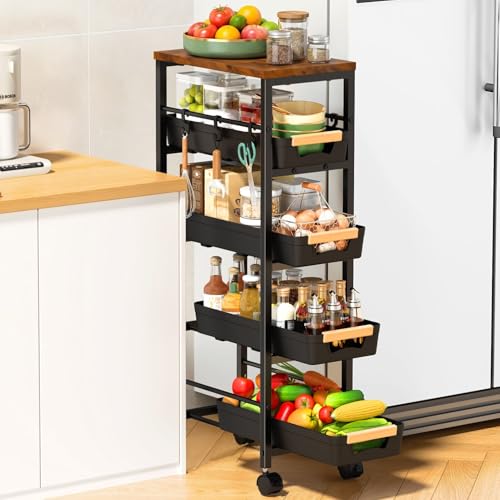
【Smooth Pull-Out Drawers with Safety Stops】This rolling storage cart with drawers features smooth-gliding pull-out baskets, making it easy to access items stored in the back.Built-in safety stoppers ensure the drawers stay securely in place and will never accidentally fall out, providing a safer and more reliable storage experience.

Three-Tier Layout: The spice rack has a top and two smooth drawers, perfect for organizing messy spice bottles on the counter. Pull-out design eases item access; locking mechanism stops drawers from fully opening and items falling out
5. Toe-Kick Drawers

A handleless face keeps the look clean but means you need finger room above to pull it out. I would reserve this for flat, light items; the drawer is shallow and the mechanism adds cost over a standard kick plate.
If you are already replacing cabinets, the upcharge is modest. Retrofitting is harder but possible with a specialty drawer kit.

【Quality Assurance】Our toe kick ducting kit features corrosion-resistant metal with a rust-proof coating, built to withstand moisture over time. Lasts 1.8 times longer than bare metal alternatives.

Widely application: The bracket has two mounting methods.Work perfectly for most drawers, Used to reinforce and repair wooden / MDF / chipboard drawers,Repairing those drawers that have sagged with age by strengthening the support and firmness of the base.

Complete Installation Kit: Includes 10 black toe kick clips with matching square mounting brackets and 20 screws providing everything needed to secure kitchen baseboards to adjustable legs quickly without buying extra hardware
6. Pull-Out Pantry

Pull-out pantry drawers bring the back row to you instead of sending you crawling inside.
A light wood unit with fixed upper shelves for tall bottles and roll-out lower drawers for dishes and cookware is, I think, the smarter split: drawers for weight, shelves for height.
Full-extension hardware is worth the extra cost; anything less leaves the back third in shadow. Check that your cabinet opening is square before you order; pantry pull-outs need true sides or they bind.

【Heavy Duty Iron & Durable Coating】The WEKIS J shelf brackets are made of 1/5 inch thickness solid cast iron, every 2 shelves brackets can load a weight of 160lbs-200lbs, with more shelving brackets, you can build a powerful wall shelf. Well-paint matte black with high quality rustproof coating, not easy to rust and fade (board is not included)
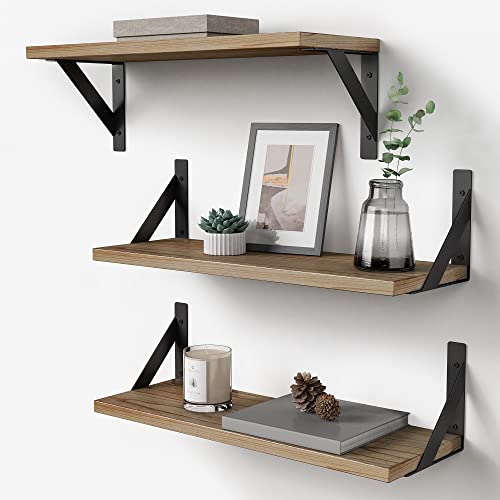
【Perfect solution for your walls】Our stylish shelves look rustic yet modern, are a great addition if you need extra storage space or if you want to add green decor touch – small indoor plants, succulents, flowers. These shelves can free up floor & counter spaces and make places much tidier and neater in your kitchen, dinning room and office.

2 Pack Unique Yoga Mat Hanger: This yoga mat rack comes with floating shelves and 4 hooks, larger capacity. It can save floor space, stylish and simple design is the first choice for home gym decor.
7. Hooks for Kitchen Storage

S-hooks or J-hooks hold the weight; I would check that the pegboard is plywood or metal, not particleboard, since moisture near cooking kills the cheaper stuff.
The rail or board needs to clear the cooktop by enough that a swinging pan handle never crosses a burner. This suits the dead space beside appliances better than it suits a main wall, where open metal reads industrial fast.

Bathroom Tray: Crafted from biodegradable recycled paper ropes, this toilet tank tray is an eco-conscious choice that combines sustainability with practicality. Bathroom tray used to hold toilet paper rolls, towels and diffusers, keeping your bathroom countertops and toilet tank area neat and tidy.

Spacious Capacity - Come in a set of 2, and each measures 7 ½ x 10 ¼ x 4 / 7 ¼ inches (L x W x H), may vary 1/4 inch in size due to handmade, the trapezoid decorative baskets let you find things in a glance.

DIMENSIONS - The overall size of the XXL LARGE black wire basket is 13" x 9" x 8.6" . The size of the Bamboo board is 16.6" x 5.9" .it can hold all of your kitchen items including fruits, vegetables. The stackable design also maximizes space utilization and keeps kitchen countertops clutter-free, You can also fold it up when not use, taking up little space. Organize your home from now.
8. Rolling Kitchen Carts

Casters let you park prep space where you need it and roll it out when you do not.
I would want a towel bar on the side too, since the cart becomes a second sink station. Locking wheels matter on tile or uneven floors; without them the cart drifts every time you lean.
A wood top takes oiling but stands up to knives better than laminate. For a few hundred dollars this adds storage and counter where a built-in would cost thousands and need a permit.
A built-in island can cost thousands; a cart can provide similar storage for a few hundred dollars. "Some have fold-down tabletops and hideaway stools," says Caroline Harmon, Lowe’s trend strategy manager.

Versatile multi-purpose storage items with a coordinated look

12-Cup Capacity: Ample storage for all your pantry staples

Modular Design: Rubbermaid Storage Containers are compact and stackable, optimizing your kitchen storage space.
9. Drawer Dividers

Grey felt or bamboo dividers let you slot utensils flat instead of piling them into a jumble. I would measure my drawer interior before buying, since off-the-shelf units leave gaps or force a squeeze.
Adjustable dividers cost more but handle odd items: a fish spatula, a long whisk, the pizza wheel that never fit the old crock. The move is simple: empty the drawer, test the layout, then trim or add spacers.

ONE-OF-A-KIND CABINET SPICE ORGANIZER WITH OUR EXCLUSIVE PATENTED PROGLIDE PLUS 2 SLIDE ADJUSTS TO FIT THE VARIOUS DEPTHS OF UPPER CABINETS giving you easy access, vertical storage, and organization for all your bottles and spice jars

MORE SPICES IN LESS SPACE - Easy slide out spice rack organizer that holds a large number of spices in the small area. No more tip-overs of front items. This sliding spice rack gives your easy access to all seasonings stored in your cabinet. This is also a great cabinet organizer.
10. Lazy Susans
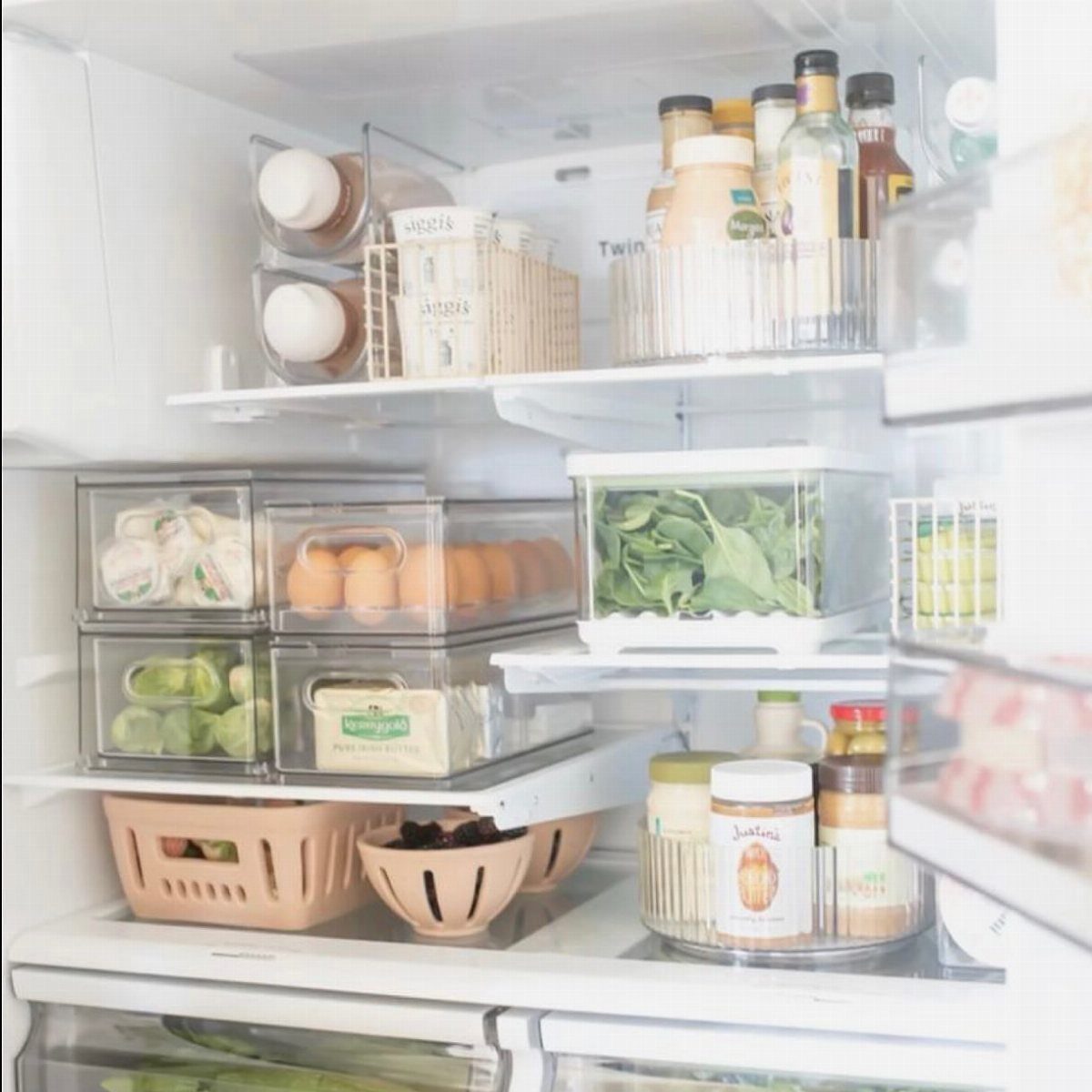
A turntable brings the back corner of a shelf to your fingertips with a quarter spin. Clear ribbed ones hold condiment bottles that otherwise colonize the door shelf and fall out every time you open it.
I would check the diameter against my shelf depth; a Susan that is too small wastes space, one that is too large binds.
The bearing quality matters more than the rim style; cheap ones stick or wobble under weight. In a fridge, the clear plastic reads cleaner than white or bamboo.
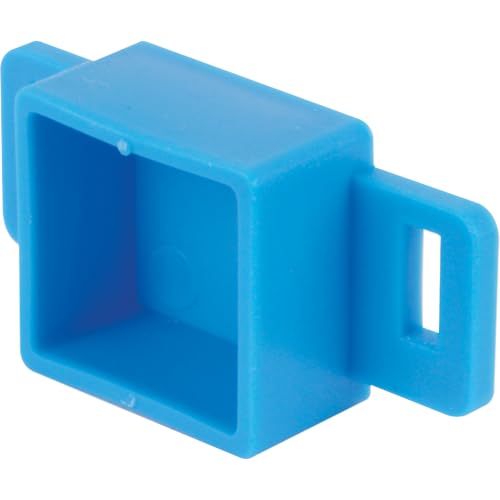
Used by a variety of cabinet drawer manufacturers

Material: The toe kick cover is made of stainless steel in brushed black finish, which is rustproof, scratch and corrosion resistant, long lasting and easy to clean

Packaging: 15 pieces, Material: Plastic, Color: Black
11. Pot Rails
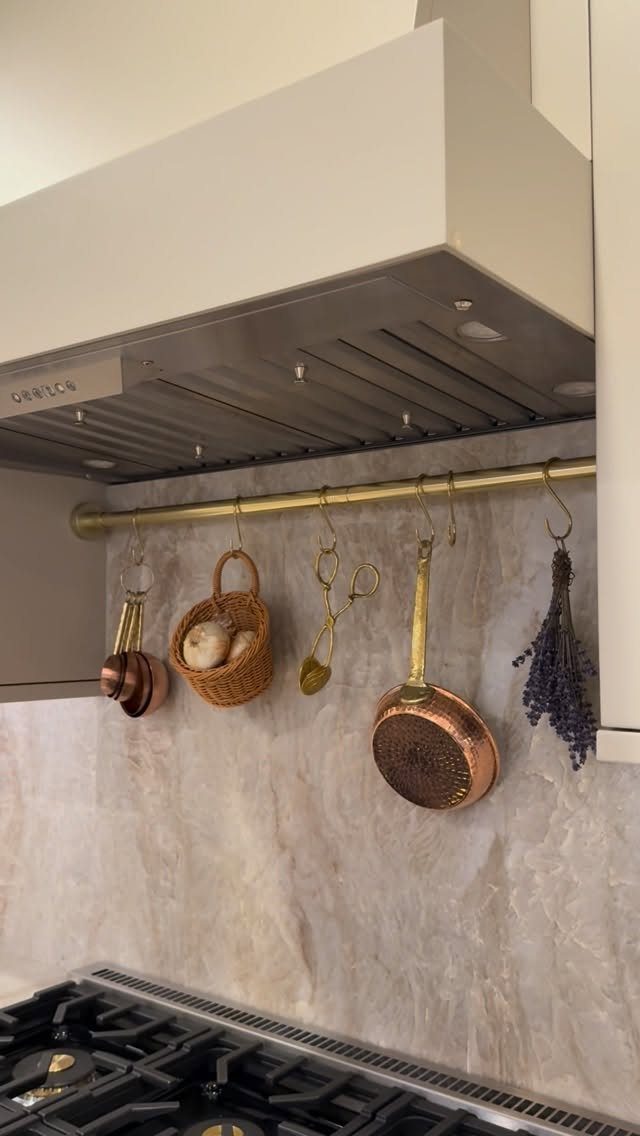
Brass rail mounted under a hood puts copper and tools where the heat dries them and the reach is natural.
S-hooks slide to rearrange; I would keep the load light directly over the cooktop, since a full copper pan swinging off the hook is a wrist strain and a grease catcher.
Brass pot rails set off marble backsplash, but on tile or painted wall I might choose black steel or chrome instead.
Check your hood underside for mounting threads or plan to drill into framing; sheetrock alone will not hold a loaded rail.
12. Utilize Cabinet Doors

Acrylic bins stuck to the inside of a cabinet door turn the under-sink cave into reachable storage for pods, sponges, spray bottles.
I would check that my door still closes flat with the bin depth added, since a bin that bumps the plumbing or disposal is a door that will not shut.
Command strips work for light loads but I would screw through the bin flange for anything wet or heavy. The real gain is moving the clutter off the sink rim where it grows mildew.
13. Labeled Bins in Refrigerator
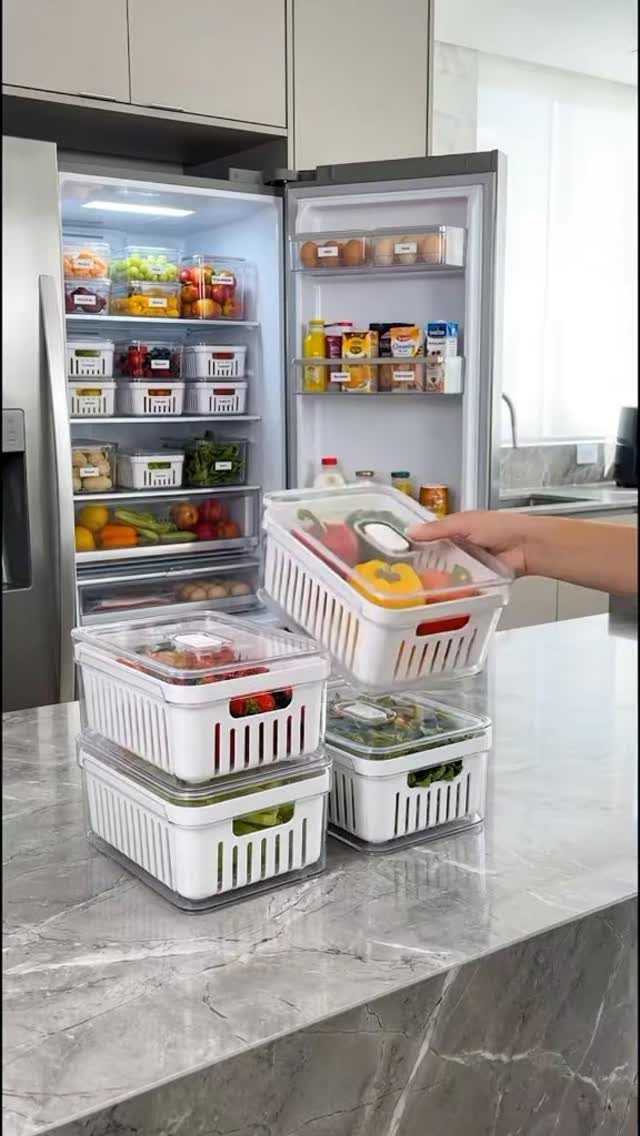
Clear bins with handles keep loose produce and dairy from rolling into the back corners where they spoil unseen. I would label each bin by category, not by day, since "snacks" survives a menu change and "Wednesday" does not.
Check that your shelf height clears the bin plus a jar standing upright; a bin that fits flat but not tall wastes the function.
14. Over the Sink Drying Rack

A two-tier rack over the sink reclaims the counter space a dish mat usually eats. I would check my faucet height first; the rack needs to lift clear of a gooseneck or pull-down sprayer in full extension.
A black metal frame holds plates vertical for drainage, but I would keep bowls and cups on the upper tier where the water drips straight to the drain and not onto clean plates below.
15. Dedicated Snack Drawers

Stacked drawers for snacks keep the morning rush from rifling through the whole pantry. Clear front bins or original bags both work; I would use whichever keeps me honest about what is left.
Chips, cookies, and Nutella packs sorted by type matters more than sorting by brand. I would reserve the lowest drawer for the youngest hands in the house.
16. Walk-In Pantry Organization

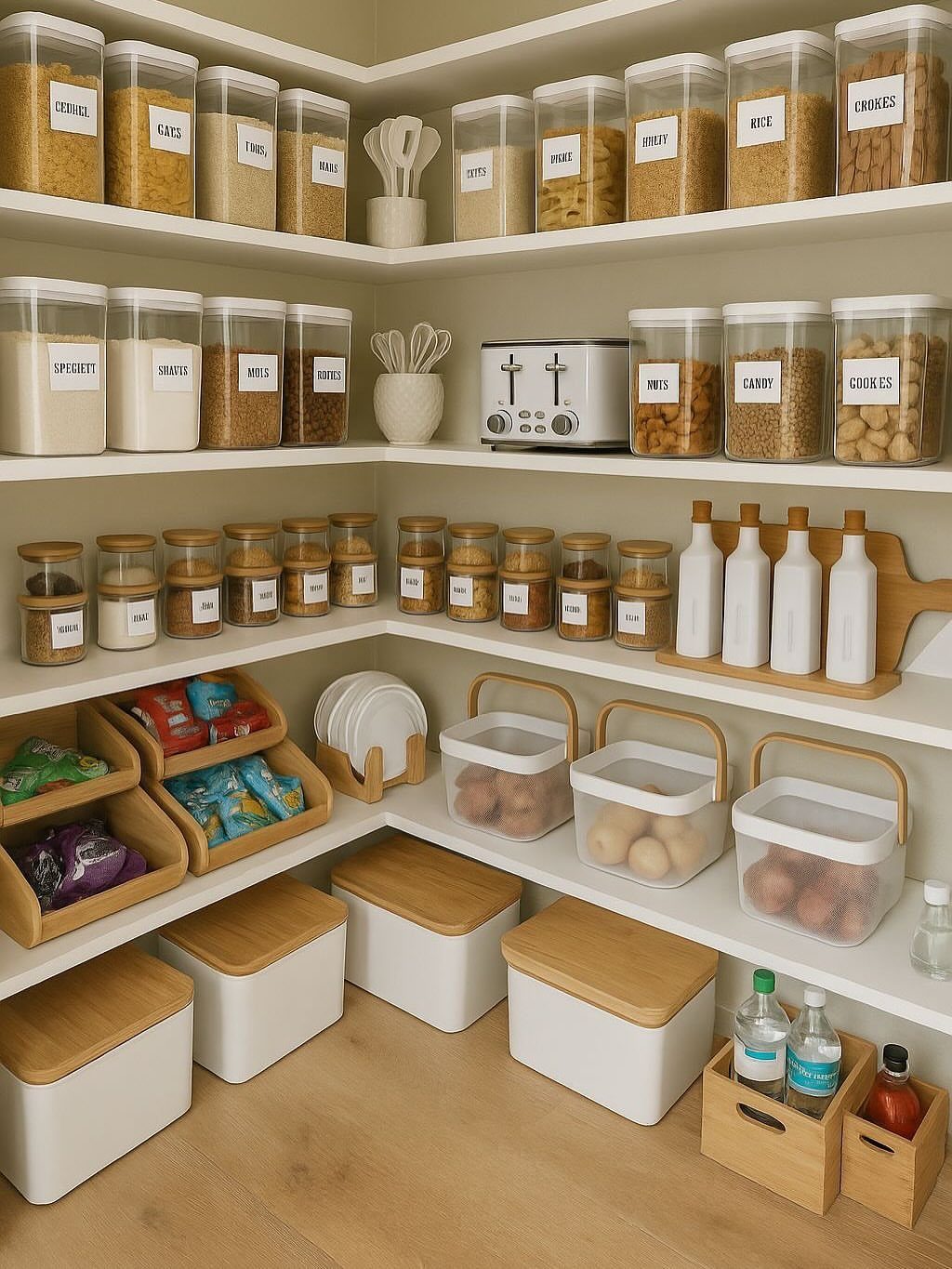
Light wood shelving with baskets and uniform glass jars turns a pantry into a room you actually want to enter.
I would plan the shelf spacing around my tallest jar and my coffee maker; a machine that lives in the pantry needs enough counter depth and an outlet.
Wicker handles the visual clutter of bags and boxes; glass shows off dry goods that stay pretty.
17. Cookware Organizer Racks

A tiered metal rack stores pans upright so you lift one without toppling the stack. I would count my lids separately; they need their own slots or they slide and scratch.
I would measure my cabinet floor first, since a rack that fits the width may still bind on the hinge side when the door closes.
18. Vertical Baking Sheet Divider

Wooden dividers in a lower cabinet hold trays, boards, and tins on edge where you slide one out without disturbing the rest.
I would space the dividers to fit my widest cutting board plus a finger grip; too tight and the board jams, too loose and the row leans.
The photo uses a white cabinet interior, but the divider wood tone is what shows, so I would match it to my existing shelves or go deliberately darker for contrast.
19. Integrated Countertop Alcove Shelving

A recessed alcove behind the counter keeps mugs and daily dishes at hand without stealing workspace from the surface below. Marble lining turns the alcove into intentional architecture, not an afterthought; that is the standard this idea sets.
I would check my wall depth first, since a true recess needs a cavity or a faked-out stud bay.
LED strip lighting inside the alcove turns it into a display niche, but wiring it means an electrician and a switch location that does not clutter the backsplash.
A sliding panel that covers the shelf is a high-end detail; a fixed open shelf is the version most budgets reach.
This suits new builds or full-gut renovations where the framing is open.
Maximizing Small Kitchen Space
In a small kitchen, the wall between upper cabinets and the counter is usually dead space.
A pegboard or rail system there keeps tools off the work surface without the depth a shelf requires. Clearance matters most where pots lift free of burners below, and anything over a prep zone should not drip.
Stackable containers matter more in small kitchens because you have no room for single-purpose shapes.
Rectangular bins tile flat in a drawer; round ones leave gaps you cannot fill. The same rule applies to furniture: a cart with casters becomes an island when you need it and rolls to the wall when you do not.
Vertical storage starts at the toe kick. The gap at floor level under base cabinets, usually wasted, holds flat items if you add a drawer there; retrofitting is harder than planning it into new cabinets.
Decluttering Tips
Start with what you actually use. A tool you have not touched in a year is probably not waiting for its moment; it is taking up a slot a daily tool needs.
I would pull everything out, sort by function, and be honest about duplicates. Three wooden spoons is reasonable; six is a collection you are storing.
Grouping by task, not by size, is what makes the system stick.
Baking ingredients live together; breakfast items live together. When you reach for the pancake mix, the syrup and the spatula should be in the same zone, not scattered across the kitchen.
Packaging eats space. A cereal bag inside a bin takes less room than the box, and you see the level at a glance.
I would transfer anything dry to a rectangular container with a lid that matches the set; the uniform line reads as intentional, not cluttered.
The exception is oil and vinegar, which I would keep in their original bottles since the labels matter and the glass is already right.
Kitchen Workflow Improvement
The right storage system changes how the kitchen feels to work in.
A clear container system turns inventory into a glance. You see pasta levels, you know what to buy, and the weekly shop gets faster.
Lighting matters to workflow.
Frequently Asked Questions
How to store in a small kitchen?
A rail or pegboard on the wall keeps utensils and tools off the counter without eating the inches a shelf would stick out into the room.
Rectangular containers that stack flat tile neatly in drawers, and a rolling cart doubles as extra prep space when you need it then tucks against a wall when you do not.
The toe-kick gap at floor level under base cabinets can hold a shallow drawer for flat items if you plan it into new cabinets or retrofit with a specialty kit.
What are the best cabinet organizers for my kitchen?
For blind corners I would put in a turntable, for base cabinets a roll-out drawer, and for pantries a tiered shelf stand; those 3 retrofits give you the most function back for the money.
I would add drawer dividers for utensils and a vertical pan rack that stores lids in their own slots so nothing slides or scratches. Check your cabinet floor width and hinge clearance before ordering any rack.
What do you call kitchen storage?
There is no single term.
Cabinet storage, pantry storage, wall storage, and under-sink storage are the common divisions by location. Built-in storage means the solution is part of the cabinet itself, not an add-on.
What do you put in a pantry vs kitchen cabinets?
Pantries hold non-perishable dry goods, bulk items, and small appliances you use weekly.
Cabinets keep daily cooking tools, plates, cookware, and the ingredients you reach for every meal. I would store backup snacks and overflow in the pantry, not the cabinet, so the cabinet stays uncluttered for the active rotation.