
These options run from pre-cast terrazzo tiles at half the price of slab to backlit crystalline quartz that needs an electrician before cabinets go in.
1. Concrete Countertop

A cast concrete countertop starts as a custom pour, not a slab you order. That means the edge profile, the thickness, even the pigment are yours to set.
Weight is the real problem with concrete: it is heavy enough that standard cabinets will need reinforcement or a plywood subtop before you pour. I would check that before falling for the look.
Sealing matters too; unsealed concrete wicks oil and wine like a sponge. Budget for a food-safe penetrating sealer and reapply every year or two.

SAFE: Ovation is a Food Safe, Water Based, Non Toxic, and High Performing sealant specifically designed for concrete countertops in the kitchen and beyond. Complies with FDA guidelines.
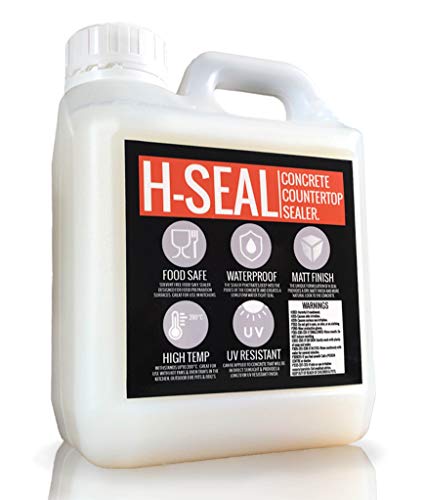
OVERVIEW: H-Seal is a food safe, solvent free, water-based concrete sealer designed for food preparation surfaces, bathrooms and outdoor applications. It is heat resistant up to 392°F making it great for use with hot pans and BBQ's and has a delicate matte finish which sets it apart from its competitors. It provides protection for 10+ years with proper maintenance and is designed for use in direct sunlight. H-Seal goes far! With coverage between 5-12m2 depended on surface roughness.

PROTECTIVE BARRIER – Enhanced with Carnauba wax and beeswax, CLARK’S creates a non-greasy barrier that helps protect soapstone, slate, concrete, and butcher block countertops from stains and spills. Ideal as soapstone wax for counters and concrete countertop sealer.
2. Soapstone Countertop

Soapstone carries a soft, almost waxy surface that no gloss polish can replicate. Soapstone looks best with matching backsplash slabs: one stone, fewer seams, and the stove wall stays as easy to wipe as the counter.
The material is talc-rich, so it scratches. I would keep a sanding block handy; 220-grit smooths the mark, mineral oil darkens the fresh surface to match.
It does not etch like marble, and it takes heat without drama, which matters more to me than a perfect surface. Price sits near mid-range quartz, sometimes less depending on your source.

Revitalizing blend prevents drying and cracking of hardwoods and bamboo
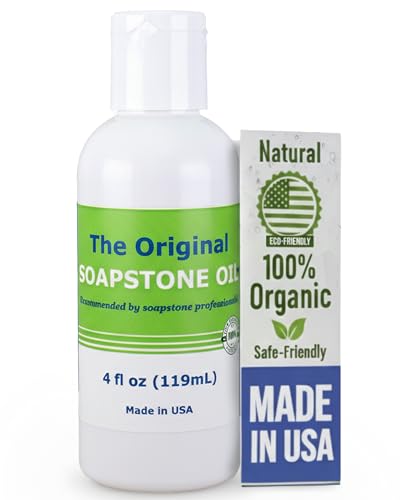
Long-lasting protection; Reduces the need for frequent oiling; Keeps soapstone surfaces looking rich and well-maintained

Food Grade - SMPLY. Mineral Oil is perfect for cutting boards, wooden spoons, butcher-block countertops, and any wooden surface that is used to prepare food!
3. Marble Countertop

Marble is the stone that still reads as luxury in a way nothing manufactured quite matches. The veining runs random, so I would pick my slab in person, not from a sample chip.
Owners of marble counters note resealing regularly, which squares with what I have seen.
That maintenance is the trade. Honed finishes hide wear better than polish; polished marble shows water rings by noon on a busy Saturday.
I would go honed for a kitchen that actually cooks, and keep a cutting board in sight not to protect the stone, which it will not, but to break the habit of treating it like stainless steel.

CLEAN & PROTECT - MORE Stone & Quartz spray is a 2-in-1 daily cleaner and protector formulated specifically for natural stone and quartz surfaces.

Brilliant, Streak-Free Shine: Goddard's premium plant-based formula uses natural carnauba wax to gently polish granite, marble, and other stone surfaces.

Transform the look of outdated countertops with a faux marble kit
4. Recycled Glass Countertop

Crushed glass set in concrete or resin catches light in a way solid stone cannot.
I would ask my fabricator about glass source and binder.
Post-consumer bottle glass differs from manufactured cullet in color range; resin binders need less sealing than concrete but top out at lower heat tolerance. Either way, expect visible texture at the surface, not a glass-smooth polish.
For a reader doing one project a year, this is weekend-timeline only if you buy pre-cast; a site-pour adds a week of cure and grind you probably do not have.

Protect Your Tile: this uncoupling membrane for tile provides a protective buffer layer that prevents flooring from detaching due to temperature fluctuations; It helps ensure...
5. Terrazzo Countertop

Terrazzo is marble or glass chips bound in cement or resin, ground flat, and sealed. White terrazzo with dark speckles reads clean and retro at once, which is the particular trick of this material.
Cement-based terrazzo needs the same sealing discipline as concrete; resin-based shrugs off most stains but can yellow near a sunny window over years. I would check which I am getting before I sign.
The look scales well: a small counter feels intentional, a large island becomes graphic. For a budget project, pre-cast terrazzo tiles exist; the grout lines break the field, but the price drops by half or more.

Concrete Countertop Sealer XS-327 Matte. 1 Kit. Excellent heat resistance. Withstands temperatures up to 300°F
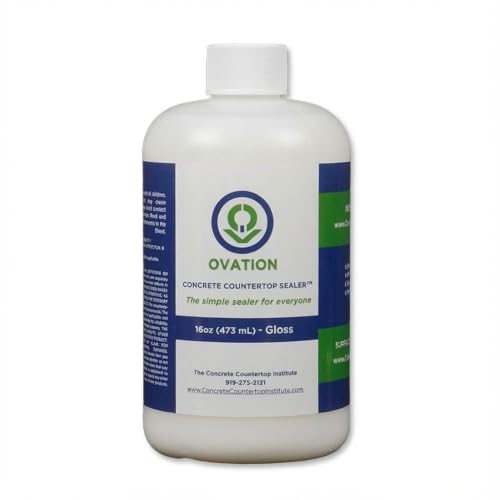
Water Based, Non Toxic, Best Performing Sealant specifically designed for DIY concrete

6. Waterfall Countertop

A waterfall edge carries the countertop material down both short sides of an island, turning one surface into a monolith. The marble runs continuous grain from top to floor; a seam at the corner ruins it.
That continuity costs.
I would budget more stone than a standard edge, plus fabricator time for the precise miter and support. A dark base cabinet below a white slab is smart; it anchors the floating look and hides scuffs where stools kick.
I would not attempt this with a stone I had not seen slab-sized; small-sample veining can turn busy across a full drop.

ENHANCES SOAPSTONE'S NATURAL BEAUTY – Deepens and enriches the unique patina of soapstone countertops, giving them a smooth, elegant finish.
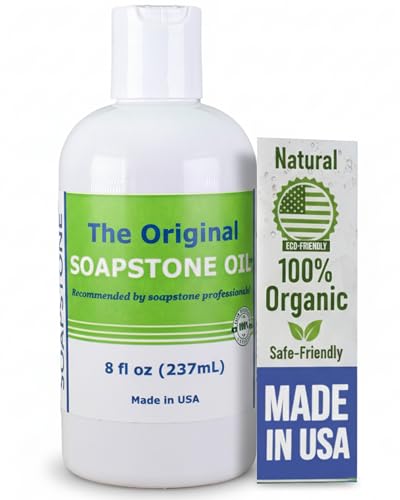
Long-lasting protection; Reduces the need for frequent oiling; Keeps soapstone surfaces looking rich and well-maintained

【100% Food Grade Mineral Oil – Safe for Kitchen Use】 Nicalas Cutting Board Mineral Oil is a food grade mineral oil that is 100% pure, colorless, odorless, and tasteless. Lab-tested to meet strict food safety standards, it is the ideal mineral oil for wood cutting board, butcher block, and all food-contact surfaces. Safe for daily kitchen use and trusted by home chefs.
7. Honed or Matte Finishes

A honed finish stops short of the last polish pass, leaving the stone with a soft, light-absorbing surface.
A honed or matte finish reads warmer than the same stone polished to gloss, and it hides the fine scratches that come with actual cooking.
I would check the stone type before committing. Marble and limestone in honed finish stain more readily because the pores stay open; granite and quartzite handle it better.
Fingerprints and water spots show differently than on gloss, so I would live with a sample for a week near my actual sink habits.
Sealing schedule stays the same, but the visual forgiveness of honed means I might actually keep to it.

【Rapid Revitalization: Say Goodbye to Dullness】 Stop putting up with dull, hazy, or lightly scratched kitchen countertops and floors! Formulated for a quick shine, this professional-marble polishing paste restores a crystal-clear, mirror-like luster with just a few seconds of wiping. Achieve professional-quality restoration at home—no expensive contractors needed, and the results are immediate

STONE PROTECTOR: The stone sealer can be used to protect and seal soapstone, concrete, slate, marble, granite, and other porous non-glossy surfaces, leaving a long-lasting low luster finish

1 quart covers 160 - 180 square feet
8. Countertops with Integrated Draining Grooves

Grooves cut into the stone beside the sink replace a dish rack. Water runs back to the basin through channels the fabricator mills directly into the surface.
Depth and spacing matter.
Shallow grooves pool water; too deep weakens the stone at a thin edge. I would ask to see a finished example with my stone choice, since brittle materials crack under the router differently than granites.
The groove area needs the same sealing discipline as the rest of the counter, and I would run a brush into the channels each wipe-down to prevent the film that builds in standing water.
9. Blue Veined Stone Countertop

Dark stone with blue and grey veining reads cooler than warm-toned alternatives, which is the particular character of this look.
The veins shift with the time of day on a polished surface, since sharp reflection changes as the light moves across it.
I would carry the same stone up the backsplash; the continuity saves the decision of what else coordinates. Light wood cabinets balance the darkness, but I would test my actual cabinet sample against the slab in person.
Blue veining varies wildly between quarries, from steel grey to near-navy, and the slab I see is the one I get. No two match.

✅ Natural Countertop Care for Stone & Wood – Daddy Van’s All Natural Beeswax Countertop Care is the ideal solution for renewing and protecting soapstone, slate, concrete composite, and wood butcher block countertops.

A water-based, non-toxic concrete sealer capable of protecting the warm luster and beauty of your concrete countertops, integral sinks, fire places, furniture, fire pits and planters.
10. Dark Stone with Gold Veining

Gold veining against dark stone needs the right light to read as metallic rather than muddy.
Controlled overhead lighting in a recessed alcove hits the surface directly instead of relying on ambient window light, which is how you actually see gold veining after dark.
I would match metals to the vein, not fight it. Brass or unlacquered bronze fixtures pick up the gold; chrome would sit as a separate element.
The full backsplash and counter in one stone is a commitment on material cost, but it eliminates the joint where counter meets wall, which is where grime collects and silicone eventually fails.
For a small area like a bar niche, the splurge is contained.

FOOD GRADE & NSF APPROVED - High-purity white mineral oil suitable for food-contact applications. Made in the USA and commonly used for cutting boards, butcher blocks, utensils, and food preparation equipment.

FOOD SAFE: Our mineral oil exceeds all standards for direct and indirect food contact, making it safe for cutting boards, butcher blocks, countertops, and more-expertly refined and bottled in the USA.

FOOD GRADE & SAFE – Colorless, odorless mineral oil that’s safe for use on food-contact surfaces like cutting boards and butcher blocks.
11. Backlit Crystalline Countertop

Light from below turns a translucent stone slab into a lantern. The amber glow comes from LED panels mounted under a crystalline quartz or onyx top, not from the stone itself.
I would plan this with my electrician before cabinets are built.
The panels need housing, ventilation for the LEDs, and access for the driver replacement that comes eventually. Stone thickness matters; too thin and the light shows hot spots from each diode, too thick and the glow dulls.
A sample lit from below is essential before I order slab-sized. This is not a weekend project, but the result is the one guests remember.
12. Reddish-Brown Granite Countertop

Polished reddish-brown granite with dark veining carries warmth that cooler greys and whites do not.
Pushing the material to counter, waterfall island, backsplash, and even cabinet fronts turns the kitchen into a single carved mass; it is a lot of the same stone, but the effect is coherent.
I would resist the temptation to match everything. The waterfall edge already makes the island a statement; wrapping cabinets in stone adds cost and weight I would redirect to hardware or lighting.
Granite this color shows dust and crumbs more than mid-tones, so the daily wipe-down is visible work. The polish seals the pores, but I would still reseal yearly in a kitchen that actually cooks.
Choosing the Right Countertop
Cooking habits matter more than showroom displays. A baker who rolls dough daily needs the cool surface marble provides; someone who mostly reheats takeout can live with almost anything.
Budget reality for this audience runs a few hundred to a thousand dollars, which puts pre-cast terrazzo tiles, laminate, or tile in range while full-slab stone sits at the edge.
I would visit a fabricator with my cabinet sample and a photo of my actual kitchen light, not a Pinterest board.
Stone looks different under 2700K bulbs at 7 p.m. than under showroom spots. Mixing materials is valid: wood for the island where I chop vegetables, quartz for the perimeter where I roll dough and prep cold dishes.
The combination costs more in labor but less in the stress of pretending one material does everything.
Maintenance of Countertops
Sealing is the recurring task nobody budgets for. I would calendar the date I seal, not wait until a stain appears.
The daily wipe-down matters more than the annual seal: standing water in draining grooves builds film that sealing will not prevent.
I would place my trivets before I choose.
Durability of Countertops
Granite, quartz, and concrete are the materials I would shortlist for a kitchen that sees actual use. Each survives dropped pans and sliding dishes; each has a failure mode to know.
Concrete cracks from substrate flex, not from the material itself.
Granite handles heat without drama, though yearly resealing in a cooking kitchen is the price. Quartz is consistent and non-porous but can discolor from sustained heat; I would still use a trivet.
Mixing materials adds visual interest and lets me put durability where I need it. A wood prep surface beside a stone counter gives me a forgiving place to chop and a stone surface for hot pans straight from the stove.
Metal inserts near the stove handle the abuse that would etch marble in a month.
Frequently Asked Questions
What are the different types of kitchen countertops?
The main types include natural stone such as granite, marble, soapstone, and quartzite; engineered materials such as quartz; and alternatives such as concrete, terrazzo, recycled glass, and tile.
Each handles heat, scratches, and sealing differently, so I would match the material to how I actually cook rather than how the kitchen looks in a showroom.
What are some DIY countertop ideas?
Pre-cast terrazzo tiles, laminate, and tile are the options that fit a few-hundred-to-a-thousand-dollar budget and a weekend timeline. I would buy pre-cast and handle the install myself.