
These ideas run from a tension-rod fix you can test this afternoon to a full corner pantry that ships at standard height and needs trimming on site.
The deciding factor is how often you open that corner: daily use justifies hardware that costs more per pair, while a twice-monthly reach is better served by the cheapest test first.
I would check my ceiling height and cabinet line availability before ordering anything custom, since not every manufacturer offers the corner box.
1. Lazy Susan

A Lazy Susan spins hard-to-reach items to the front, which is why it has stayed in kitchens for decades. Curved shelves work best for small, light pieces: spice jars and short bowls that will not tip when the turntable moves.
Check the diameter against your cabinet depth before buying; most need a wide base cabinet to turn freely.
A wooden tray like this one suits dry storage, but I would use a polymer version under a sink where dampness warps the real thing.

Size & Compatibility: This Value Line Polymer Kidney-Shaped Two-Tier Lazy Susan measures 28"W x 22.5"D x 26"H and fits corner base cabinets. Its adjustable post fits cabinets with an interior height of 26" to 31".

Size & Compatibility: This Value Line Polymer Kidney-Shaped Two-Tier Lazy Susan measures 24"W x 14.31"D x 26"H and fits corner base cabinets. Its adjustable post fits cabinets with an interior height of 26" to 31".
2. Swing-Out Shelving

Swing-out shelving carries pots and pans around the corner and into the open, which solves the blind-cabinet problem without a full pull-out track. Black metal arms pivot from a central post; the pots nest inside the curve of the doors.
This option needs more open floor space in front than a drawer requires, since the swing arc clears the cabinet by a good distance.
I would measure that clearance before deciding; in a tight galley kitchen, it is the reason I skip this one.

Corner Champion: Turn the dreaded blind corner into your favorite cabinet—one 270° swing brings every pot, spice jar and pantry box into daylight, no more lost Tupperware in the back.

🧡Super Hardness Material - Made of high quality iron and aluminum material, the overall weight of the product is 24lbs. Made with high quality craftsmanship, sturdy. Using high-end surface treatment technology, it is not easy to broken.

Organizational Companion: Equipped with 2 trays, this unit enhances spatial efficiency and accessibility. Each tray rotates independently, making it easy to sort, store, and retrieve your kitchen essentials in seconds
3. Open Shelving

Open shelving in the corner turns dead wall space into storage you can reach without opening a door.
I would use this only where I cook less than I display, since every dish faces the room and needs wiping before use.
The brackets are hidden, which means finding studs or adding a backing panel; do not skip that step, or the seam at the corner will sag within a year.

【High Quality Metal】: This heavy duty shelf bracket is made of high-quality solid metal steel, coated with a matte black finish, with a sleek and modern look. Rust-proof, corrosion-resistant, and smooth edges to prevent scratches during installation. Suitable for all kinds of DIY projects and long-term use

【Matrial】Industrial pipe shelving features a sturdy metal pipe brackets ,Painted black matt, Hardware Only,No plank Included.

【Standard 90° bending】In order to ensure that each shelf bracket can be at 90° to the maximum extent possible, we add a rigorous picking process before the shelf brackets are packaged. The standardized 90-degree design is so important that it’ s the objective factor in ensuring that items remain level and do not tip over after being placed on the board(board is not included).
4. Magic Corner Pull-Out System

The Magic Corner is the fully extending version of a blind-corner fix: the front basket pulls out, then the rear unit trays slide forward into the opening.
The grey organizer holds bowls and a pan with room to spare; the motion needs two motions, not one straight pull.
I would install it only where I reach daily; for a corner I open twice a month, a simple Lazy Susan returns the money better.

Please measure the cabinet dimensions before purchasing, and choose the appropriate size according to your needs to avoid unnecessary returns. A significant difference between the cabinet and turntable dimensions will result in low space utilization.

√【Magic of Blind Corner】With this pullout organizer, you can fully use the cabinet blind corner space, so to maximize the storage of your kitchen cabinet. All baskets can be pulled out completely, so it's very convenient to take and put stuffs inside.

【Full Blind Corner Utilization】 HANKEY blind cabinet organizer transform wasted blind corner space into fully accessible storage. Slide shelves outside of the cabinet making every item easy to reach without stretching or digging
5. Pull-Out Shelves
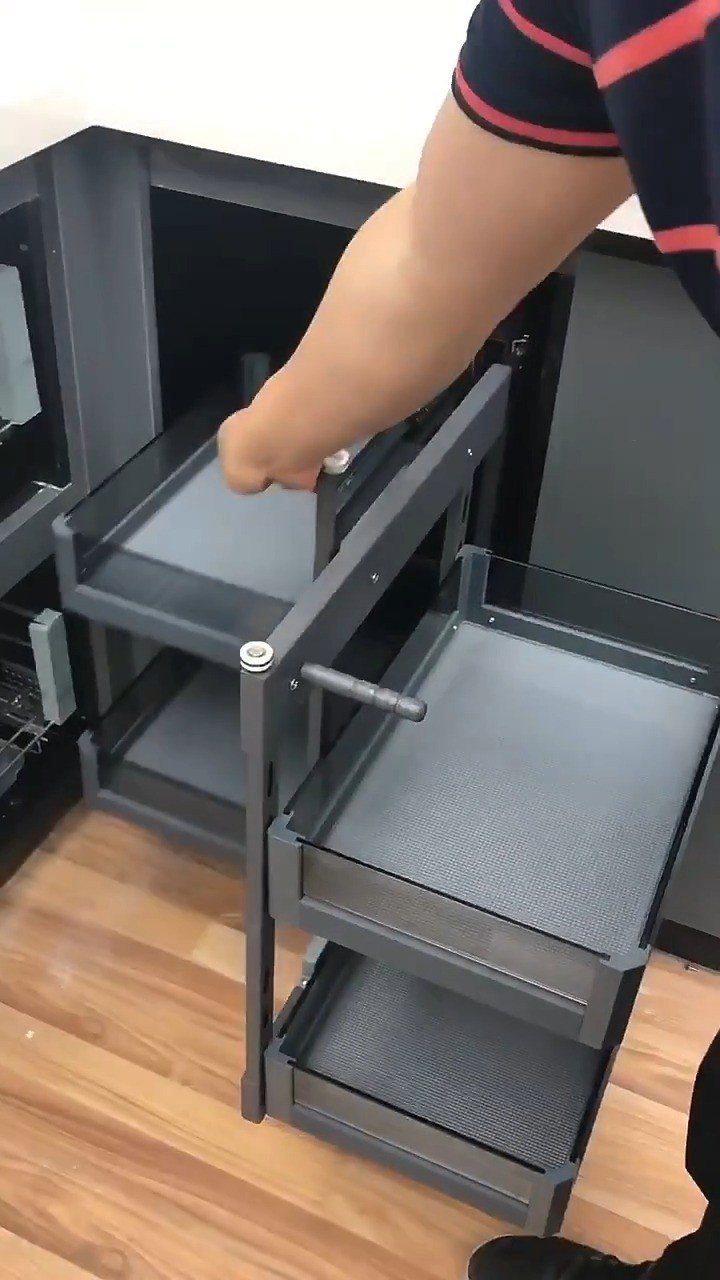
Pull-out shelves slide straight forward on ball-bearing tracks, bringing the full depth of a base cabinet into the light.
Track quality matters more than shelf material; a heavy-rated slide costs more per pair and outlasts 3 replacements of the lighter kind.
I set the bottom tier just above the cabinet floor to clear the toe-kick framing; any lower and the shelf catches.
Each shelf can hold up to 38 pounds. Each shelf slides on a track and the unit is installed within the cabinet so that you do not have to worry about buying extra hinges, as you won’t be attaching it to your cabinet doors.

More Space, Less Mess: Turn your hard-to-reach corners into easy-access storage with up to 270° swing-out trays; This smart kitchen dead space solution keeps your cookware, spices, and pantry items organized, making it a true space maximizer for corner cabinets
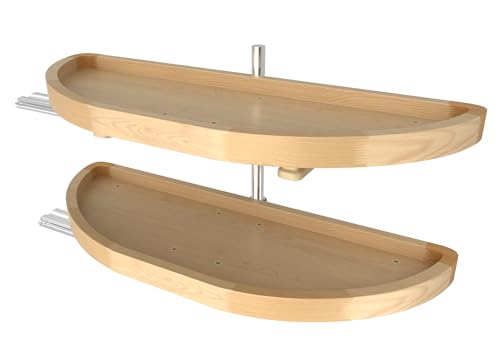
Convenient Lazy Susan Organizer: Maximize space and efficiency in your corner base kitchen cabinet and easily access pots, pans, dishes, kitchen gadgets, and food with this half-moon lazy susan

Cabinet Blind Spot Storage: The kitchen blind cabinet organizer features a clever design that addresses kitchen corner blind spots, transforming hard-to-reach deep spaces into efficient storage areas and preventing wasted space. When your cabinet door opens to the left, choose the right rotation pull-out turntable.
6. Corner Drawers
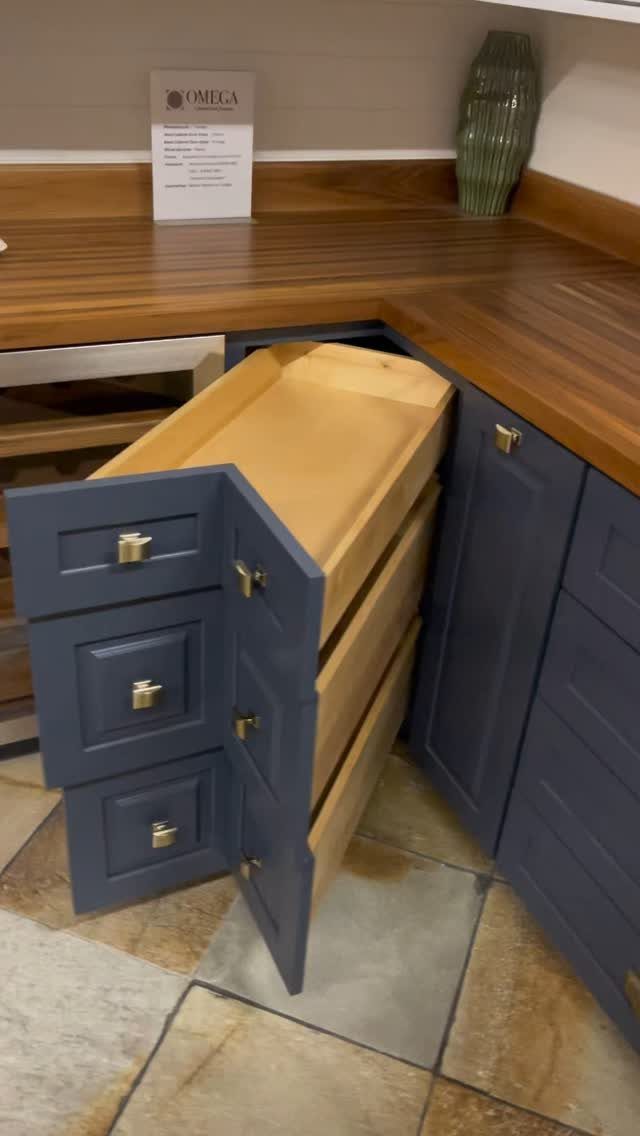
Corner drawers fill the diagonal with angled fronts that meet at a straight edge, turning the awkward void into usable depth. Three drawers at staggered depths; the inner one is shorter because the corner itself narrows.
Hardware for this runs higher than standard drawer slides, since the load sits off-center and the mechanism needs synchronization.
I like the look, but I would budget more than a cabinet of the same face dimensions and confirm my cabinet line offers the corner box, since not every manufacturer does.

Special Design: the Banded-Shaped design is not only attractive, It allows for more effective use of storage space and improves kitchen storage efficiency

Three Size Options: One for 26" diameter corner lazy Susan, one for 28", and the other for 32". Please make sure you measure the diameter of your lazy susan first and then CHOOSE THE RIGHT SIZE bins. More Quantity Options: Four bins create a semicircle, Six bins create 3/4 circle, Eight bins create a circle.

Size & Compatibility: Organize your space with our Polymer Pie-Cut Two-Tier Lazy Susan for corner base cabinets. This rotating kitchen organizer measures 28"W x 18.25"D x 26"H.
7. Appliance Garage
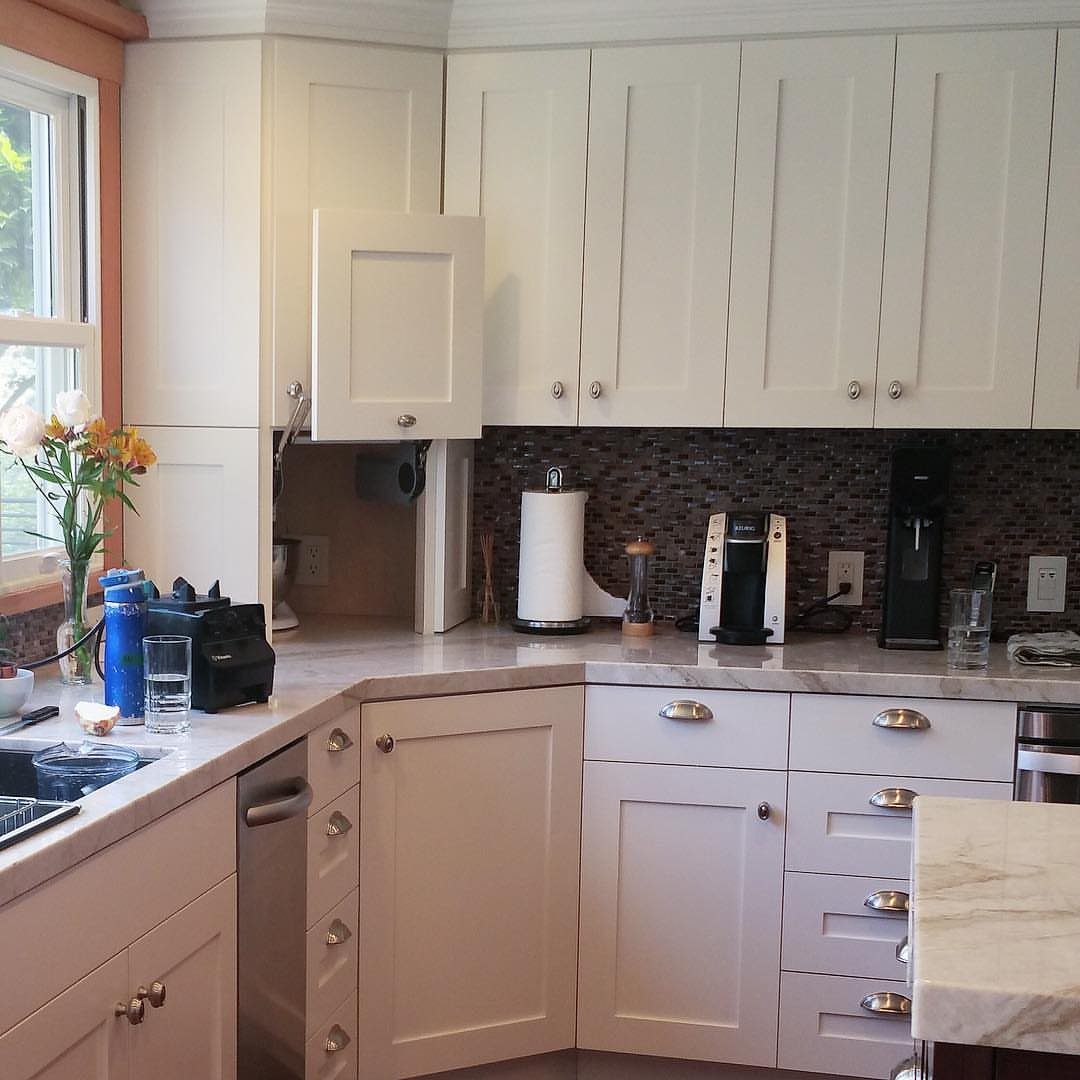
An appliance garage hides the stand mixer and coffee maker behind a lift-up door that slides back into the cabinet body, keeping counters clear without hauling appliances to a closet.
An open appliance garage stores tools upright on shelves; a closed front would need clearance above for the door arc.
I would check that the door hardware clears any upper cabinet trim before ordering. This suits corners where you use one appliance daily and want it plugged in, ready.

Corner Champion: Turn the dreaded blind corner into your favorite cabinet—one 270° swing brings every pot, spice jar and pantry box into daylight, no more lost Tupperware in the back.

Corner Champion: Turn the dreaded blind corner into your favorite cabinet—one 270° swing brings every pot, spice jar and pantry box into daylight, no more lost Tupperware in the back.

🧡Hard Material - Made of high quality iron and aluminum material, the overall weight of the product is 24lbs. Made with high quality craftsmanship, sturdy. Using high-end surface treatment technology, it is not easy to broken.
8. Corner Pantry Cabinet

A floor-to-ceiling corner pantry turns the full height of 2 walls into open shelving, lit from within so you can read labels in early morning light without flipping a switch.
The unit sits between standard base and upper cabinets, using the same face frame so the kitchen reads as one run.
I would add outlet strips inside for small appliances if the pantry sits near the prep zone; otherwise the depth eats counter space you might need.
Confirm your ceiling height; most of these ship at a standard pantry height and need trimming on site.

STYLISH & ELEGANT: Crafted from premium particleboard, the Set of 4 corner wall shelves create a rustic and clean look, match with any of your decor and perfect for organizing everything, enhance vintage aesthetic for your space.

Package Includes: 4 x Black shelf brackets with mounting screws, which can help you repair shaky furniture quickly and easily. The size details are shown in the figure. Note: Manual measurement, please allow slight errors on size. Thank you for your understanding!
9. Glass-Front Corner Display Cabinet

A glass-front corner cabinet sits on the counter, not in it, which makes this the only idea here that needs no cabinet box or demolition.
The panes show white dishes against a painted interior, turning everyday plates into something like a display.
I would keep the contents pale and uniform; dark or mismatched pieces read as clutter through glass.

CONVENIENT CORNER SOLUTION: GWANLUKEJ corner cabinet pull out with swing out shelves – Crafted to maximize tricky blind corners, this solution offers easy access and spares you from fruitless searches

Please measure the cabinet dimensions before purchasing, and choose the appropriate size according to your needs to avoid unnecessary returns. A significant difference between the cabinet and turntable dimensions will result in low space utilization.

Cabinet Blind Spot Storage: The blind corner pull out organizer features a clever design that addresses kitchen corner blind spots, transforming hard-to-reach deep spaces into efficient storage areas and preventing wasted space.
Challenges of Corner Cabinets
The corner cabinet sits where 2 cabinet runs meet, and that geometry turns simple storage into a reach problem.
In an L-shaped or U-shaped kitchen, the junction leaves a deep pocket that standard doors cannot fully expose; items slide toward the back wall and stay there.
A blind corner cabinet leaves you reaching into dark space with no view of what is back there.
The door opens on a shallow face while the bulk of the box extends around the angle, so most of the volume hides in shadow.
You lose track of what you own, and the stuff you do find has collected dust or grease from months against the wall.
Some kitchens skip the corner cabinet entirely and lose the storage; others build one and treat it like a closet they dread opening.
The fix is mechanical: something has to carry contents to where you can see them. Without that, the space functions as a pit for appliances you meant to use and forgot.

EFFORTLESS GLIDE & SOFT-CLOSE – No more wrestling with stuck shelves or slamming doors. The smooth swing-out mechanism with a soft-close damper lets you access everything quietly and effortlessly, protecting cabinets and fingers while eliminating kitchen noise.

CABINET REQUIRE: This 3 tier pull out drawer can be installed at the bottom of the cabinet. When installing it at the bottom, ensure your cabinet has a width greater than 17.5 inches, a depth greater than 21.5 inches, and a height greater than 19.5 inches
EFFORTLESS GLIDE & SOFT-CLOSE – No more wrestling with stuck shelves or slamming doors. The smooth swing-out mechanism with a soft-close damper lets you access everything quietly and effortlessly, protecting cabinets and fingers while eliminating kitchen noise.
Cabinet Door Styles
Accordion doors fold back in sections and need less swing clearance than a standard panel, which matters when the corner sits tight to a wall or an island.
I have seen them work well on upper cabinets where the box is lighter and the load is dishes, not pots.
Double doors need more room but open wider. The hinge has to swing a full 180 degrees or the paired panels still block half the opening.
Measure the door width and the hinge spec together; a door that is too narrow for the box leaves a blind strip even when both sides stand open.
Glass doors on a corner cabinet show you the same clutter you would hide behind wood.
I would use them only on an angled or diagonal front, where the cabinet face points into the room and the contents read as display rather than storage.
DIY Solutions
Stacked wooden crates turn a blind corner into pull-out bins you build yourself.
Size them to the cabinet depth so the front crate clears the opening; label the ends so you know which holds baking dishes and which holds the slow cooker.
Tension rods set vertically create slots for pot lids that otherwise slide and stack. The rods press against floor and shelf, no hardware needed, though I would check the fit monthly; they loosen with humidity changes.
Magnetic strips mounted inside the door face hold metal utensils and free drawer space elsewhere. Keep the strip below the shelf line so nothing hangs where it could knock against contents when the door closes.
A rotating turntable on an existing shelf is the cheapest way to test whether a Lazy Susan suits your habits before you buy the fitted version.
Frequently Asked Questions
How to measure a corner cabinet?
Most Lazy Susans need at least a 33-inch base cabinet to spin without hitting the sides; measure your diagonal depth and subtract two inches for clearance.
For swing-out shelving, measure the swing arc clearance in front of the cabinet, since the arms pivot out by a good distance.
A blind corner base eats 18 to 24 inches of floor on each wall; in a narrow galley I would rather lose that storage and gain the walking room.
How to make the best use of corner kitchen cabinets?
The fix is mechanical: something has to carry contents to where you can see them.
A Lazy Susan spins small items to the front, swing-out shelving carries pots around the corner, and a Magic Corner pulls the rear unit forward in 2 motions.
What are the different types of corner base cabinets available?
Corner base cabinets meet where 2 cabinet runs intersect at right angles, and the main types differ by how they solve the blind reach.
Corner drawers cut the face at 45 degrees and stack three high, while straight pull-outs mount on side-mounted ball-bearing slides and ignore the angle entirely.