
The ideas below start with a weekend project like open shelving and run up to pulling a ceiling for exposed wood beams, with most landing somewhere between: subway tile you can set in an afternoon or a farmhouse table you build over a couple Saturdays.
What decides which one you actually do is how much of your kitchen already reads farmhouse and how much still needs convincing.
The 9.5-inch maple shelves and the butcher-block island that needs oiling every few months both assume you are fine with surfaces that age in place.
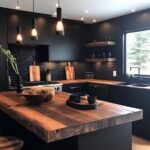
1. Rustic Wood Island

A distressed painted base with a thick natural wood top gives you storage and seating without the cost of built-in cabinetry.
I would check that the base is real wood or MDF that can take paint touch-ups, since a working island gets nicked fast.
The butcher-block top needs oiling every few months, but it gains character where a stone top would just stain.
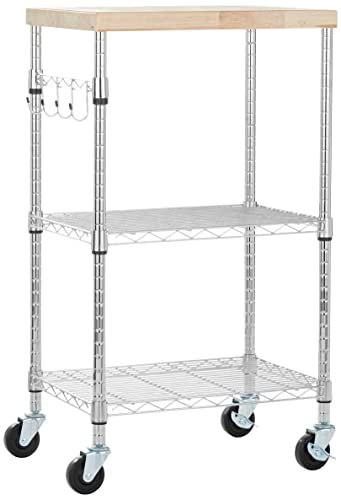
Kitchen cart for a microwave, mini fridge, or convenient extra storage space

Solid wood top for increased durability and longevity contrasts with the clean white finish seamlessly; 50lbs (shelf); 5lbs (drawer); Assembly Required Yes; Capacity 100lbs (top); Warranty 30 days limited; Construction Material Solid wood; Country Of Origin Thailand; Dimensions 20?W x 40?D x 36.5?H

Spacious Worktop & Ample Storage: This 55-inch kitchen island features a large rectangular worktop for meal prep, plus a 2-tier shelf. Keep cookware, spices, or dining essentials organized—ideal for cluttered kitchens
2. Open Shelving

Maple shelves sealed with matte polycrylic, 9.5 inches deep and 1.75 inches thick, keep dishes within reach and force you to edit what you own.
These work best when you have matching dishes worth displaying and a cabinet elsewhere for the mismatched stuff you actually use daily.

6-tier Large Capacity: With a size of 23.6*10.2*63.4 inches (60*26*161cm), this 6-tier bamboo rack has a large capacity to hold most of your kitchenware, toiletries, books, plants, and so on, which is a perfect storage shelf unit that can meet your daily storage and display needs.
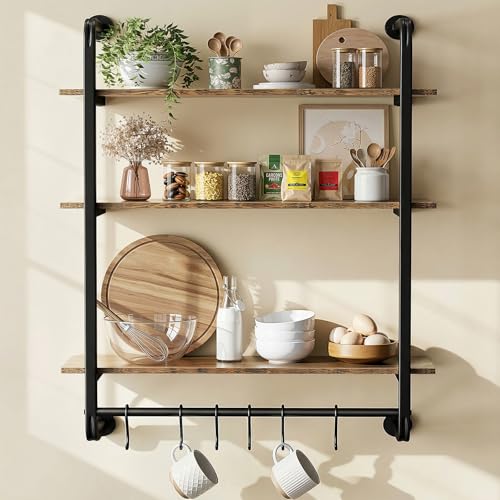
𝗥𝗲𝘁𝗿𝗼 𝗜𝗻𝗱𝘂𝘀𝘁𝗿𝗶𝗮𝗹 𝗦𝘁𝘆𝗹𝗲: Kssiaz 3-tier industrial pipe shelving has a unique water pipe designgive your home a vintage feel. Great for displaying souvenirs, collections, photos, books, trophies, food containers and tableware. As a bookshelf in the farmhouse or living room or as wine rack in the bar, any other where you want to install.

[Widely Used]- This industrial design floating shelf is constructed of heavy duty wrought iron pipe and chunky P2 particle boards, which will be an attractive decoration for modern and retro home style. Suitable for living room, bathroom, bedroom, kitchen, coffee bar, wine bar, restroom, garage, laundry room and farmhouse
3. Stone Countertops

Travertine or limestone with its natural pitting reads warmer than polished granite but needs sealing more often, sometimes twice a year in a busy kitchen.
I would check whether the slabs come from the same lot; variation between bundles is real and the backsplash needs to match the counter, not fight it. The fluted wood cabinets shown keep the overall look from feeling too lodge-like.

Authentic Travertine Aesthetics: This countertop contact paper features a sophisticated cream beige travertine stone pattern with subtle gold veins, linear veining, and a smooth matte finish, bringing natural elegance and a modern aesthetic to your home décor
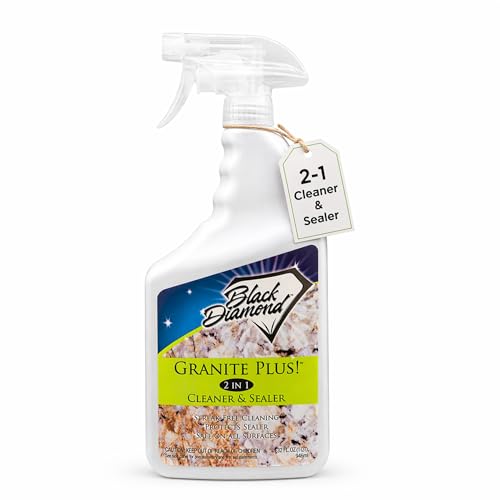
2-in-1 Cleaner and Sealer: Cleans and protects in one step; removes dirt and buildup while helping maintain the protective sealer barrier on stone surfaces with regular use

𝐍𝐚𝐭𝐮𝐫𝐚𝐥 𝐓𝐫𝐚𝐯𝐞𝐫𝐭𝐢𝐧𝐞 𝐌𝐚𝐫𝐛𝐥𝐞 𝐃𝐞𝐬𝐢𝐠𝐧: Elevate your space with the luxurious look of authentic travertine limestone. Featuring warm beige tone with realistic stone textures, this contact paper perfectly mimics premium natural marble to give your tired kitchen countertops, bathroom vanities, or furniture a high-end, sophisticated upgrade at a fraction of the cost
4. Pendant Lights

2 large domes in antique brass draw the eye down to where people gather without blocking sightlines across the room.
I would hang pendants high enough that tall people do not take a knock on the head. The metal finish should relate to your faucet and cabinet hardware, not match exactly but speak the same language.

Note: The color of this pendant light may be darker than shown in the picture. It features an antique brushed dark gold finish.

【Coppper Pendant Light】 - This matte black metal and wood pendant light exudes an artistic vibe, elevating the ambiance of your kitchen. It serves not only as a pendant lamp but also as a captivating decoration for dining room and kitchens. Its timeless appeal effortlessly complements any style

【 Multi-Style Modern Pendant Lights 】 Bold statement dome chandelier features a full antique brown tone—from shade to rod to canopy—creating a warm, artisanal look that flows effortlessly into contemporary, farmhouse, vintage, rustic, retro, and transitional interiors
5. Exposed Wood Beams

Real structural timber adds ceiling detail you cannot fake with hollow box beams, though the weight needs engineering confirmation before anyone strips a ceiling.
I would keep the wood tone within 2 shades of your flooring or it floats like an unrelated installation. Painted beams read cottage, stained beams read ranch.

Complete 8-foot Coverage for Versatile Installations: this set includes two 48-inch beams, offering a combined 8 feet of coverage; Ideal for ceiling spans, entryways, hallways, or accent walls, you can install them side by side for a continuous run or use them separately for creative, staggered layouts; This flexibility allows you to tailor the faux wood beams for ceiling projects to fit various architectural spaces without needing custom sizing

Item Description: Heritage Timber Faux Wood Mena 3-Sided (U-Beam) Beam 5 1/2"W x 7 1/2"H x 48"L, Natural White Oak Finish

6. Wood Countertops

Light wood surfaces against dark painted cabinets give you a workspace that quiets the room and shows fewer crumbs than black stone.
I would use maple or oak for hardness, not pine, and keep a cutting board handy because knife marks darken with moisture.
The open brick and shelving nearby mean this kitchen already accepts some patina; wood counters fit that bargain rather than fighting it.

Versatile Appearance: Elevate your space with this rolling kitchen island from the SIREN Collection, showcasing framed recessed doors and smooth round knobs for a refined touch. Pair it with matching furniture for a coordinated style
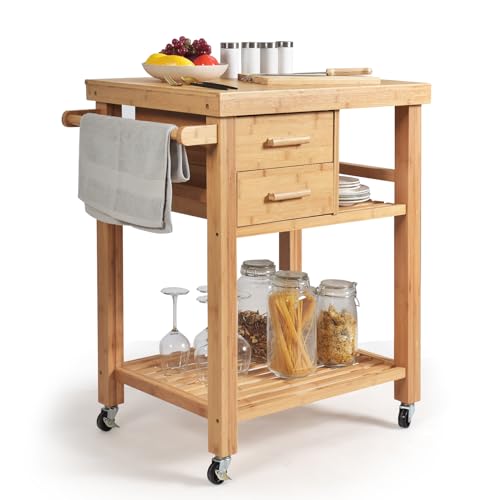
🍗[Multiple Storage Options]: A large countertop provides ample space for the preparation of food ingredients. Two deep drawers with convenient handles provide additional hidden storage for utensils, napkins, and other small items. In addition, the open shelves offer versatile organizational options to keep all of your essential cooking supplies within easy reach.

Kitchen Cabinet with Charging Station: This kitchen island with a 15"D x 26"W island top offers you the additional space for your delicious meals. Your kitchen essentials can find the right place to stay and the power strip including 3 sockets and a 59" long cord facilitates your free charging of various kitchen appliances
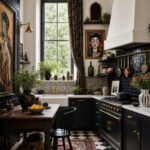
7. Farmhouse Table

A turned-leg table in light oak anchors the kitchen as both prep surface and dining spot, no separate room required.
I would check that the legs clear your toe kick by a couple of inches; a table that traps your feet gets shoved against a wall and loses its purpose.
The visible grain and simple joinery forgive a few dings from daily use, which matters when the table sees breakfast, homework, and dinner in the same day.
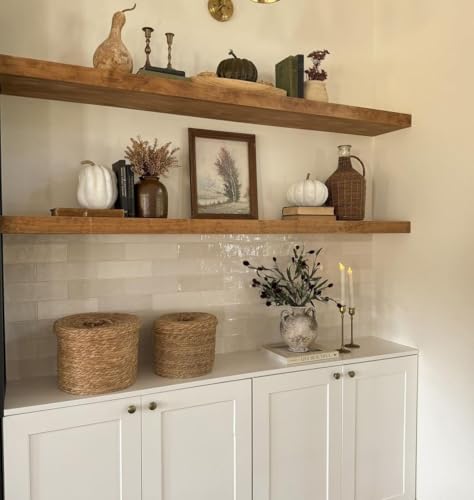
【Real wood 】These floating shelves for wall is made of 100% natural solid wood with a non-toxic and harmless varnish coating. This 36 inch floating shelves has its own wooden node and grain.The texture is very clear,The smooth surface is easy to clean.

Drawer dividers are the perfect solution to organize open drawers to keep things from shifting.

【Matrial】Industrial pipe shelving features a sturdy metal pipe brackets ,Painted black matt, Hardware Only,No plank Included.
8. Farmhouse Sink

The apron front puts the basin right at the edge, so you stand closer and spill less water on the floor.
I would confirm your base cabinet can take the weight; fireclay sinks run heavy empty, and the cabinet front gets cut away to expose the apron.
A bridge faucet needs two holes, not the standard one, so check your deck before ordering. A side sprayer is worth the extra drilling if you wash produce straight from the garden.

Design & Aesthetics: This countertop contact paper features a realistic off-white and cream travertine marble stone pattern with linear veining and subtle pitted details to instantly upgrade home decor and DIY projects
Design & Aesthetics: This countertop contact paper features a realistic off-white and cream travertine marble stone pattern with linear veining and subtle pitted details to instantly upgrade home decor and DIY projects

100% Natural Limestone: this sponge holder and tray set is crafted from 100% real natural limestone, featuring natural veining, tiny pores and subtle color variations; Every piece is one‑of‑a‑kind, delivering warm upscale stone texture for your kitchen or bathroom countertop
9. Subway Tile Backsplash

White ceramic subway set in running bond is cheap per square foot and installs over a weekend with premixed mastic.
I would use sanded grout in a light gray, not white; white grout on white tile reads sterile, and gray hides the cooking grease that collects behind ranges.
The open shelves nearby mean this backsplash actually gets seen, unlike the wall behind upper cabinets.

【INDUSTRIAL AND FARMHOUSE STYLE】- This pendant island lighting features a rustic vintage style with a curved lampshade and dome shape, can lighting and decor any kitchen island, dining room,or living space.

Includes one 6-inch stem and two 12-inch stems, allowing for a customizable hanging length up to 30 inches to accommodate various ceiling heights and design preferences.

Bulb Type: 1 x Max60W x E26bulbs(Bulb not included)
10. Two-Tone Cabinets

White uppers and wood lowers ground the room where all-white drifts toward clinical. I would keep the wood tone consistent between lowers and island, even if the grain differs; 2 wood species fighting each other read as mistake, not choice.
The quartz counters bridge both colors, so the transition lands where the eye already rests.

Item Description: Heritage Timber Salvaged Timber Faux Wood Beam, 3-Sided (U-Beam), 3 1/2"W x 3 1/2"H x 48"L, Natural White Oak Finish

Item Description: Heritage Timber Faux Wood Mena 3-Sided (U-Beam) Beam 3 1/2"W x 3 1/2"H x 48"L, Primed Tan Finish

Dimensions: 5-1/2 in. Width x 7-1/2 in. Height x 120 in. Length
11. Vintage Dishes

A few pieces with age, not a full set, give the kitchen history without the pressure of matching.
I would stick to items you can use; monogrammed plates on a windowsill work, but a display-only collection becomes dusting homework. The brass lantern and flour tin shown mix materials and eras, which keeps the look collected rather than staged.
12. Pass-Through Kitchen Window

An awning window hinged at the top opens outward without blocking the counter inside or the patio outside. The counter depth on both sides should match so plates slide across without a lift.
13. Glass-Front Cabinets

Tall cabinets with glass doors and interior lighting turn dish storage into display without the dusting burden of fully open shelving.
I would wire the lights to a wall switch, not a door hinge; bulbs that flicker every time you reach for a plate get bypassed and left dark.
Open shelves above the lower drawers keep daily dishes within arm’s reach; the glass-front upper cabinets are reserved for the pieces that actually look good on display.
I would keep the frame color consistent with surrounding cabinetry; a mismatched glass cabinet reads as afterthought rather than intentional gallery space.
If your dishes are mostly mismatched, stick to solid wood doors. Glass rewards restraint, not clutter.
Incorporating Natural Elements
Natural materials carry the farmhouse look, but the specific material matters more than the category.
Flanigan’s approach of stained wood cabinetry with natural stone surfaces and reclaimed beams gives you a framework: pair one dominant wood tone with one stone, then stop.
Wrought iron and unlacquered brass work as accents because they age; lacquered metals stay shiny and read as new.
I would bring in branches or cut flowers weekly rather than maintaining permanent greenery that dries out. The styling should look found, not arranged.
Wood islands, stone counters, and exposed beams each get their own entry, but flooring ties them together and needs its own spot.
Natural stone flooring ties the room to the rest of a farmhouse if you have it elsewhere in the house; otherwise, wide-plank wood floors in a tone that relates to your cabinetry keep the eye moving without a jarring transition.
Choosing Color Schemes
Soft color does not mean white by default. Carney’s pine green works because it reads as a neutral in mountain light; in a kitchen with smaller windows, that same green turns dark by afternoon.
I would test paint on the wall that gets the least daylight and live with it before committing.
Two-tone cabinets in white and wood already have their place, so wall color is the open ground.
Warm off-whites with gray undertones stay cleaner-looking than yellow-based creams, which can read as dingy under LED bulbs. If you want a color, sage and dusty blue both recede enough to let your dishes and wood tones advance.
French doors or large windows are the priority for brightness before paint color is considered. A north-facing kitchen with generous glazing still feels airy; a south-facing room with small windows fights its paint no matter how pale.
Lighting Considerations
Natural light comes first, then you layer fixtures to fill what is missing. Pendant lights over islands and work areas are covered, which leaves sconces, chandeliers, and under-cabinet strips.
Sconces mounted on walls flanking a window or flanking a range hood give you the vintage feeling of candlelight without the fire hazard.
I would choose a style with a visible filament bulb and a shade that directs light downward; bare bulbs in a kitchen create glare on work surfaces.
A wrought iron or wood chandelier makes sense only where ceiling height allows it; in a low kitchen ceiling, it becomes an obstacle.
Under-cabinet lighting is the practical addition most people skip, then regret at 10 PM when the overheads feel too bright for the room’s mood.
LED strips warm in color temperature, around 2700K, keep the evening feeling consistent with vintage fixtures rather than clinical.
Antique brass pendants with a wrought iron chandelier and aged bronze sconces works if the tones share a warmth; mixing cool and warm metals in the same sightline reads as accident.
Frequently Asked Questions
Is farmhouse style still in for 2026?
Farmhouse kitchens remain popular because the look adapts to any kitchen, modern or traditional, and reads as homey rather than dated.
The style works as a full design or as accents brought into an existing space through cabinetry, beams, or decor.
I would focus on specific materials rather than the label: natural wood, stone, and aged metals carry the feeling without locking you into a trend that might feel stale later.
What is a modern farmhouse kitchen?
A modern farmhouse kitchen keeps the warmth of a country kitchen, but pairs it with cleaner lines and finishes that hold up to daily use.
It sits between old and new: traditional farmhouse goes heavy on wood surfaces and earthy tones, while the modern version mixes materials for balance and sticks to warmer neutrals with darker accents.
The key is livability, not theme, so natural stone counters, stained wood cabinets, and vintage-inspired hardware all work without the space feeling like a set.
What are some ideas for a modern cottage kitchen?
Modern cottage and modern farmhouse share DNA: both lean on natural materials, light, and a collected rather than staged feeling.
Start with light wood cabinetry and natural stone surfaces, then add antique-inspired hardware and wrought iron or unlacquered brass accents that age over time.
Branches or cut flowers styled loosely keep the connection to nature without the maintenance of permanent greenery that dries out and collects dust.