

Yes, most movers absolutely disassemble furniture. They’ll tear down platform beds into slats and headboards, pop legs off dining tables, and flatten shelving units, usually with their own tools in 15-30 minutes for a basic bed. Local moves sometimes include this service free, but long-distance moves often charge extra. They won’t touch wall-mounted TVs or fragile antiques, so call ahead and confirm what’s covered. They bag every screw, tape it right to the frame, and reassemble without leftover bolts. Prep your furniture in advance so your move doesn’t turn into a hardware store scavenger hunt.
Do Movers Disassemble and Reassemble Furniture?
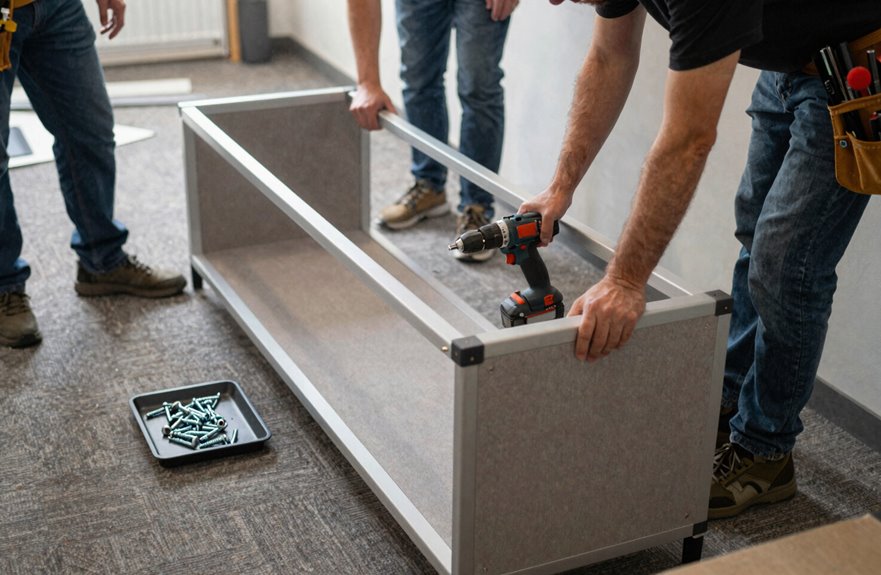
How do you even get that king-size platform bed through a doorway? I’ve stared at that exact problem, measuring tape in hand, muttering about geometry I barely remembered from eighth grade. This is where furniture movers absolutely save your sanity and your doorframe trim.
Most movers disassemble common pieces, beds, dining tables, desks, shelving units, breaking them down into manageable components. That platform bed? The headboard, slats, and frame separate and slip right through. I’ve watched pros knock out a bed in fifteen minutes flat, tools already in hand.
They reassemble everything at your new place. Bed frame tightened, table legs secured, stability checked. You won’t be hunting mysterious screws at midnight or wondering why you have parts left over.
Just confirm they’ll bring tools for anything non-standard, and you’re set.
What Furniture Will Movers Disassemble?

What exactly can you hand over to the pros with confidence? Most movers disassemble furniture you’d never tackle solo: beds broken into interlocking frames, mattresses hauled separately (your back will thank you), dining tables with removable legs, desks, shelving units, and bulky dressers. Furniture disassembly isn’t universal though. Cabinets lose drawers, bookcases shed shelves, and modular pieces flatten like origami. Moving company requirements vary significantly. Some include disassembly in their base service, others charge extra, and timing shifts everything. Call ahead to confirm what’s included, as unexpected fees can derail your budget. Verify details early to avoid surprises and understand exactly what your moving company will handle.
What Furniture Won’t Movers Touch?

I learned the hard way that movers won’t touch my wall-mounted TV, that gorgeous, tilting beast I’d spent an hour perfecting with all those hidden cables snaking through the drywall like a technical system. Fragile antiques, too, are basically off-limits, which broke my heart when they side-eyed my grandmother’s wobbly, gilded mirror with its foxed glass and carved cherubs. One wrong move and that patina’s gone. Call a handyman or an art specialist for those pieces, because your movers will thank you, and your sanity will too.
Wall-Mounted Items
Before your movers arrive, you’ll want to grab a screwdriver and face the reality: that gorgeous floating shelf you spent three weekends perfecting will not go anywhere with the crew. Most movers won’t touch wall-mounted items, TVs, shelves, built-ins, because one wrong move and your drywall looks like abstract art (not the good kind).
I learned this the hard way. When I moved last spring, I assumed they’d disassemble my bracket-heavy entertainment center. They didn’t. Wall-mounted stuff requires special liability coverage, and most companies exclude it entirely. Some charge extra, others want you to hire a handyman.
Call ahead and ask specifically about your mounted TV, those industrial-chic pipe shelves, anything bolted down. Clarify who removes the brackets, who packs the electronics, what’s actually covered. You’ll feel better knowing the details upfront rather than discovering surprises on moving day.
Fragile Antiques
Picture your grandmother’s mahogany vanity, the one with those tiny brass pulls and wobbly left leg that’s been “fine” since 1987. Movers feel that same panic when handling fragile antiques like this. They typically stay whole.
Disassembly risk on these heirlooms is significant. That dovetail joint, dry as dust, will crumble. Glue older than most people alive today isn’t worth the gamble. Most movers decline the job because insurance exclusions often leave you unprotected if Grandma’s treasure gets damaged.
Wall-mounted mirrors, glass shelves, and fussy hardware present the same problems. Ask movers about their policies before move day. Some professionals bring specialists and extra coverage, but that requires special arrangement and additional cost.
Your eclectic treasures need proper protection. Bubble wrap is essential here.
Is Furniture Disassembly Included in Moving Quotes?

How exactly do moving companies handle disassembly in their pricing? Inclusion isn’t always obvious. For local moves, they often bundle it right in: bed frames, tables, shelving with no surprise fees. For long-distance moves, that’s where separate charges apply, billed by time or weight.
Here’s the breakdown:
| Move Type | Disassembly Pricing |
|---|---|
| Local | Usually included in base rate |
| Long-distance | Often billed separately |
| Standard items | Typically covered |
| Special fasteners | May cost extra |
Liability is essential. When movers handle the disassembly, their coverage protects you. Self-disassembly can void that protection. Ask your moving company directly what disassembly services are included in your quote and what additional costs may apply.
Should You Disassemble Furniture Yourself or Hire Movers?
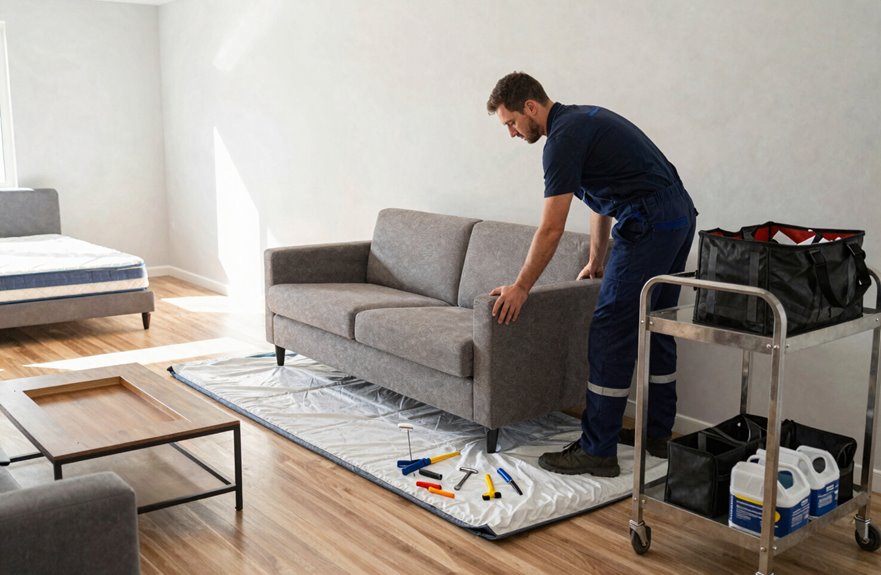
Why wrestle with a stubborn hex bolt at midnight when you could be sipping wine on your couch? I’ve been there, friends. Knees aching, Allen wrench slipping, questioning every life choice that led me to this IKEA nightmare.
Movers bring on-site tools, expertise, and muscle memory I’ll never have. That disassembly cost is often worth every penny when they whisk your bed frame apart in minutes, not hours. Reassembly service means your Saturday morning belongs to you again, not deciphering mysterious leftover screws.
Sure, I’d save a few bucks doing it myself. But I’ve learned from experience. Stripped screws, wobbly legs, and that embarrassing moment when the headboard wouldn’t fit through my doorway taught me valuable lessons. Sometimes calling in the pros eliminates frustration and prevents costly mistakes.
How to Prep Furniture for Mover Disassembly
I’ve learned that prepping furniture for mover disassembly isn’t about doing their job. It’s about making sure nothing gets lost, broken, or misunderstood. First, I always walk through my space with the team lead, pointing out exactly which pieces need coming apart: that wobbly vintage desk with the weird screws, the platform bed I definitely can’t rebuild myself. Clear communication upfront prevents that awkward mid-move realization. Then I grab ziplock bags and masking tape, stripping drawers and bagging every hex key, cam lock, and mysterious bracket I find. You don’t want to hunt for that one specific bolt while surrounded by cardboard boxes at midnight. Finally, I double-check their service scope in writing. I’ve been burned before assuming they’d handle my wall-mounted floating shelves; they wouldn’t, and my drywall paid the price.
Clear Communication First
What happens when you assume movers know exactly which IKEA nightmare you want taken apart? Chaos, my friend, pure chaos. I’ve learned this the hard way, and I’m here to save you from my mistakes.
Clear communication isn’t just nice; it’s everything. I always call moving companies at least a week ahead, walking through each piece that needs disassembly like I’m showing off my weird, wonderful collection. That vintage platform bed with the hidden bolts. The modular shelving unit I “definitely assembled correctly.” I describe them all, down to the wobbly leg and the stuck drawer, because movers aren’t mind readers, and I want us on the same team.
I confirm they’ve got tools for every disassembly job, and I mark each item with bright tape so there’s no morning-of confusion. This prep means fewer headaches, faster work, and movers who actually smile when they see your place.
Organize Small Hardware
The first time I watched a mover hold up a fistful of mystery screws and ask, “These yours?” I knew I’d messed up in a way that would haunt me for three moves. Never again. Now I’m obsessed with hardware organization during disassembly prep, and it’s become my system for staying on top of moves.
Here’s my bulletproof system:
- Snack-size baggies for every screw, bolt, and Allen wrench (label them.)
- Masking tape those baggies directly onto the furniture piece they belong to; no mix-ups.
- Sharpie the furniture name on each bag, because “weird metal thing” isn’t helpful at 11 PM.
Your movers will appreciate this level of organization. It means efficiency. That bed frame you love will have its hardware stay with it, reassembly becomes straightforward, and you’ll join people who execute moves without losing parts.
Confirm Service Scope
Once you’ve got your hardware sorted, it’s time to confirm that your movers are actually allowed to take that bed apart. Not every moving company handles disassembly. Call ahead and double-check their service scope covers your specific pieces: beds, tables, and any non-standard furniture. Ask if they bring tools, since disassembly for a basic bed runs 15–30 minutes, and non-standard fasteners need advance notice.
Clear space around everything, tape small bags of screws right to frames for hardware labeling, and mention glass parts. This keeps the process organized and prevents moving day surprises.
How Do Movers Keep Track of Screws and Parts?
How do movers keep track of screws and parts so they don’t end up haunting you at 2 a.m.? I’ve learned through experience.
When I disassemble your grandmother’s ornate bed frame or that mid-century modern table you scored at a flea market, I treat every hex key and cam lock like treasure. Here’s my system:
- I strip screws straight into labeled bags, never my pockets (learned that lesson after washing my favorite jeans with a handful of hardware)
- I tape those labeled bags directly to the furniture legs, so reassembly happens without frantic searching
- I snap photos before touching anything, because your “simple” IKEA hack often has surprises
This keeps everything organized through the chaos. Your pieces arrive intact, and nobody searches for lost dowels.
Who’s Liable for Lost or Damaged Furniture Parts?
So here’s the million-dollar question that keeps me up at night: what happens when that bag of cam locks I’ve taped to your dresser leg goes missing somewhere between Brooklyn and Boston. I’ve seen it happen, and it’s not pleasant.
Here’s the deal on liability: when I handle your disassembly, I’m responsible for those parts. Lose a bracket. Scratch a finish. That’s on me, and I’ll make it right. But if you’ve already taken things apart yourself, coverage gets fuzzy fast. Those damaged parts from your DIY attempt are probably not my responsibility.
I always tell people to let me do the disassembly. I’ve got the right tools, the ziplock bags, the labeling system. We’re in this together, and I want your bed reassembled without that wobble.