
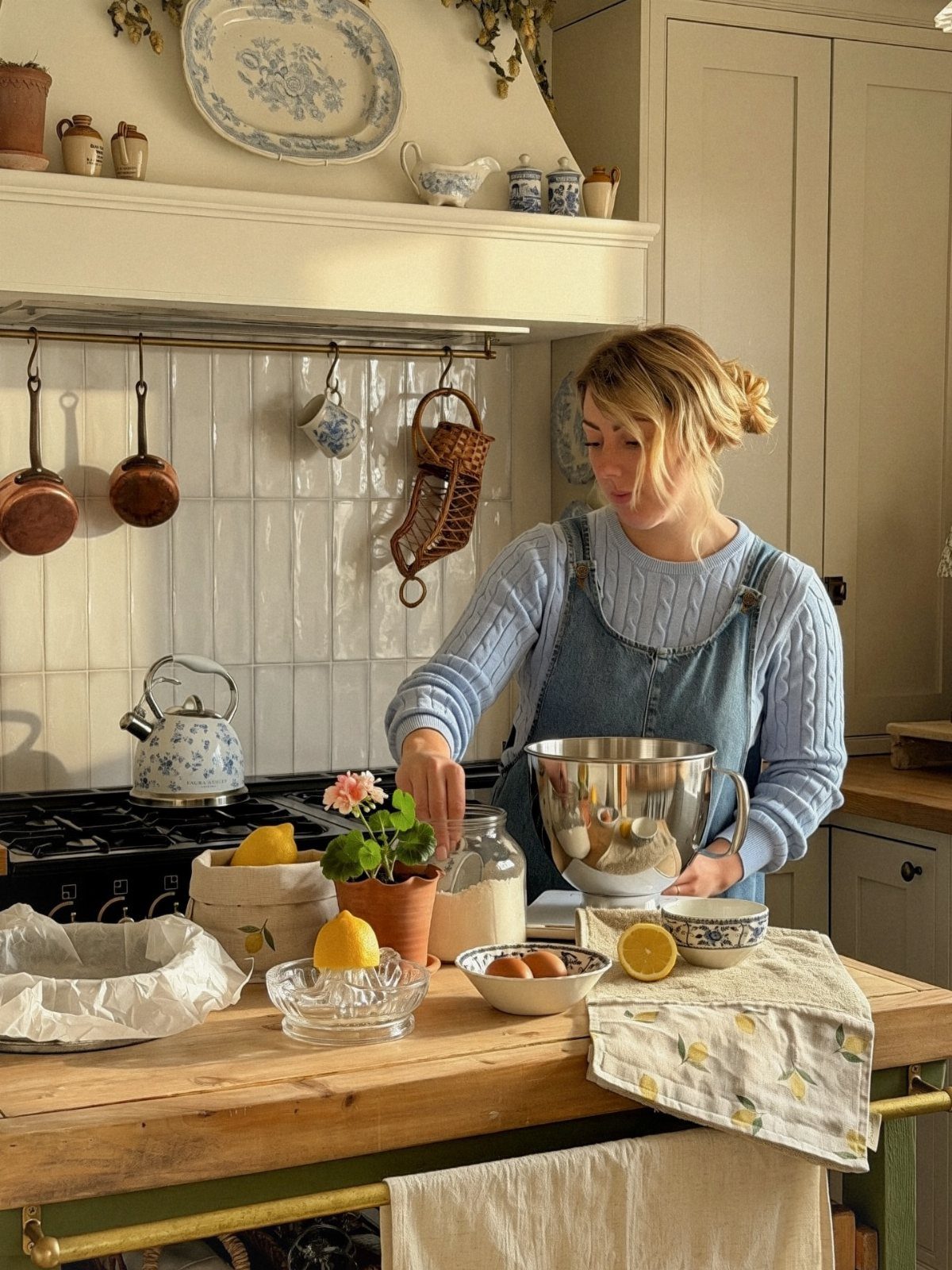
An English country kitchen can run from a weekend of painting cabinets sage to a full renovation with exposed stone and a range cooker, and the deciding factor is whether you own the walls or just need your deposit back.
Renters will find the gingham fabrics and herb jar displays that lift a space without a landlord’s permission; homeowners get the structural moves like stripping plaster to stone and installing a range cooker that needs measured width and reinforced floors.
The olive green range cooker with brass hardware, at a width that demands cabinetry built around it from the start, sits at the far end of that scale.
1. Farmhouse Sink

A farmhouse sink is the single piece that signals "country kitchen" faster than anything else you can install. The apron front puts the basin on display, and the depth handles pots that would crowd a standard basin.
What I would check before ordering: cabinet height. The apron drops lower than a conventional sink base, so your existing cabinet may need modification or replacement.
Fireclay gives the truest vintage look and stands up to decades of use, though it chips if you drop a cast-iron skillet from counter height.
Porcelain enamel on steel costs less and weighs less, which matters if you are installing it yourself on a weekend.
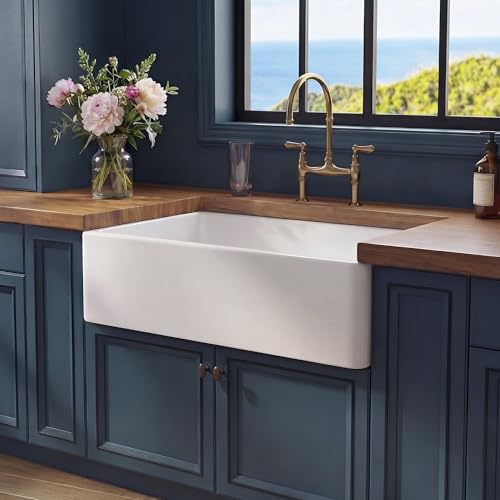
【Made of Fine Fireclay】Miuara farmhouse sink 30 inch is made of fine fireclay fired at extremely high temperature above 2600℉ for 26 hours,it’s very hard and sturdy.And the solid core construction makes the fireclay farm sink superior strengthen and durable to withstand heavy use, which is highly resistant to stain, crack and scratch. Miuara white apron sink is classic and gorgeous!

【Made of Fine Fireclay】Miuara farmhouse sink is made of fine fireclay fired at extra high temperature above 2600℉ for 26 hours, it’s very hard and sturdy. And the solid core construction makes the fireclay sink drop in superior strengthen and durable to withstand heavy use, which is highly resistant to stain,heat,crack and scratch. Miuara farm sink is classic and gorgeous!

【White as jade,CUPC Certified】 The white farmhouse sink 27 inch adopts a high - gloss glazed surface process. Its surface is as warm and translucent as jade, combining the transparency of glass with the delicacy of ceramics. The white farm sink adds a touch of high - end aesthetic atmosphere to the kitchen, for Kitchern, Laundry Room. At the same time, all aspects have passed CUPC certification standards, making use more reassuring!
2. Farmhouse Table

The pine farmhouse table with turned legs works as both dining surface and extra prep space when the counters fill up. In a country kitchen, one piece doing two jobs is usually the right call.
Before buying, measure your traffic paths. A farmhouse table needs breathing room.
Pull it far enough from walls and islands that someone can squeeze behind a seated guest without asking the whole row to stand. Turned legs look decorative but collect crumbs at the joints; a quick vacuum weekly keeps them presentable.
Pine dents easily, which I consider part of the charm, though if you want pristine surfaces after year one, oak or ash holds up better to daily use.

Crinkled Ruffle Edge: the 36 Inch long brown white plaid cafe curtains has a delicate ruffle edges, bringing soft and elegant visual effects; Precise stitching enhances fabric texture and decorative details, creating a gentle and romantic style for home windows

100% COTTON MATERIAL: Enjoy our soft, durable, and absorbent towels, perfect for everyday kitchen tasks.

3. Shaker-style Cabinets

Recessed-panel Shaker cabinets carry no ornament beyond the frame itself, which is exactly why they read as timeless rather than dated. Cream keeps the room bright without the starkness of pure white.
Brass hardware against cream is a combination I would pick every time; it warms up faster than nickel or chrome in morning light.
Marble countertops and backsplash demand regular sealing, and acidic spills left sitting will etch the surface. If that maintenance sounds like a burden, quartz that mimics veining has improved to the point where I no longer rule it out.
The integrated refrigerator paneling keeps the wall line continuous, which costs more than standard installation but removes the visual interruption of stainless steel.

Value Hardware Set: this set includes 10 cabinet knobs and 5 drawer pulls, providing a unified look for your furniture; Ideal for full room upgrades, it eliminates the need for separate purchases; A complete cabinet hardware set to refresh your kitchen or bedroom in one go

STYLE: Easily update your kitchen and bathroom cabinets or furniture with our casual cabinet hardware collection.

Fluted Mushroom Crown: Precision-etched vertical grooves create micro-textured grip (+32% torque vs smooth knobs) while scattering light like vintage cathedral hardware.
4. Open Shelving

2 wooden shelves on white subway tile replace upper cabinets entirely in the visible stretch, which opens the room up but commits you to keeping dishes orderly.
I would not install open shelving as the only storage in a small kitchen; you need somewhere to hide the mismatched plastics and emergency appliances.
White dishes and mugs read as intentional because they match; mixing colors and patterns on open shelves tends to look accidental rather than collected.
Wood brackets or floating hardware rated for heavy loads are non-negotiable, since ceramic dinnerware is heavier than it looks.
A small trailing plant or 2 breaks up the geometry without adding clutter; more than that and you are tending a windowsill garden every time you reach for a plate.

Five Piece Gas Stove Nozzle: With this brass gas stove nozzle, you receive a five piece set and a complete replacement kit, so no separate purchasing is needed. This gas stove nozzle enables stove adaptation for convenient daily cooking and hassle free maintenance
Stable Gas Stove Nozzle: This gas stove nozzle ensures stable kitchen performance and reliable gas supply, via high-temperature brass. The nozzle's BBQ grill-compatible design reduces replacement hassle and supports safe daily usage for home cooking and outdoor grilling

Triple strength control: this stove switch control knob provides precise fire levels, from simmer to full blaze, enabling versatile flame adjustment for a variety of recipes on every gas cooking knob,ignition control knob,medium pressure burner knob
5. Earthy Hues on Walls and Accents

Sage green cabinetry against floral wallpaper and a live-edge wood island hits the English country note without drifting into theme-park territory. The palette works because nothing competes for attention; each element stays in the same muted register.
If you are renting or hesitant about wallpaper, paint the cabinets sage and keep walls neutral. The green carries most of the mood, and you can swap it back to white when your lease ends or your taste shifts.
Live-edge wood needs sealing and will move seasonally, opening hairline gaps at the wall; I would use it on an island rather than a perimeter counter where water exposure is constant.
A real bucket by the door for garden cuttings earns its space all summer.

PROFESSIONAL-GRADE SEALER: For use on natural and engineered countertop stone surfaces including granite, quartz, marble and more

For use on granite, marble, quartz and all other natural stones

PRECISE SIZE FOR YOUR PROJECT – Measures 37 inches wide and 4 inches high. Please measure your countertop and check the available installation space before ordering to ensure a proper fit.
6. Vintage Furniture

An antique long table with turned legs repurposed as an island gives you storage, workspace, and a story in one piece. New and old can share a room without fighting when each piece knows its job.
What I would verify before buying: height.
Standard counters run high; many antique tables sit lower, which is comfortable for dining but murder on your back after any stretch of chopping. A raise with bun feet or a custom base fixes it, though you lose some proportion.
Check that the top is food-safe or plan to seal it; old finishes may contain lead, and a cutting board over the surface is simpler than testing.
Turned legs limit knee space on the long sides, so I would orient this as a workspace island rather than a breakfast bar.

SUREFIRE FIRECLAY BUILT TO LAST: Fired to 2100 degrees F and coated with a dense, protective proprietary finish that resists chipping, cracking, and staining. Every Parker sink is backed by the Sinkology Everyday Promise, your assurance every day, every year, for life.

【Made of Fine Fireclay】Miuara bone farmhouse sink is made of fine fireclay fired at extremely high temperature above 2600℉ for 26 hours, it’s very hard and sturdy. And the solid core construction makes the fireclay sink drop in superior strengthen and durable to withstand heavy use, which is highly resistant to stain,heat,crack and scratch. Miuara farm sink is classic and gorgeous!

【Made of Fine Fireclay at 2600°】Miuara black farmhouse sink 30 inch is made of 100% fine natural fireclay fired at extremely high temperature above 2600℉ for 26 hours,it’s very hard and sturdy.And the solid core construction makes the black farm sink superior strengthen and durable to withstand heavy use, which is highly resistant to stain,heat,crack and scratch. Miuara black apron sink is classic and gorgeous!
7. Exposed Beams

Vaulted ceilings with exposed beams add architecture that new construction usually fakes with hollow box beams.
Real structural timber carries weight and history; the stain grade matters more than the species, since oak and pine both darken toward the same honey tone under the right finish.
Beams drop the visual plane noticeably, and in a standard room with low ceilings that can feel oppressive rather than grand.
Existing drywall comes down, electrical relocates, and insulation may need reworking; budget for a contractor unless you have experience with load-bearing elements.

Ample Size and Quantity: measuring 18 x 28 inches, this set of 2 hand towels for kitchen provides generous coverage and drying surface; Ideal for handling large tasks or multiple uses; Note: not a thick terry towel, this is a classic flat-weave gingham towel with ruffles for farmhouse charm

Ample Size and Quantity: measuring 18 x 28 inches, this set of 2 hand towels for kitchen provides generous coverage and drying surface; Ideal for handling large tasks or multiple uses; Note: not a thick terry towel, this is a classic flat-weave gingham towel with ruffles for farmhouse charm

【Package】One panel per package. Each ruffled valance measuring 55 inch width by 20 inch length, features a beaded Tab top to coordinate with any curtain rods, easy to install.
8. Range Cooker
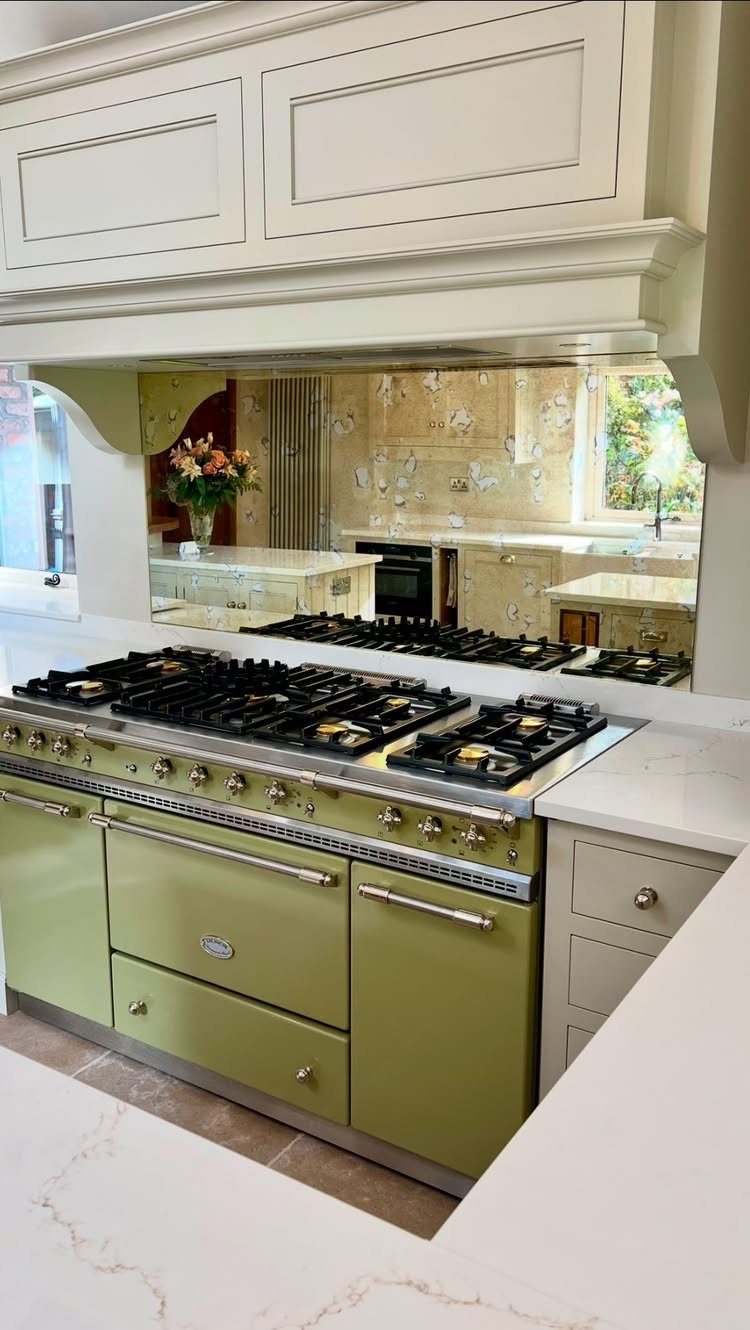
An olive green range cooker with brass or silver hardware becomes the kitchen’s focal point without trying. The color reads as intentional against cream cabinets, and the mantel hood above it frames the whole composition like a hearth.
What I would measure first: the opening width. Range cookers run wider than standard slots, and the surrounding cabinetry must accommodate that from the start.
Brass details need occasional polishing if you want them bright; let them tarnish and they shift toward a softer, more lived-in look that suits the style.
The antiqued mirror backsplash behind it catches light without the glare of plain mirror; install that after the cooker is in place, since alignment matters.

WHAT YOU WILL GET: Each package contain 6 cabinet handles, and each handle comes with 2 sets of mounting screws.
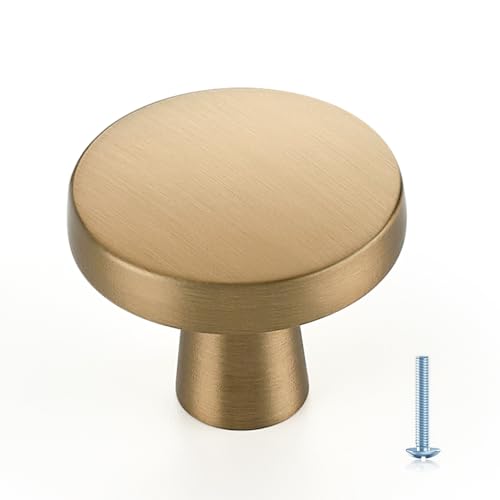
365-DAY TRIAL PERIOD: We're confident you'll love these cabinet handles, so we're offering a 365-day trial. If they don't meet your satisfaction, return them for a replacement.
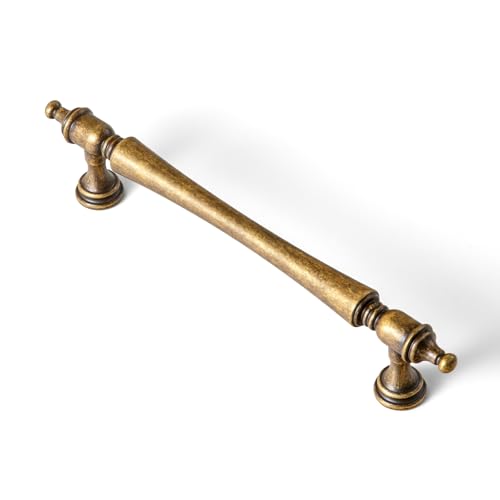
Classic Vintage with European Influences:Elevate your space with Goo-Ki’s antique brass pulls, featuring ornate tapered designs, sculpted detailing, and decorative finials for a grand, old-world aesthetic. Perfect for Victorian-inspired kitchens, traditional furniture, or farmhouse pantries, these handles blend opulence with rustic charm.
9. Larder Cupboard

A freestanding larder cupboard gives you pantry storage with the proportions of furniture rather than built-in cabinetry.
A pine larder cupboard between dining and prep zones is where I would place it: close enough to grab flour mid-recipe, not so close it blocks workflow.
Paneled doors hide clutter better than open shelving, and the drawer base keeps onions and potatoes in dark storage where they last longer. Check floor level before buying; old kitchens settle unevenly, and a tall unit rocks on a slope.
Adjustable feet or a thin shim under one corner fixes it without calling a carpenter. If pine feels too casual for your space, painted hardwood reads more formal without losing the country reference.

Elegant appearance: the simple yet stylish design enhances the overall look of your kitchen, providing both functionality and aesthetics,range hood hanging plate,hanging bracket for range hood

Adjustable range hood bracket--made of material, no harm and safe to use,Cooker Hood Fixing Bracket

‑ Lets you replace aging nozzles to stabilize flame output while you operate household gas stoves
10. Exposed Stone
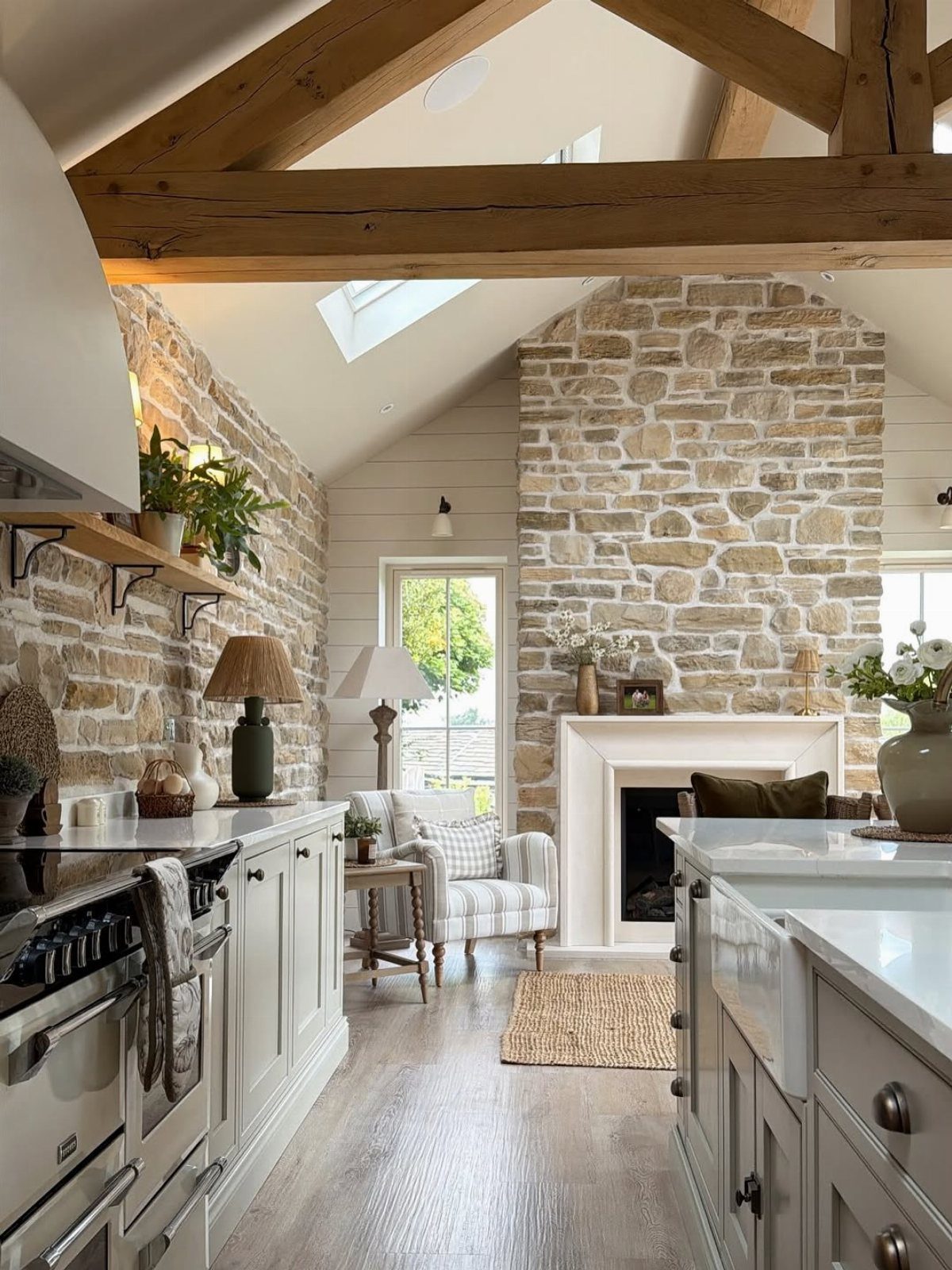
Stone left visible on interior walls gives a kitchen the sense of having been converted from something older, even when it has not.
The texture works against white cabinetry because the contrast is material, not color; both stay in the same quiet register.
What to check before stripping plaster: the stone behind it.
Interior stone was often laid as backing material with rough faces and wide joints, never meant to be seen. A test patch in an inconspicuous corner saves you from discovering crumbly mortar or mismatched repairs halfway across the wall.
Sealing is optional; raw stone sheds dust and darkens slightly where hands brush it, which I prefer to the plastic sheen of some sealers. Stone alone carries the mood; a fireplace is a bonus, not a requirement.

🏆 35 OZ PROFESSIONAL VALUE SIZE (INCLUDES TOWEL & GLOVES) – While standard sealers offer only 24 oz, Meuvcol delivers a massive 35 oz supply, providing distinct coverage for large kitchen islands and expansive granite sealer countertop projects. No need to ration your product; this kit is the ultimate granite and stone sealer solution that allows you to protect your entire home with one bottle. Includes a premium microfiber towel and gloves for a complete, ready-to-use experience.

PRECISE SIZE FOR YOUR PROJECT – Measures 31 inches wide and 4 inches high. Please measure your countertop and check the available installation space before ordering to ensure a proper fit.

Our new MORE Premium Plus Stone Sealer with extra built-in protection will stop food and beverages from staining the surface AND obstructs new growth of harmful film and grime that build up on surfaces.
11. Dried Herbs Display

Glass jars of dried herbs on open shelving turn storage into color that shifts with the season. A green wall behind herb jars makes them pop; against white or cream, the herbs read more softly.
I would not buy herbs pre-dried for display.
They look uniform and dead. Dry your own in small batches, label with masking tape and a Sharpie, and replace them when the color fades.
A hanging braid of garlic needs dry air; in a humid kitchen it sprouts or molds within weeks. A cabinet above is a smart addition, since lower shelves alone do not hold a full pantry.
Keep the display to 2 rows; a third row of jars becomes invisible behind the front line and collects dust you will never clean.
12. Butcher Block Worktops

A butcher block island top brings wood warmth right where you stand and chop. End-grain or edge-grain construction reads as lighter than most stone, which opens up a kitchen that risks feeling heavy with cream cabinets and brass fixtures.
Maintenance is the trade-off. Oiled tops need re-oiling regularly in heavy use; mineral oil is food-safe and cheap, though it never builds a waterproof film.
Water left standing darkens the wood in rings that sand out only with effort. I would use butcher block on an island rather than perimeter counters, since the sink area sees more standing water.
An undermount sink is doable with proper sealing, but the joint between wood and basin is the first place trouble starts; check it twice a year.
13. Copper Pots Display
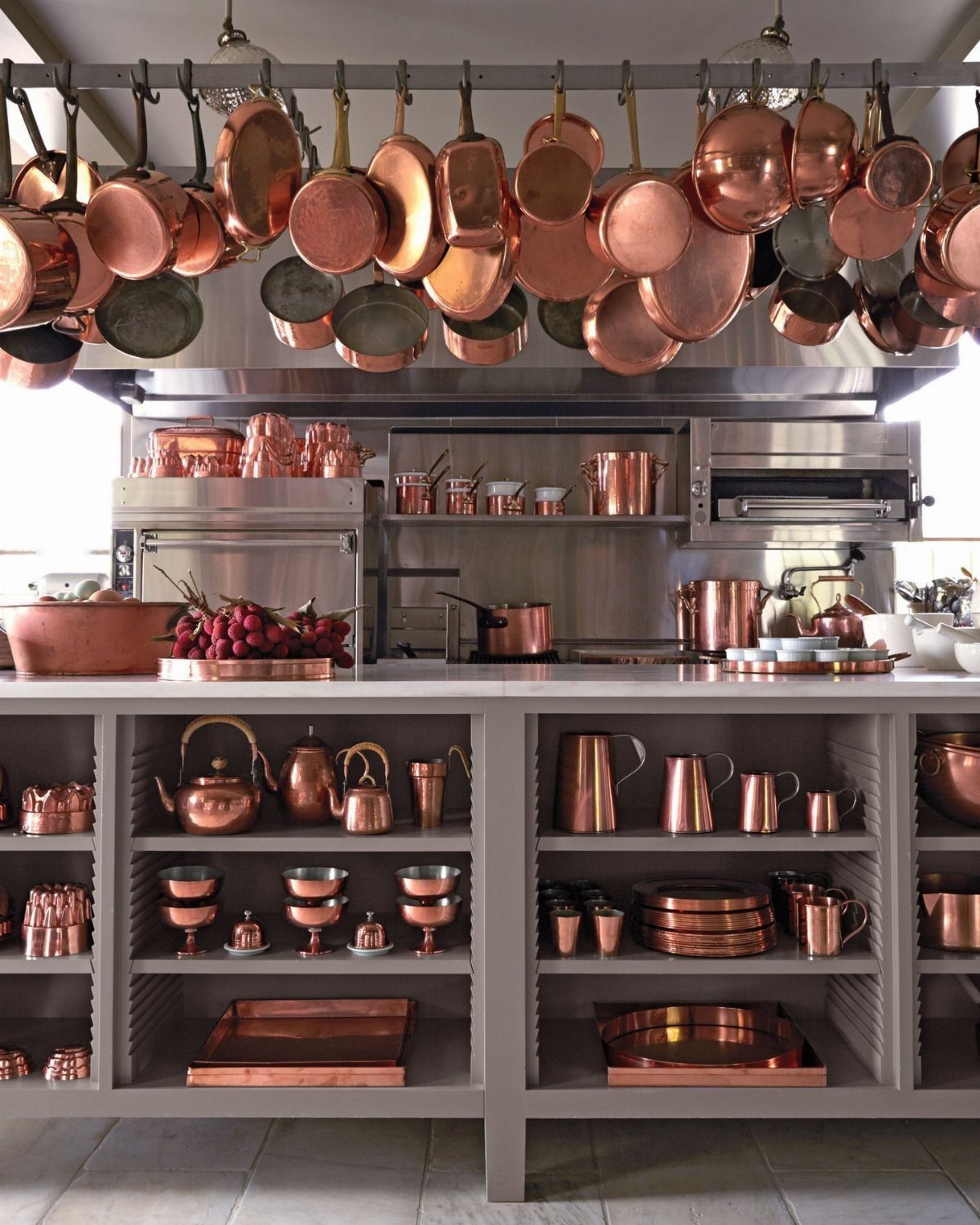
Copper pots on a hanging rack or open shelf warm up a kitchen faster than any paint color.
The metal catches light and shifts from rose to amber through the day, which is why I would hang them where morning sun hits.
Polished copper demands commitment. It tarnishes to brown within weeks in a working kitchen, so either budget for regular polishing or let it age.
A rack over the island keeps pans accessible but collects grease from cooking below; a wall-mounted grid near the sink stays cleaner but risks water spotting.
Mixing copper with stainless steel appliances works fine, the 2 metals read as different eras rather than a clash.
14. Wall-mounted Plate Rack

A pine plate rack on the wall turns everyday dishes into a display without giving up cabinet space entirely. I would mount it where I actually reach for plates, not above the sofa where it becomes a museum piece.
Standard wall-mounted plate racks hold plates two deep or more; measure your wall studs before ordering, since plasterboard alone will sag under ceramic weight.
The slotted rails keep plates upright and visible, but wide rimmed bowls and modern coupe shapes slide through, so check your dish profile against the slot spacing. A rack over a counter catches drips; over a sideboard, it stays cleaner.
15. Bridge Taps

A bridge faucet with cross handles mounted on a shared base plate reads as vintage because the design predates single-hole mixing.
The two-handle layout means separate hot and cold controls, which takes an extra second to balance but gives precise temperature.
Brass finish is what I would choose for an English country kitchen; chrome reads as modern and nickel as transitional. A side sprayer is a practical addition for rinsing vegetables, though it adds a second hole to drill.
Bridge taps need a two-hole sink or countertop cutout; retrofitting a single-hole setup means replacing the surface or choosing a different style. Check reach length against your sink basin depth, a short spout sends water splashing off shallow farmhouse profiles.
16. Tongue & Groove Paneling

Vertical tongue and groove boards on the wall add shadow lines that flat drywall cannot match. Painted cream, the paneling reads as texture rather than color, which keeps a small kitchen from closing in.
I would run boards floor to ceiling behind a range or sink, where splatter happens, since the grooves wipe cleaner than textured wallpaper and touch-up paint hides scuffs better than plaster repair.
Pine is standard and takes paint well; MDF versions cost less but swell at the joints if steam from a kettle hits them daily.
A shelf running the length of tongue and groove paneling needs support at intervals; floating looks cleaner but eventually bows under cookbooks.
17. Cozy Window Seat

A built-in bench under a kitchen window turns a blank wall into seating without stealing floor space from work zones. Storage underneath, as the boxy construction suggests, holds linens or bulky appliances you use twice a year.
Depth matters more than cushion thickness. A narrow ledge is enough for perching while water boils; a deeper seat lets someone actually sit back with a mug.
I would build a window seat at counter height if it doubles as extra prep space; standard seat height works better for lingering.
Blue cabinetry flanking the seat frames the nook and connects it to the rest of the kitchen; painted wood holds up better than fabric against cooking humidity.
18. Exposed Brick Wall

A single brick wall left visible gives a kitchen age it has not earned, which is exactly what the English country look is after. Whitewash lightens the masonry so it does not dominate a room with pale cabinets.
Before stripping plaster, tap for soundness.
Interior brick in old houses was often laid as a backup wall with soft lime mortar that crumbles; a test patch behind where a fridge will sit tells you whether you are opening a feature or a repair job.
Sealing whitewashed brick is optional but practical in a kitchen, since grease particles settle into porous mortar and darken it over time. A range hood in wood softens the transition between brick and cabinetry better than metal would.
19. Stone Floor Tiles

Large stone-look tiles in a staggered layout give a kitchen floor the uneven rhythm of an old farmhouse without the cold or maintenance of real quarried stone.
Porcelain runs warmer underfoot and far less porous than natural stone, which matters in a kitchen where you are standing for hours and spills are guaranteed.
I would check the rectified edge before ordering; a true square edge needs tighter grout lines and a flatter subfloor.
A metal floor vent, like the one visible, sits flush with the tile and should be set before grouting begins. Light beige reads as neutral under cream cabinets and grey alike, so the tile outlasts a cabinet repaint.
20. Gingham and Checkered Fabrics

Red and white gingham on curtains, chair skirts, and a tablecloth turns a small kitchen dining nook into something intentional rather than accidental.
Smaller checks read as texture from across the room, while larger blocks dominate and turn the fabric into a statement.
I would limit gingham to three surfaces maximum in one view; more than that and the room becomes a theme park.
Cotton duck holds up to washing but fades in direct sun, so cafe curtains that roll up are practical near a south-facing window.
The duck motifs visible on some pieces are optional; plain gingham carries the idea without the nursery effect.
21. Sage Green Cabinetry
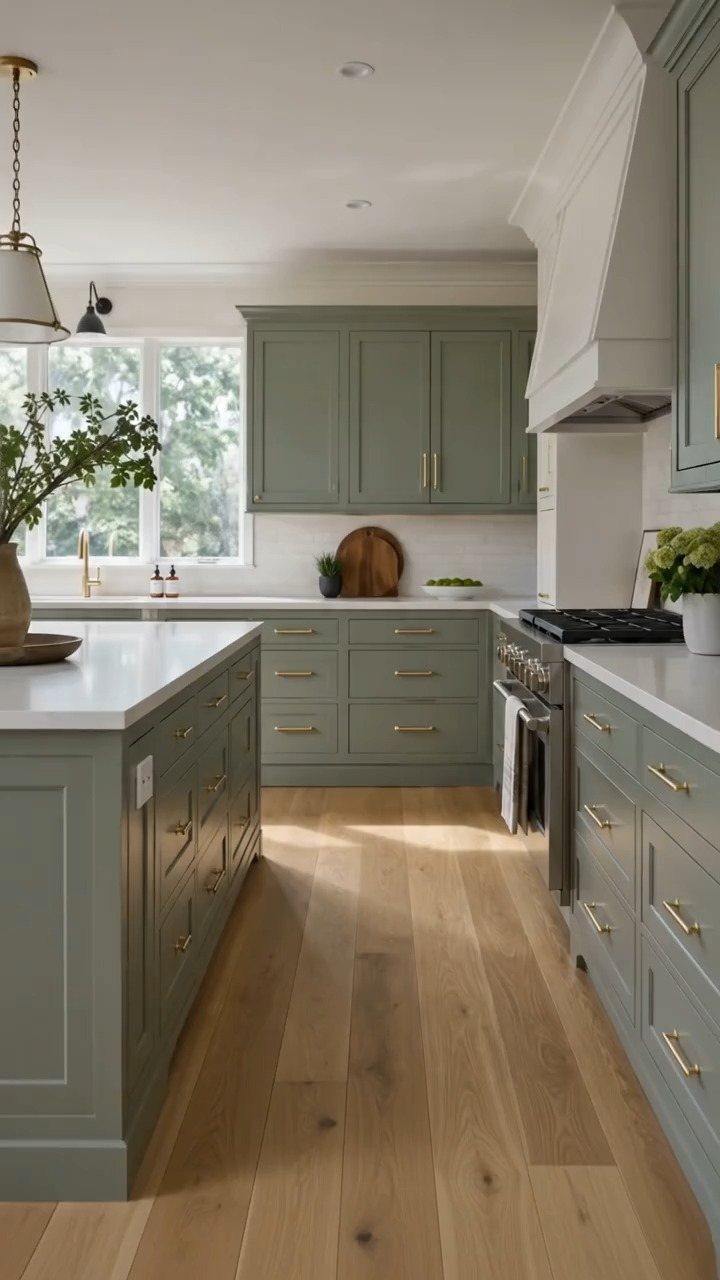
Sage green on shaker cabinets with brass hardware and white countertops hits a balance between color commitment and restraint.
The tone shifts with the light, reading gray-green on overcast mornings and warmer in afternoon sun, which keeps it from tiring the eye.
Brass hardware against sage needs to be unlacquered; sealed brass stays too bright and reads as hardware-store generic.
Light oak floors, like the ones visible, bridge the cabinets and countertops without introducing another strong color. I would test the cabinet color at sample scale first; sage goes muddy fast if the undertone drifts toward olive.
22. Patterned Floor Tiles
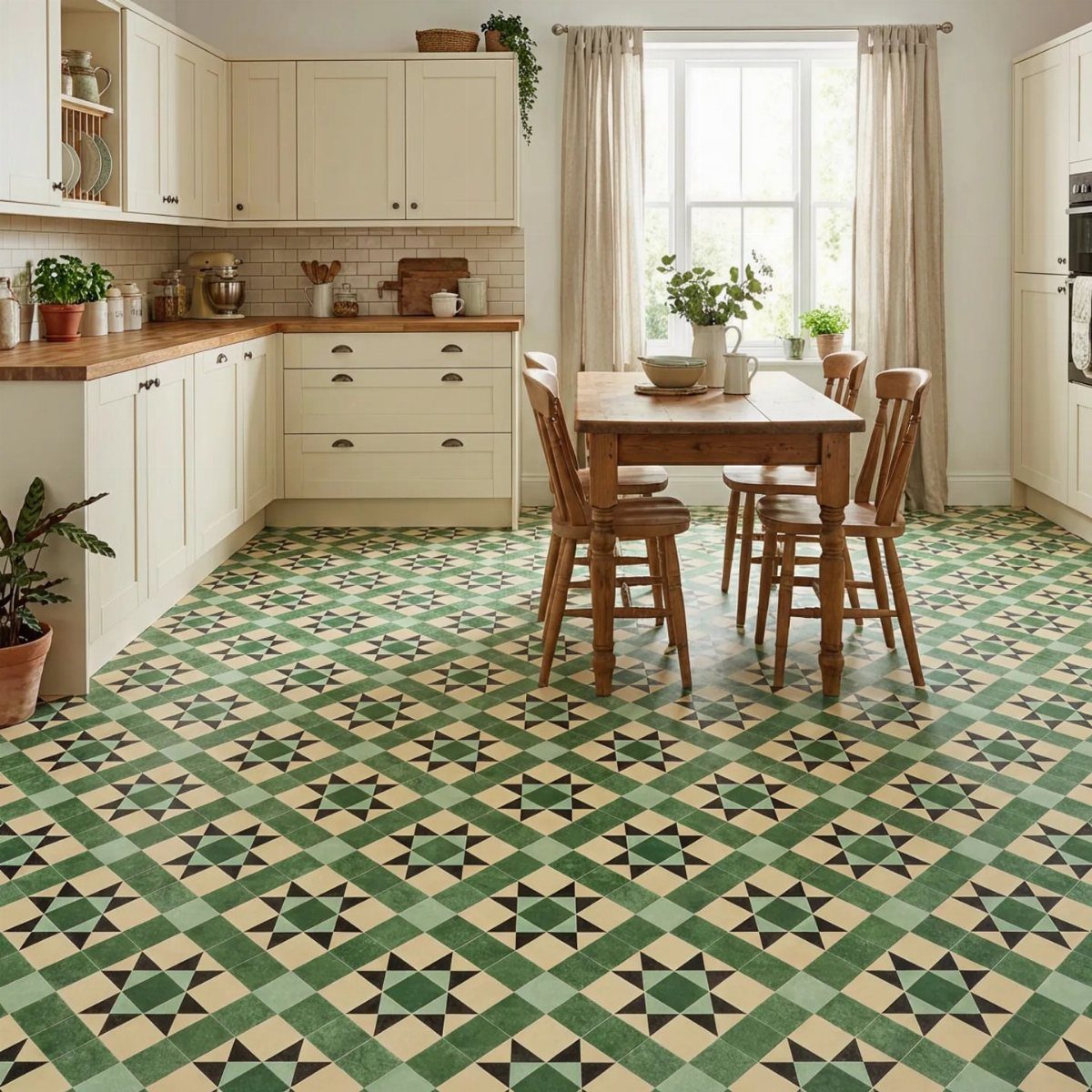
Green and cream geometric tiles on the floor give an English country kitchen its pattern where the walls stay quiet.
The visible layout runs the pattern diagonally, which makes a narrow room read wider and hides slight imperfections in old subfloors.
Encaustic-look porcelain is what I would choose for a working kitchen; true cement tile stains with red wine and tomato sauce in hours, not years.
The cream in the pattern should be close to the cabinet color, not matching exactly, since identical tones look like a mistake when they shift with age.
A wooden table and chairs ground the busyness of the floor and keep the room from feeling like a tile showroom.
Creating a Cozy Atmosphere
The warmth in an English country kitchen comes from layering materials that age in place rather than fighting it.
Terracotta and ochre read as autumn light held indoors; I would use them on a back wall or floor where they ground the room without overwhelming cream cabinetry.
Sage and pale blue work better at eye level or above, where they catch daylight and keep the ceiling feeling high.
Soft textures matter as much as color.
A mix of finishes, pine against linen against worn brass, stops any single material from dominating. I would add one element that carries real use: a wooden bowl that holds fruit, a stoneware jug for utensils.
Display without function drifts toward staging. The personal touch I trust is the one that shows wear from actual handling.
Nothing beats flowers for putting the ‘country’ into kitchens. An abundance of dainty florals has a lovely enveloping effect, creating the signature cosiness of a country kitchen and softening an otherwise functional space.
Choosing the Right Colors
A countryside palette looks like paint mixed with milk: cream, sage, duck egg blue, warm putty, gentle stone.
I would test it on a single piece of furniture before committing walls or cabinets. One dresser in warm putty tells you whether the tone flatters your light without the cost of a full repaint.
Richer colors need restraint.
Terracotta and olive green work as accents or on a single bank of lower cabinets; across every surface they overwhelm. The same ochre that warms a larder cupboard reads as heavy on 4 walls.
I would keep the base palette soft and let depth come from materials: pine darkening with age, brass tarnishing, stone absorbing cooking residue. That aging does the work of pattern without your choosing it.
Functional Layout Considerations
High ceilings give you headroom for a pendant or a rack, but the social center is the island. Face your guests while you work; the conversation matters more than the view of a wall.
I would size the island for standing room on all working sides and still leave clear traffic space behind seated guests, the same clearance I’d want in any working kitchen.
Spacious layout sounds like a luxury, but it functions as a tool. Ample countertop means prep does not crowd plating; room for a dining zone means the cook stays in the gathering rather than disappearing behind a wall.
I would place the island between cook zone and entry, so guests arrive into the activity rather than trailing through it.
An island at Olive & Barr’s specification, designed for engagement, beats a narrow galley that isolates the person at the stove.
Frequently Asked Questions
What defines an English countryside kitchen?
Painted Shaker cabinets, natural materials like wood and stone, and a warm, lived-in feel define the style.
Soft muted colors and honest craftsmanship matter more than sleek modern finishes. An English countryside kitchen looks like you inherited your grandmother’s pieces and added your own over decades, not like a showroom assembled in a weekend.
What colors work best in a country kitchen?
Cream, sage green, and warm putty are the classic palette, keeping the room calm and timeless.
I would add brass hardware and copper accents for warmth, or a dark range cooker for contrast. These muted tones sit together without competing for attention.
Are French country kitchens in style?
Country kitchens in general balance rustic charm with modern functionality, and that combination stays relevant because it works for real life.
The English variant favors more restraint in color and pattern than French country, which leans into ornate detailing and brighter blues and yellows. Both endure because they prioritize natural materials and honest wear over pristine finishes.