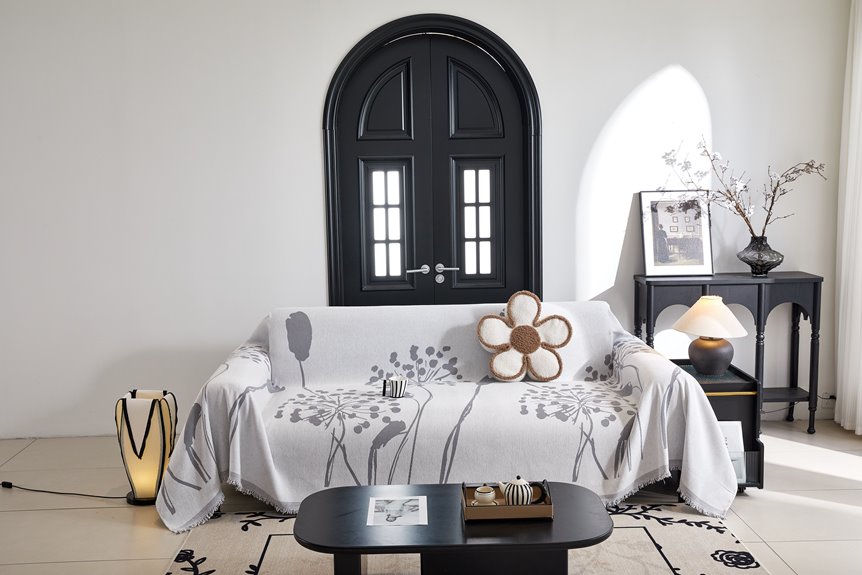
I’ve spent years obsessing over throw placement—yes, really!—and I’ve learned that a blanket tossed just right can transform your entire living room from “meh” to magazine-worthy in about thirty seconds. I drape mine over the back for that waterfall effect guests see first, fold it into seat cushions for tucked-in coziness, or wedge it behind back cushions so it actually stays put on leather. Armrest hangs feel casual-cool, corner cascades add drama, and center folds create perfect symmetry. Sectionals love a chaise wrap, and textured knits grip slick surfaces better than silky fabrics. Pairing your throw with coordinating pillows creates a cohesive look. My favorite technique is the hidden tuck: lift one cushion, wedge the edge underneath, and you’ll get a polished cascade that stays in place. Experiment with different placement methods to find what works best for your space.
Drape the Throw Over the Back (Entry-Visible Placement)
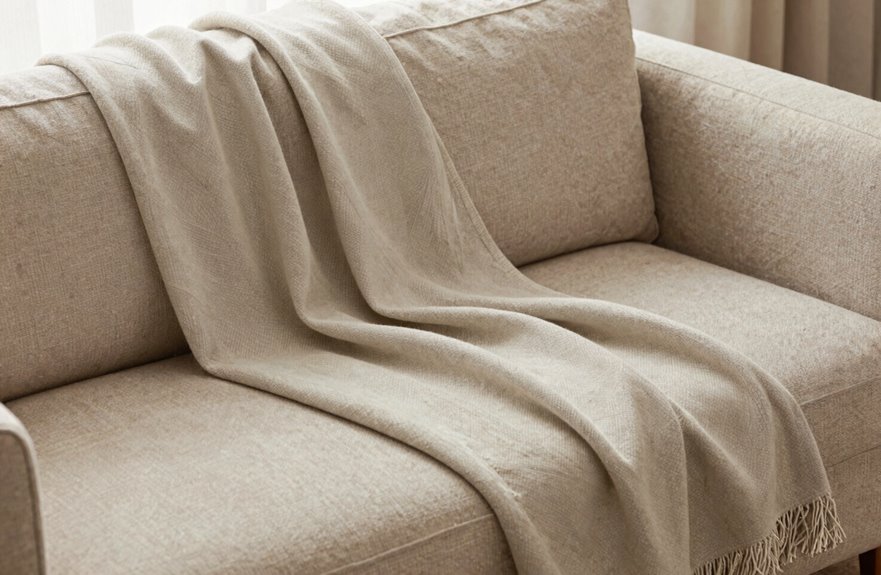
One of my favorite ways to style a throw starts the moment you walk through the door: draping it over the back so it cascades down like a waterfall of cozy intention. I call this the back drape, and it’s effective for entry-visible sofas.
When your throw blanket greets guests head-on, you’re giving your living room visual impact before anyone sits down. This placement showcases gorgeous textiles that would otherwise remain hidden.
Pick something with texture, like a nubby weave or subtle pattern, because that back wall becomes your canvas. A flat, solid throw becomes visually lost from the hallway.
Tuck just an inch behind the top cushion so it stays put without looking fussy. Keep it thin enough to preserve seat space.
Fold the Throw Into the Seat Cushions
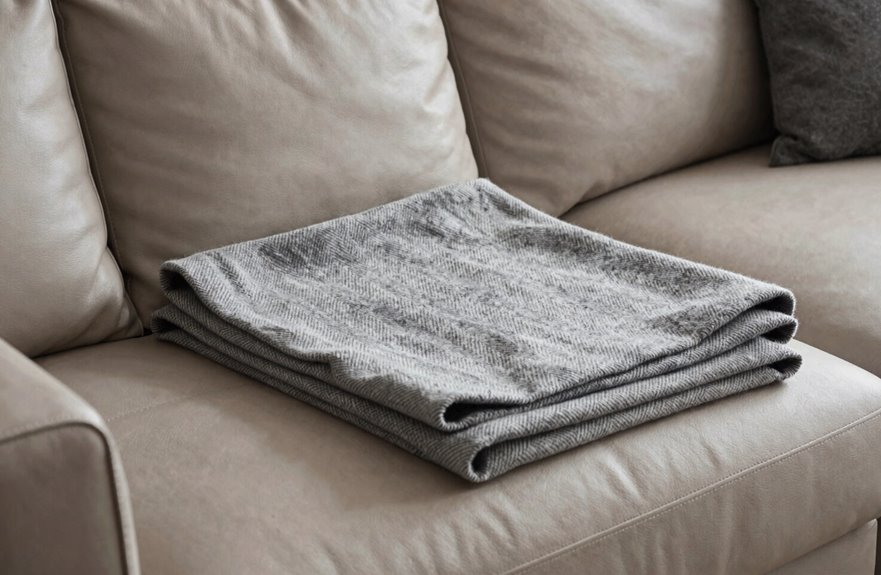
I like to fold my throw lengthwise into thirds and tuck it right into the seat cushions, where it becomes this neat, structured base that still feels totally grab-able when the temperature drops. There’s something so satisfying about getting that crisp edge. I usually nudge mine slightly off-center, just a little visual detail that shows intentional styling.
I tuck the front edge behind the cushion, and this prevents slippage when someone’s scrambling for the remote. Thinner blankets work best here. I learned that the lumpy way with my chunky knit phase, which didn’t work well.
When I want the whole sofa to feel intentional, I’ll match my folded neatly positioned throw with pillows in similar tones. Suddenly the seating area has a cohesive, collected appearance, and that coordination is what creates a truly inviting space.
Tuck the Throw Behind Back Cushions for Security
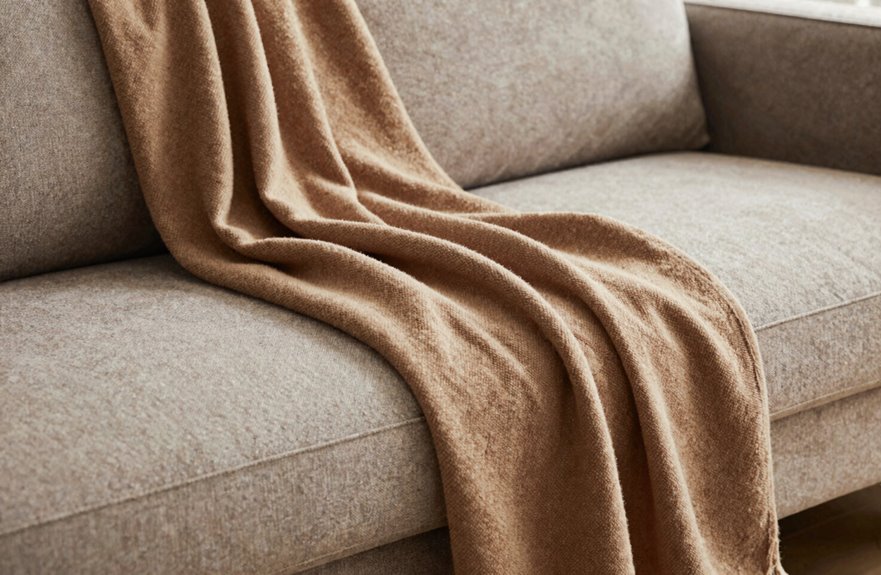
I wedge my throw behind the back cushions when I’m tired of chasing it across the leather every time I stand up. You’ll get that secure anchor point without the bulk, plus the hidden tuck method keeps your sofa looking sleek from the front while that cozy texture still peeks over the top. It’s my go-to cushion integration technique when I want style that actually stays put, and it pairs well with your pillows.
Secure Anchor Point
Because I’m constantly knocking throws onto the floor every time I flop down, I’ve become slightly obsessed with this anchoring trick: tucking the fabric behind your back cushions so it actually stays put.
This anchor point changed everything for me. I grab my medium-weight throw, fold it neat, and wedge that top edge right behind the center back cushion, where the weight distributes evenly with no weird lumps. It hides completely while keeping the drape perfect along the sides.
I always straighten after tucking, smoothing the fabric so nothing bunches. Then I casually drape the rest over the seat. That combination locks it down. Once you feel that security, you’ll notice the difference between this method and slippery, sliding blankets.
Hidden Tuck Method
When you want that perfectly draped look without the constant readjustment dance every time someone sits down, the Hidden Tuck Method delivers reliable staying power tucked right where you need it.
I use this trick on my leather sofa constantly because throw blankets love to slide on slick surfaces. Here’s how I nail it: I drape the fabric over the back, lift one cushion (it’s like peeking under a mattress, admit it, we all do it), and wedge that edge deep between cushion and frame. The hidden tuck disappears completely, leaving this gorgeous cascade down the sides. Textured knits look incredible here. They get this crisp silhouette that reads intentional, not messy. I keep extra pillows minimal, maybe two, so those folds stay even and inviting. Once you’ve tried this method, the blanket remains securely in place without slipping across the floor.
Cushion Integration Technique
How do you keep a throw from ghosting you every time someone shifts on the couch? I’ve cracked it with cushion integration.
Start with a lightweight or midweight blanket, nothing bulky that’ll fight your cushions for space. I center mine at the back, then guide the fabric down between cushions toward the seat, anchoring it subtly so it stays put. The tucked throw keeps that gorgeous texture visible along the sofa back and sides without the constant slipping. I pair mine with complementary pillows for extra security and that pulled-together look we all crave. It’s neat, tailored, but still cozy; your sofa actually becomes functional for relaxation. Once you try this method, the difference in throw placement stability becomes immediately apparent.
Drape the Throw Over the Armrest

Why settle for a sofa that just sits there when one simple move can make the whole room feel alive? I discovered the arm-drape years ago, and it’s an effective way to create an intentional, styled look.
Here’s what I’ve learned about nailing this look:
- Grab a chunky knitted or woven piece. Textured throws catch light and shadow effectively.
- Let the ends hang loose, resist the urge to tuck.
- Match your throw to one pillow color, it ties everything together without trying too hard.
- Show off those arm details. If you’ve got pretty wood or interesting lines, this placement puts them center stage.
I always feel like I’ve got my life together when the arm-drape looks right. The visual coherence of a well-placed throw creates an immediate sense of intentional design in any room.
Cascade the Throw Over the Corner
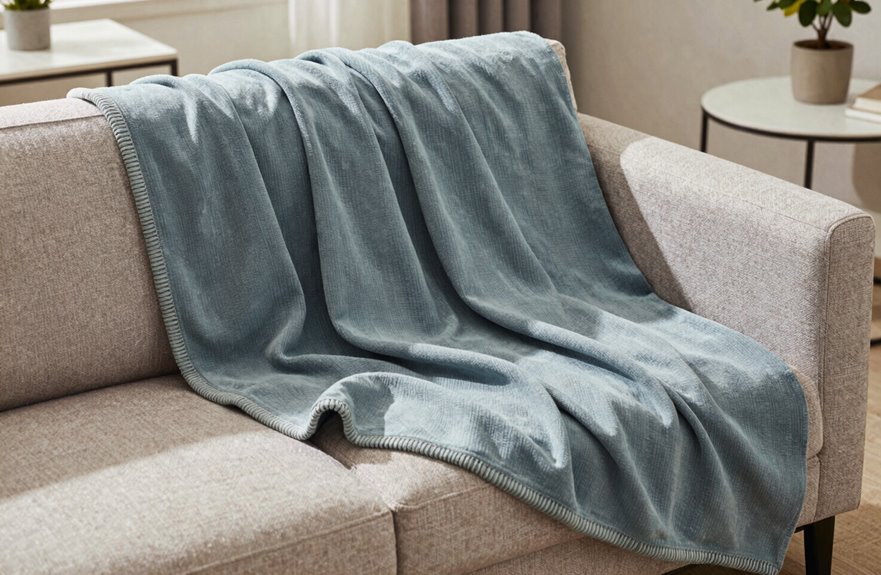
The arm-drape has its fans, sure, but I’ve got a soft spot for the corner cascade. It feels like the throw landed there instinctively, curling up in the coziest spot. I always grab a thin-to-mid-weight throw for this, nothing too heavy, because bulk kills the vibe. You want that soft fall where the back meets the arm, right. Let one edge hang evenly down the side. It looks polished, not try-hard. I learned the hard way: overload that corner with chunky knits and suddenly your sofa looks cluttered, not curated. The corner drape shines when it picks up colors from your pillows, creating this layered moment that suggests you actually live here, beautifully.
Layer Two Throws for Richer Texture
I love doubling up throws because one blanket simply doesn’t provide enough layering. I’ll grab my chunky ivory knit and drape it along the back, then toss a smaller leopard-print faux fur at an angle so both textures create visual interest. The layered result looks intentional and polished, giving your living room a curated appearance.
Mix Complementary Textures
How do you make your sofa look like it belongs in a design magazine without actually hiring a designer? The secret is texture play.
Grab your Chunky Oversized Throw, that gloriously nubby, hand-knit situation that weighs approximately one small child, and layer it over something completely opposite. Enter Chenille, smooth as butter, practically begging to be touched. The contrast works.
Here’s what works:
- Pair rough with smooth, never two textures that compete for attention
- Keep colors in the same family, think charcoal cozying up to graphite
- Let both throws show, no hiding your hard work
- Anchor with a pillow or two so it doesn’t look like you just tossed and ran
The result is an inviting sofa that feels intentionally styled.
Vary Scale and Pattern
Starting with one throw is like eating just one chip—technically possible, but why would you do that to yourself? I always layer two throws because the texture payoff is instant, dramatic, and weirdly satisfying.
Here’s my go-to move: I’ll grab a chunky knit, the oversized kind that looks like you could hibernate in it, and drape that beast over the back as my base layer. Then I fold a smaller throw, maybe something smooth or geometric-patterned, and casually toss it across the seat so both textures peek out.
I keep them in the same color family, neutrals with one little pop, so they talk to each other without shouting. The fringe ends pointing different directions are intentional, not messy. It gives your sofa this lived-in, collected vibe that demonstrates intentional styling choices.
Anchor With Placement
Once you’ve got those textures talking, the real magic happens when you lock everything into place so it actually stays put. Layering two throws instantly makes your sofa feel like a magazine spread you actually live in.
- I start with a chunky knit draped over the back, then add a smoother woven piece along the seat for that delicious contrast
- I tuck the bottom throw behind cushions so nothing slides when I flop down
- I let one throw cascade over the arm while keeping the other contained for visual drama with coziness
- I finish with coordinating pillows at each end to ground the whole layered look
Anchoring transforms a thrown-together sofa into one that looks effortlessly curated.
Roll or Fold the Throw at Center
Three, two, one. Center stage. This move instantly makes your sofa feel like a curated showroom, not a chaotic afterthought.
I grab my throw blanket and create a center fold that sits pretty, right where everyone’s eyes land. Rolling works too, but I fold for that crisp, even edge that conveys intentionality.
I tuck those ends into the back cushion gaps so nothing shifts when my cat launches her evening zoomies. Thin blankets work best here. Chunky knits overwhelm, but a subtle texture provides the right visual balance.
Want to level up? I pair my center placement with matching cushions on both ends, and suddenly the space looks professionally designed. Symmetry creates visual cohesion.
For Sectionals: Wrap the Throw Around the Chaise
Why fight a sectional’s weird angles when you can hug them. Use the chaise as your anchor, letting the chaise wrap create a gorgeous, continuous flow across the whole seating area.
Embrace the angles instead of fighting them—let the chaise wrap create a gorgeous, continuous flow across your whole seating area.
Here’s how to make it work every time:
- Fold the throw neatly at the corner where chaise meets seat, then wrap it along that outer edge. This keeps the rest visible and inviting.
- Double it up when you want bold texture, or keep it loose for Sunday-morning-slouchy vibes.
- Pick throws that either pop against your upholstery or whisper along with it. There are no rules, just go with your instinct.
- Echo the wrap by tossing a second throw on the adjacent section. Matching energy creates cohesion.
Your sectional will benefit from this approach.
Stop Slipping: Secure Throws on Leather and Smooth Fabrics
I’ve wrestled with throws sliding off my leather sofa more times than I’ll admit, usually while I’m mid-coffee, reaching for that corner that’s pooled on the floor again. Grip-enhancing fabrics, strategic placement tricks, and solid anchoring methods actually work on slick surfaces. Here’s how I’ve stopped the slip-and-slide chaos for good.
Grip-Enhancing Fabric Choices
That dreaded slide. I’ve watched my favorite chenille throw slither right off my leather sofa like it’s trying to escape, and it broke my heart. Fabric choice matters significantly, and I’ve learned what actually works.
- Chunky knits with serious texture grab leather like they’re old friends, without any fussing.
- Sherpa-backed throws feel cozy and stay put; the fuzzy side down creates instant friction.
- Wool blends have natural grip that silky fabrics simply cannot compete with.
- Non-slip furniture pads underneath? They’re essential, especially for my vintage velvet finds.
I used to blame my sofa, but really I needed smarter materials. Now my throws stay where I put them, and my living room finally feels like my space.
Strategic Placement Techniques
Where do I even begin with keeping these gorgeous throws from staging their great escape? I’ve battled this myself; my leather sofa once rejected every blanket I owned.
What actually works: I slip non-slip furniture pads underneath, and suddenly the fabric grips like it belongs there. For a secure drape, I fold my throw lengthwise into thirds, drape it over the back, and align those folds evenly for a polished, intentional look. I tuck one corner into the seat cushion, behind the back, anywhere it’ll grab hold. Let the ends hang down the sides; it creates gorgeous visual movement while staying put.
If mine still slides, I lightly tuck the edge under a cushion. No more chasing blankets across the room. Your sofas will look incredible with throws that actually stay in place.
Secure Anchoring Methods
Three solid anchors will stop your throw from sliding into the floor. I’ve dealt with this problem on my own leather sofa, and anchoring makes a measurable difference.
Here’s my tested toolkit:
- Non-slip pads tucked beneath your throw create invisible friction that grips effectively
- Corner tucking into seat cushions locks everything down with minimal effort
- Back cushion wedging keeps your throw centered and reduces constant readjustment
- Strategic draping with one end over the back and one tucked into the seat uses natural tension to maintain position
I learned this after my favorite throw spent considerable time on my rug instead of my couch. These methods solve the functional living room problem. No more chasing blankets.
Complete the Look With Accent Pillows
How do I know when a throw blanket truly sings? When I’ve got my accent pillows hitting every note. I’ve learned that balancing a single throw draped over the arm means placing pillows at opposite ends. It’s like a visual duet.
Here’s my cheat sheet for pillow-throw harmony:
| Throw Placement | Pillow Strategy |
|---|---|
| Draped over arm | Two pillows at opposite end, one lumbar nearby |
| Folded across back | Flank with 20×20 and 18×18 sizes |
| Centered as focal point | Frame with symmetrical pillow arrangements |
| Casual cascade | Mix textures—chenille, faux fur, woven weaves |
I always coordinate fabrics for tactile harmony, echoing patterns from my throw. It makes the whole sofa feel intentional and welcoming, creating a space that feels lived-in rather than staged. Once you nail this approach, you’ll find yourself naturally reaching for pillows whenever you drape a blanket.