
I learned this the hard way after my rug tried to escape mid-turkey dinner. Start by measuring your table fully extended. Don’t guess; grab that tape measure. Add 24 to 30 inches per side so chairs slide without scratching floors. Match shapes: round table, round rug or generous rectangle. Test with painter’s tape first, leave 12 inches of floor showing near walls, and never skip a dense rubber pad. Low-pile rugs prevent stains during spaghetti nights. Getting the right rug size requires attention to multiple factors.
Start With Your Dining Table Dimensions

Where do I even begin when I’m staring at a naked dining room floor? I grab my tape measure and tackle those dining table dimensions first, because guessing leads to disaster through trial and error.
Start with your tape measure, not guesswork—dining table dimensions come first, or you’ll learn the hard way through trial and error.
Here’s my trick: measure length and width, then add 24 to 30 inches per side for your minimum rug size. That extra rug extension serves a functional purpose. When guests scoot back their chairs, nobody wants chair movement sending legs onto cold hardwood. The wobble is real.
Got table leaves? Measure fully expanded. Nothing’s worse than a summer dinner party where half your setup floats off the edge.
Now, rug shape matters hugely. A rectangular rug hugs a rectangular table perfectly, but a round dining table pairs beautifully with round rugs, though rectangular works if sized generously.
For a 36-by-71 table, a 7-by-9.11 foot rug creates a cozy, grounded look.
How Much Bigger Should Your Rug Be Than Your Table?
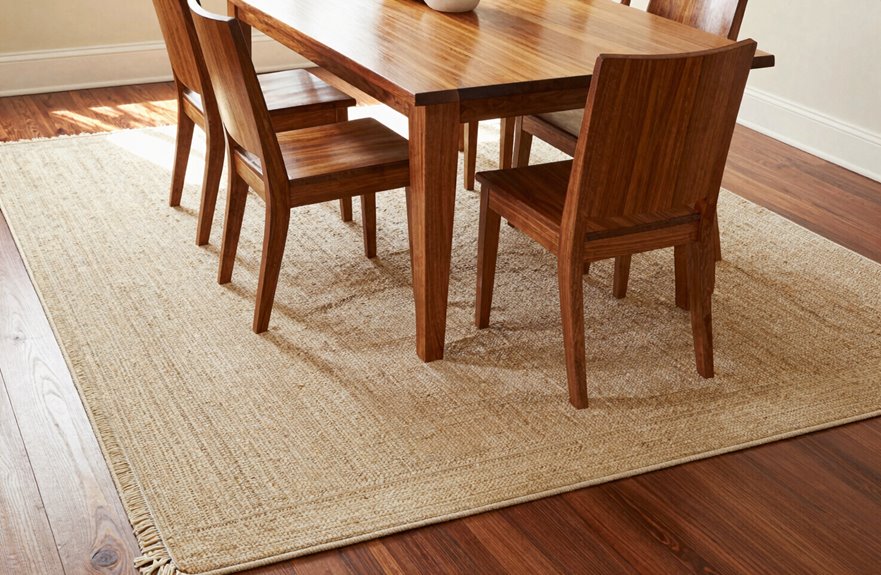
Now that I’ve got my table measured, I’m tackling the real head-scratcher: how much breathing room does this rug actually need. Your rug should extend 24 to 30 inches beyond your dining table on every side. That rug extension isn’t just for looks; it’s functional. When you pull out your chair to sit, you want those chair legs staying put, not scraping across your hardwood like fingernails on a chalkboard. Think of your seating area as a little island. That extra two feet-plus gives everyone room to scoot back comfortably after dessert. Skimping on dining room rug size means wobbly chairs and frustrated guests. Use a rug pad underneath to keep everything stable and in place.
Standard Dining Room Rug Sizes by Seating Count

Why does rug shopping feel like solving a geometry final while everyone’s watching? You’ve likely experienced this dilemma, and these guidelines actually work.
Your seating count determines everything. For four to six chairs, grab an 8×10 rug. It’s the sweet spot for cozy spaces. Six-seat setups need a 9×12 rug, which gives you that perfect rug extension beyond table edges, about 24 to 30 inches, so chairs slide out without catching legs. Hosting bigger gatherings? The 10×14 rug handles eight to ten seats beautifully.
Don’t forget chair movement space. You need at least 36 inches from table to rug edge, minimum. Round dining rug size follows the same logic: add roughly 48 inches to your table’s diameter. Match rug shape to table silhouette for that pulled-together look, and always leave wall clearance of 12 inches so your room breathes.
Match Rug Shape to Table Shape

How do I keep my dining room from looking like a furniture store had a yard sale? Matching silhouettes is key. Your rug shape and table shape need to coordinate, or the result is visual chaos.
Matching silhouettes is key—your rug shape and table shape need to coordinate, or the result is visual chaos.
Here’s my guide for choosing the right dining table rug size:
- Rectangular rug + rectangular table = classic visual cohesion, especially with expandable tables.
- Round rug + round table = add 48 inches to diameter (my 48-inch table needed a 96-inch round rug).
- Square rug + square table = clean, neat framing that feels intentional.
- Oval rug or spacious rectangular rug + oval table = elegant flow that stretches the room.
Contrast can work, but matching shapes creates a more cohesive design. Your dining room rug should feel like home, not a design experiment gone wrong.
Leave the Right Amount of Floor Showing

Where exactly does your dining room rug end and your floor begin? I learned this the hard way after buying a rug that practically kissed my baseboards, creating a claustrophobic feel. Leave at least 12 inches of floor showing between the rug edge and walls. This creates breathing room, defines your dining zone, and makes the whole room feel intentional rather than accidental.
Your rug should extend beyond table edges by 24 to 30 inches. This means roughly 36 inches of rug clearance for smooth chair movement. Your guests won’t wobble when pushing back from the table for seconds. When measuring, picture those chair legs staying planted on the rug, not catching on the edge. Get these measurements right, and your rug under the dining table becomes the anchor that pulls everyone together.
Make It Work in Small Dining Rooms
So what happens when your dining room is barely bigger than a postage stamp? Finding the right dining room rug size in small dining rooms takes some clever thinking.
Here’s my battle-tested approach:
- Measure your room, subtract 24 inches from each side for a clean rug border that doesn’t suffocate your walls.
- Match rug shapes to table shapes. Round table, round rug, simple solution.
- Ensure the rug extends beyond table edges by 24 inches so chair movement stays smooth without wobbling.
- Try under-rug layering with flatweave rugs if you need coverage without bulk.
When Bigger Is Better: Large Rooms and Open Plans
I’ve learned the hard way that a tiny rug in a massive open-concept space looks like a postage stamp on a football field, lost and lonely. When you’re working with a sprawling dining area or that trendy open-plan layout everyone’s obsessed with, you need a rug that actually shows up for the job, anchoring your table like a visual exclamation point that says “dinner happens HERE.” I’ll walk you through how I stopped fearing oversized rugs and started using them to create zones that feel intentional, balanced, and more spacious than bare floors ever could.
Open Plan Anchoring
How do you keep a dining table from feeling like it’s floating in the middle of nowhere? Open layouts can feel disconnected, like furniture at a bad party, avoiding each other.
What works:
- Go big on rug size. Your dining room rug should extend beyond table edges by 24 to 30 inches, so chairs don’t wobble off when your uncle pushes back after Thanksgiving dinner.
- Match rug shape to table shape. Round table, round rug; rectangle table, rectangle rug. This creates visual continuity.
- Use anchoring to define the dining zone clearly, creating cohesion with living areas without awkward visual gaps.
- Avoid tiny rugs. They make open plans feel choppy and fragmented.
Proportional Sizing Strategy
Open plan anchoring gets you started, but now we’re talking about the math that makes it work. In big spaces, guessing rug size is ineffective.
Proportional sizing prevents floating-table syndrome. For rectangular tables, add 24 inches all around for proper table clearance, with chairs on the rug to prevent wobbling. Round tables require adding roughly 48 inches to the diameter. Recommended rug dimensions for open-plan layouts are 9×12 or 10×14, though 8×10 works for smaller setups.
When your dining room rug extends beyond table edges by 24–30 inches, everything stays grounded as guests push back their chairs. You’re using rug sizing to define eating zone boundaries that honor adjacent living spaces while maintaining visual flow between areas.
Pick Low-Pile Rugs That Fit Your Chair Clearance
Why does chair clearance matter so much? I’ve tripped over my own dining room rug more times than I’ll admit, and it’s always when I’m juggling a hot casserole.
When your rug extends beyond table edges by 24 to 30 inches, you’re creating space where everyone belongs. No chair legs catch, and no awkward scooting occurs. I learned this the hard way at my cramped apartment dinner party, where guests played musical chairs just to stand up.
Here’s what I’ve figured out about getting it right:
- Measure 36 inches from table edge for smooth chair movement
- Choose low-pile rugs or flatweave styles. Your chairs will glide smoothly.
- Match dining room rug size to your seats: 6×9 for four, 8×10 for six, 9×12 for eight to ten
- Pick stain-resistant fibers, because spaghetti happens to the best of us
Your future self and your guests’ knees will benefit from proper rug sizing and placement.
Secure Your Sized Rug With the Right Pad
I’ve learned the hard way that a gorgeous 9×12 rug means nothing if it’s sliding around while you’re passing the gravy, so let’s talk about keeping that investment locked down. I’ll walk you through my essentials for picking a pad that actually grips. Look for dense rubber like Gorilla Grip, not that flimsy mesh that bunches up by week two. Position the pad so your chairs don’t catch an edge. After one too many wobbly dinner parties where I played rug-adjustment DJ, this step prevents your rug from shifting and creating a safety hazard.
Pad Selection Essentials
Every time I’ve wrestled a gorgeous new rug into my dining room, I’ve learned that skipping the pad invites disaster. I once watched my vintage flatweave slide under my mother-in-law’s chair during a dinner party, a moment that aged me considerably.
Here’s what I’ve figured out about choosing the right under rug pad:
- Grab a non-slip pad. Gorilla Grip works effectively because rug protection starts with eliminating slide.
- Mind your pad thickness. Too thick and chairs wobble; too thin and you’ve wasted cash.
- Size that dining room rug pad about two inches smaller than your rug so edges don’t peek out visibly.
- Prevent slipping on hardwood by checking rubber backing. This prevents accidents like spilled gravy on your floor.
Pad Placement Tips
Where exactly does that pad go once you’ve finally wrestled it out of its plastic prison? Too small, and your dining room rug slides like a runaway skateboard. The under-rug pad should sit completely beneath your rug with no peeking edges, creating that anchored feeling you need around the table.
What placement mistakes taught me:
| What I Felt | What I Learned |
|---|---|
| Panic when chairs snagged | Flatweave and low-pile save dinner parties |
| Embarrassment at lopsided layers | Proper layering means full under-rug coverage |
| Relief at smooth chair movement | Extend beyond table by 24-30 inches |
| Pride in my “grown-up” space | 36 inches clearance prevents chair chaos |
Match your rug size precisely. An 8×10 rug works for a 36×71 table. This sizing prevents bunching, sliding, and the constant need to reposition furniture during gatherings.
Test Your Layout With Painter’s Tape
Painter’s tape is my alternative phrase for “secret weapon,” my layout lifesaver, the humble hero that saves me from rug regret. Before I commit to any dining rug size, I grab that blue roll and map my vision right on the floor. No guesswork, no returns, no tears.
Here’s how I nail my rug placement every single time:
- Jot down room measurements first, then tape out my ideal dimensions
- Mark clearance space (24 to 30 inches beyond my table so chairs on rug stay put when pulled out)
- Check rug edge distance from walls, keeping 12 inches minimum so nothing feels squished
- Walk through my furniture arrangement, testing traffic flow around that taped rectangle
This layout preview lets me visualize scale, catch problems early, and verify the design works before purchasing.