I learned the hard way that “waterproof” engineered hardwood isn’t the flood-proof fortress the big-box store salesman promised me. It’s more like a really good shelter in a hurricane: fine for splashes and spills but utterly defeated by standing water or sneaky subfloor moisture that rots your floor from beneath while the surface still looks pristine. The core, usually SPC or treated composite, handles kitchen spills and powder room humidity effectively, but those seams and edges are vulnerable. Leave a puddle too long, and water sneaks through gaps, pools underneath, and creates a hidden nightmare you won’t spot until your subfloor turns to mush. Quick cleanup is your best defense. You need to act within minutes, not hours.
For bathrooms with tubs or flood-prone basements, you’d be smarter with wood-look porcelain or LVP that can actually survive a soaking. But if you love that real wood grain underfoot like I do, know where it works, where it doesn’t, and keep a towel handy. The “100% waterproof” label deserves scrutiny because engineered hardwood has real limitations when exposed to excessive moisture.
What “Waterproof” Really Means on Engineered Hardwood
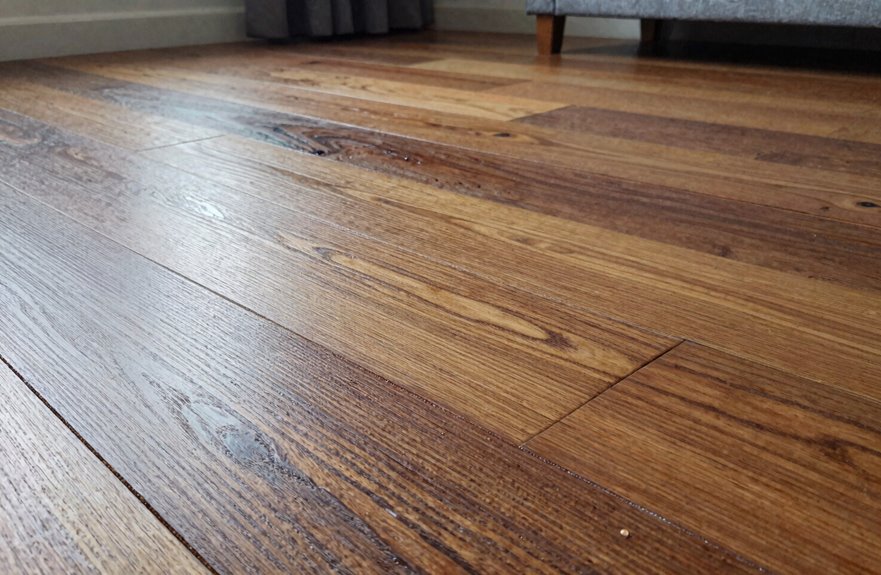
So the point about “waterproof” engineered hardwood: it’s a bit like calling myself a morning person just because I once woke up before 9 AM on vacation. Sure, that waterproof core (usually SPC or specially treated stuff) handles my coffee spills effectively, and the genuine wood veneer keeps things gorgeous. However, standing water is still the enemy. I’ve seen what happens when moisture sneaks through edge and seam vulnerability: warping, swelling, total nightmare. The moisture resistance is legitimate for daily life, kitchens, bathrooms even, but flood conditions will damage it. Installation moisture control matters significantly. Your subfloor can’t be damp, you need those expansion gaps, or you’re inviting trouble. It’s spill-proof, not life-proof, and that’s acceptable.
Waterproof vs. Water-Resistant: Which Label Should You Trust?
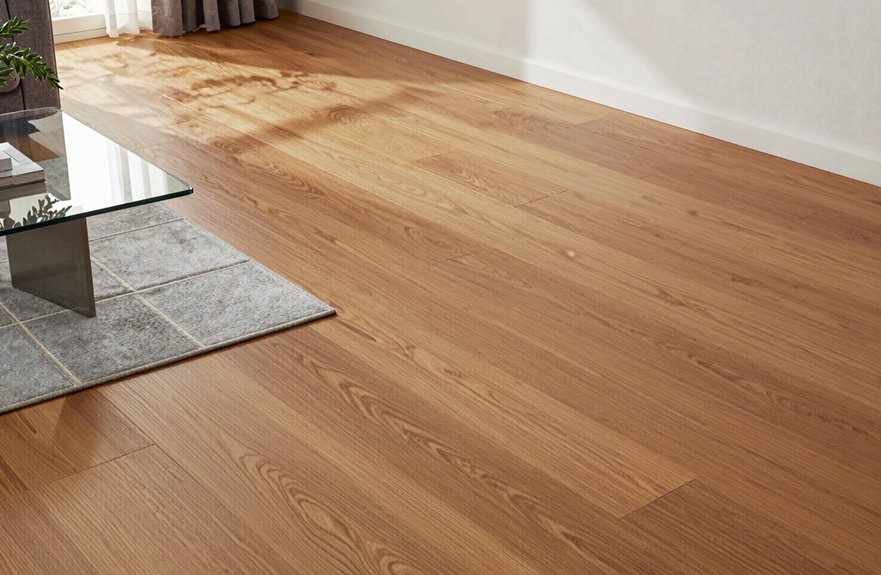
I’ve stared at enough flooring samples under harsh store lighting to know that “waterproof” and “water-resistant” get thrown around like they’re interchangeable, but they’re absolutely not. Your kitchen remodel depends on knowing the difference. When I see “waterproof engineered hardwood,” I’m looking for an SPC or rigid core that stops moisture dead in its tracks, while “water-resistant” usually means it’ll buy you time, maybe ten or fifteen minutes, before that spilled red wine becomes a very expensive problem. I’ve learned this the hard way: check the core construction, not just the bold claims on the front label, because even the best waterproof flooring can’t save you from a flooded basement you ignore for a week.
Core Distinction Clarified
How exactly do we cut through the marketing noise when every box screams “waterproof” in bold letters? I’ve been there, squinting at labels, wondering if I’m being played.
The core distinction matters: engineered hardwood’s moisture performance depends entirely on its core. A waterproof core, such as SPC (rigid stone-plastic composite), provides significant protection against spills. “Water-resistant,” by contrast, means your traditional plywood core handles humidity and minor splashes, nothing more.
I learned this when my “waterproof” floor handled my kid’s juice disaster effectively, yet the edges still swelled after I ignored a leaky planter for days. The top veneer stays real wood either way, which looks beautiful, but that core determines how well your floor resists moisture damage. Waterproof isn’t flood-proof, just substantially more forgiving than water-resistant alternatives.
Label Reliability Factors
Standing in that aisle, I’m staring at boxes shouting “waterproof” and “water-resistant” like they’re the same thing. It’s exhausting, and I get why you’re confused. We’ve all been there, nodding like we understand when we absolutely don’t.
On label reliability: that gorgeous engineered hardwood might claim waterproof status, but I’m digging deeper now. Waterproof typically means the core resists moisture, yet edges and seams remain vulnerable. Standing water, such as forgotten leaks rather than just spills, can sneak through and warp what seemed protected.
I’ve learned to flip boxes and hunt for specifics. Does “waterproof” cover flood scenarios, or just quick cleanup? Most engineered options handle humidity and splashes beautifully, but prolonged soaking is where promises fail. Labels that explain their limits provide more value than marketing hype alone.
Where Waterproof Engineered Hardwood Works (and Where It Doesn’t)
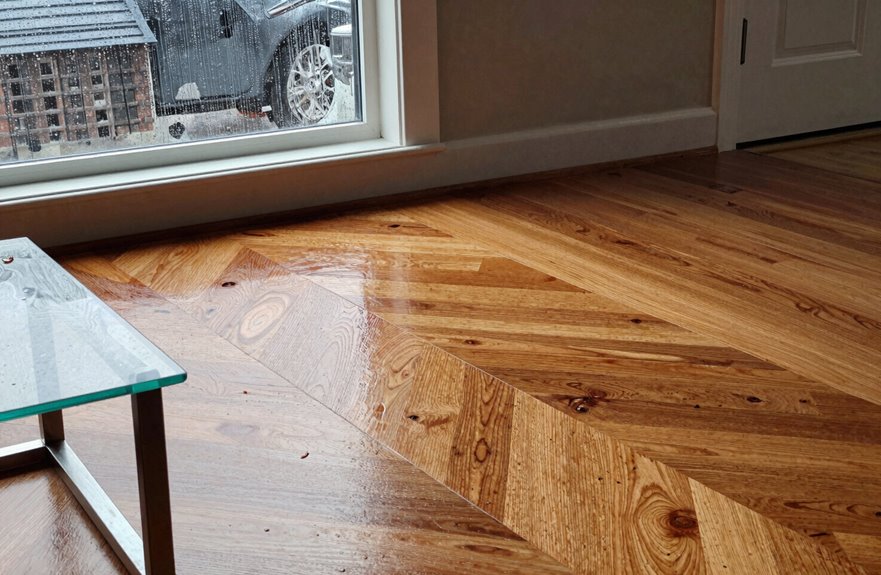
Where exactly can you get away with installing waterproof engineered hardwood without concern every time someone runs the faucet? I’ve put Hartco HydroBlok in my own powder room, and it’s been effective. The waterproof core gives you real moisture resistance, but the gorgeous real wood veneer on top remains wood. Standing water in seams will cause damage eventually; I learned this through a dripping shower curtain.
Installation precautions matter significantly: moisture barriers, tight seams, and quick cleanup are essential. Basements and below-grade spaces require careful consideration. Waterproof engineered hardwood works well for kitchens, half-baths, and busy entryways; spaces where life gets messy but floods don’t happen. Full bathrooms with tubs warrant serious reconsideration. Your floors will last longer when matched to appropriate spaces.
How Waterproof Engineered Hardwood Is Built Differently
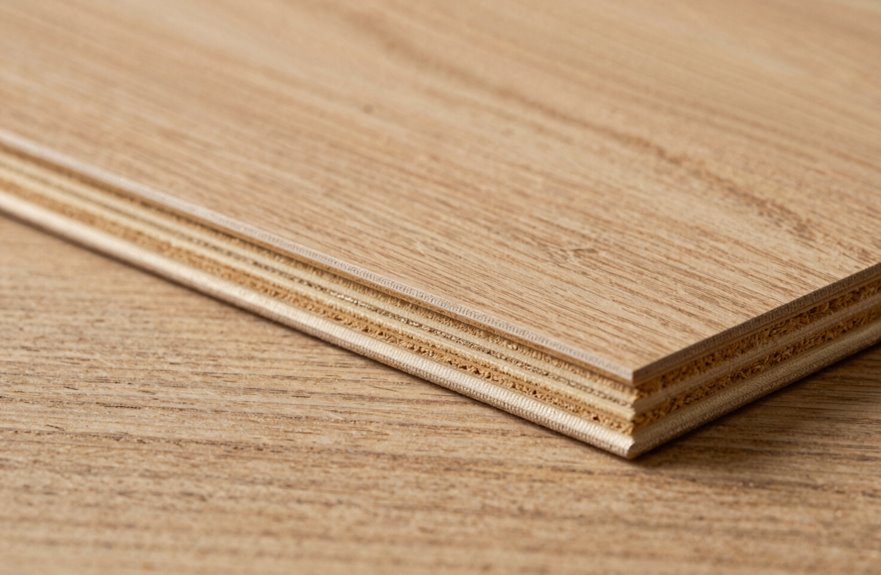
The core construction is what matters most. Regular engineered hardwood has limitations, while the waterproof version uses a fortress-like design with layers built for performance.
Here’s what separates the pros from the pretenders:
- Waterproof core – usually SPC or treated composites, not that flimsy plywood stuff that swells like a sponge
- Real wood veneer – because you want authentic grain, not plastic pretending to be oak
- Cross-ply construction – those perpendicular layers fight warping, keeping your floors flat when humidity fluctuates
- Moisture resistance – engineered into every fiber, not sprayed on as an afterthought
- Sealing edges – locking systems and protected seams block water infiltration at vulnerable points
This construction method prevents costly damage from moisture exposure, maintains structural integrity in wet environments, and eliminates the warping and swelling that compromises standard engineered hardwood.
3 Ways Water Still Damages “Waterproof” Floors
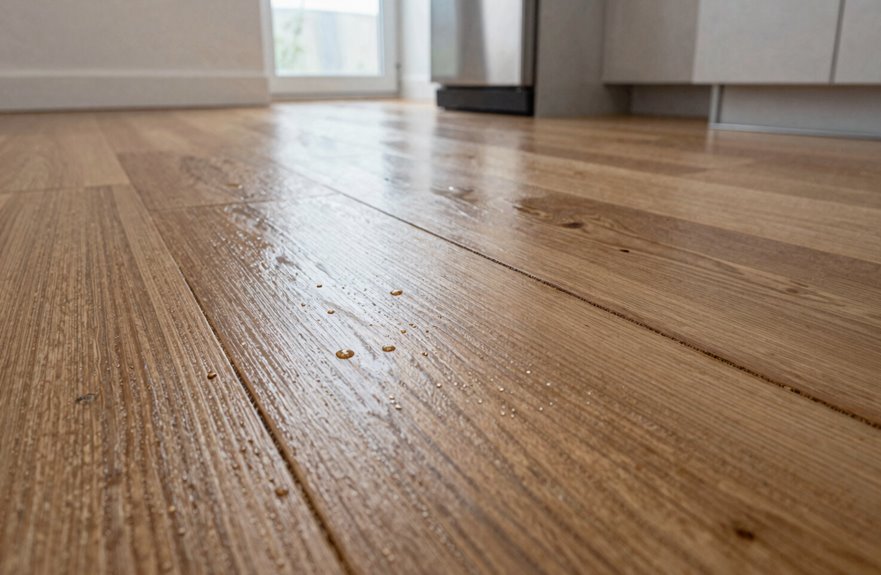
I’ve learned the hard way that “waterproof” doesn’t mean water-ignoring, and puddles sitting too long will cause damage. Water sneaks through seams like a bad houseguest, subfloor moisture bubbles up from below as a secondary problem, and that 72-hour “flood-proof” claim is more of a polite suggestion than a promise. Here are three ways your gorgeous planks can still fail you: warping, mold growth, and structural deterioration.
Seam Penetration Risks
How exactly does water sneak past a floor that swears it’s waterproof? Waterproofing on engineered hardwood doesn’t mean invincibility. Water finds every crack it can.
- Sealant gaps between planks that look tight but aren’t
- Locking systems that weaken with wear and temperature swings
- Standing water left too long on the surface
- Expansion gaps installed wrong, creating pathways for moisture
- Transition areas where rooms meet, often forgotten during cleanup
Seam penetration happens when moisture infiltration exploits these weak points. Your beautiful engineered hardwood might survive the surface splash, but water seeps underneath, threatening subfloor integrity before you notice. Waterproof floors can fail from below when these vulnerabilities exist.
Subfloor Moisture Damage
Once water slips past those seams I just warned you about, it doesn’t just disappear. Moisture penetration can turn beautiful installations into nightmares when folks assume that waterproof surface means bulletproof protection. That SPC core guards the plank, not what’s beneath it.
Subfloor moisture sneaks up from concrete that wasn’t properly dried, or creeps past a failed moisture barrier, and suddenly you’re hosting warp, buckling, maybe mold. Skipping the vapor barrier leads to water damage. Water damage doesn’t care about your aesthetic vision. Even with gorgeous waterproof claims, standing water at edges pools, waits, and destroys. Wipe spills fast, check your subfloor, and protect your investment.
Prolonged Exposure Limits
Although that “100% waterproof” label looks gorgeous on the box, it’s not a magic force field. Water exposure has real limits, even with fancy engineered floors.
Here’s what actually happens when water overstays its welcome:
- Real wood veneers? Still porous, still thirsty. Spills left too long warp and stain quickly.
- Core waterproofing (SPC, treated composites) holds strong, but prolonged moisture eventually compromises even the toughest center.
- Edge/seam leakage sneaks through gaps, pooling underneath where you can’t see trouble brewing.
- Subfloor moisture becomes a hidden nightmare, rotting from below while your surface looks fine.
- Bathrooms and flood zones? Reduced risk, not immunity. Standing water always wins eventually.
Quick cleanup is your most effective defense.
Wood Flooring Alternatives That Are Actually Waterproof
Why settle for almost-waterproof when you can choose floors that withstand floods? Waterproof engineered hardwood has significant limitations. While it offers good moisture resistance, it cannot provide true flood-proof protection when disaster strikes.
When my basement flooded last spring, my “waterproof” engineered hardwood failed. The edges swelled, and the subfloor molded underneath. That’s when I discovered real alternatives. Wood-look porcelain tile fooled my mother-in-law completely; she swore it was reclaimed barn wood. Luxury vinyl plank (LVP) and WPC rigid core actually survive submerged conditions without risk.
These alternatives give you that warm, woody aesthetic you want without the maintenance burden. Floors built to survive extreme water damage outperform engineered hardwood in flood conditions.