
Inset cabinets are doors and drawers that nest inside the face frame opening rather than sitting on top, giving you that seamless, furniture-grade look where everything lines up flush.
The visible frame becomes part of the design, showcasing craftsmanship through its precision alignment.
The trade-offs include sensitivity to humidity fluctuations, higher costs due to tight manufacturing tolerances, and seasonal hinge adjustments that may be necessary as wood expands and contracts.
Proper installation and maintenance ensure the satisfying precision fit this cabinet style delivers.
What Inset Cabinets Are (and How They Differ From Overlay)

Inset cabinets nestle right inside the frame openings, creating that seamless, furniture-grade look. Unlike overlay styles where doors sit on top, inset cabinets proudly show craftsmanship through visible frames and tight margins.
You’ve probably seen full overlay everywhere. Doors cover almost everything, sleek but hiding the bones. Inset does the opposite, displaying the cabinet structure with precision. The beaded inset style, with its tiny groove, adds vintage character compared to plain options.
Door alignment here isn’t forgiving. Humidity fluctuations affect wood, so stable homes perform better. When hinges align and everything sits flush, the result is a polished, professional kitchen appearance.
How Inset Cabinet Doors and Drawers Are Built
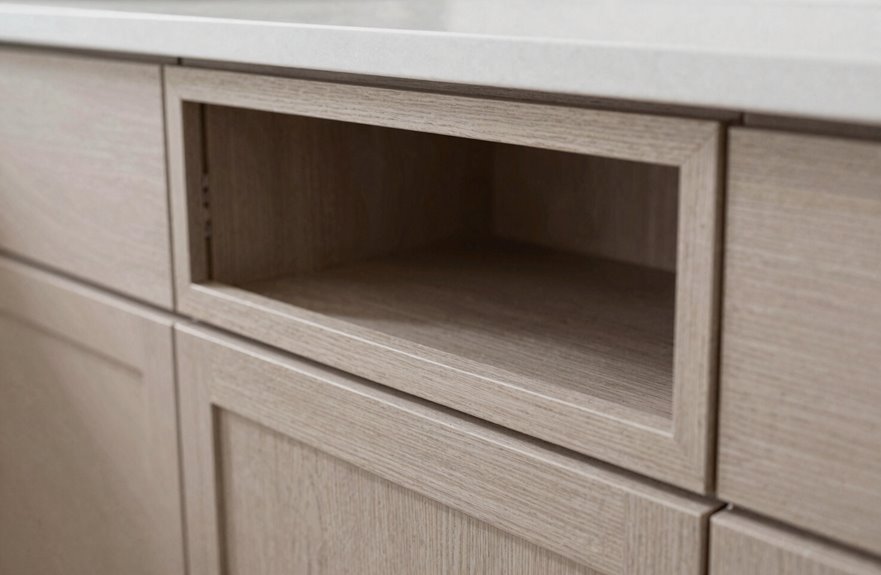
Now that we’ve covered what sets inset cabinets apart from their overlay cousins, let’s talk about how these beauties actually come together. The construction is where the magic and the headaches live.
Inset cabinetry demands your doors and drawers sit inside the face frame, not on top. That flush fit is gorgeous, brutal, and unforgiving. We’re talking hairline gaps, people. Every edge must align perfectly, or the whole thing looks off.
Your hinges matter hugely. They’re often exposed, though you can hide them, and they control that reveal consistency. Beaded inset adds that charming lip detail inside the opening, so fancy.
Here’s what matters: dimensional stability keeps your project on track. Wood moves, humidity swells, and suddenly your drawers bind. Tight installation tolerance isn’t picky; it’s essential. Execute this correctly, and your inset cabinetry will perform reliably for years.
Flush vs. Beaded Frames: Choosing Your Edge Style

I’ve stared at cabinet frames until my eyes crossed, and I learned this: flush frames give you that sleek, seamless look where cabinet doors sit perfectly flat inside square edges. They feel modern, almost invisible. Beaded frames have a little decorative ridge, a whisper of detail that suggests craftsmanship.
The flush vs beaded debate really boils down to traditional vs modern vibes. Beaded insets read antique, cozy, collected-over-time. Flush reads minimal, intentional, suggesting intentional design choices.
Interior cabinet construction gets fussy with beaded edges. Door alignment becomes crucial since that bead catches light and shadows. One millimeter off, and you’ll notice.
| Feature | Flush Frames | Beaded Frames |
|---|---|---|
| Edge Profile | Square, flat | Decorative ridge |
| Vibe | Modern, clean | Traditional, warm |
| Visual Weight | Lighter, recedes | Slightly heavier |
| Tolerance | Forgiving | Precise, demanding |
| Best For | Minimal spaces | Collected, layered homes |
I personally waffle between both. My bathroom has flush frames, my pantry has beaded frames. You’re allowed to mix. Combining both styles makes the space feel lived-in rather than catalog-ready, reflecting your actual preferences and aesthetic choices.
Hinge Options for Inset Cabinets: Concealed or Visible

Where do you begin with hinges. It’s a decision with multiple considerations, and we can work through it together.
For inset cabinets, hinge options split into two categories. Concealed hinges hide completely, keeping that face flush look sleek and uninterrupted, plus they offer soft-close so doors don’t slam. I installed these in my own kitchen, and that silent close is a practical benefit.
Or you go bold with finial hinges, visible hardware that becomes jewelry for your doors. Polished Nickel, Oil Rubbed Bronze, Flat Black. The finishes are gorgeous and add significant character to cabinetry.
Here’s what matters: concealed hinges are adjustable hinges, making cabinet alignment way easier if your house settles. Mine did, and the adjustment capability proved valuable. Finial hinges look stunning but require precision installation. Both options work well, and both have legitimate applications in cabinetry design.
The Real Drawbacks: Humidity, Binding, and Higher Costs
Why exactly do inset cabinets cost so much more, and why is everyone so nervous about humidity? The precision craftsmanship you’re paying for is significant. Every frame flush door needs microscopic tolerances, and those specialized hinges alone represent a substantial expense. We’re talking higher costs before we even discuss reduced interior storage, since doors sitting inside the frame literally eat your space.
But humidity is the real problem here. Seasonal wood expansion means you’re constantly adjusting, realigning, chasing that flush fit. I’ve watched perfect reveals swell shut in August, binding so tight the knob came off. If your frames aren’t perfectly square, weather changes turn minor flaws into disasters.
The aesthetic appeal remains undeniable, though the maintenance demands are considerable.
When Inset Cabinets Justify Their Premium Price
I’ll admit I’ve winced at inset cabinet quotes before, but then I watched a craftsman hand-plane a door until it kissed the frame with a perfect 1/16″ reveal without shims or excuses. That precision craftsmanship value became clear. You’re paying for joints so tight they’d make a furniture maker proud, plus the hidden work of humidity management necessity. Seasonal swelling and shrinking that would warp lesser cabinets get tamed by careful material selection and installation smarts. It’s not cheap, but when you run your hand along that flush, seamless face every morning, you’ll know exactly where your money went.
Precision Craftsmanship Value
The price tag on inset cabinets can make you wince. I’ve stood in that showroom, calculator in hand, wondering if flush doors are worth eating ramen for a month. Precision craftsmanship isn’t marketing fluff; it’s measurable magic. Those tight tolerances mean every door alignment sits perfectly within the cabinet frame, no floating, no faking. I watched my installer sweat through cabinet installation, shimming fractions until beaded inset edges caught light like picture frames. You do lose some storage, your plates scoot back, surrendering space to beauty. That furniture-like built-in appearance conveys intentional design. Wood breathes, so climate acclimation affects performance over time. When you choose inset cabinets, you’re buying skilled hands, specialized hinges, and minimal gaps executed with precision.
Humidity Management Necessity
Humidity can damage inset cabinets quickly, requiring proper climate control. My new kitchen experienced this problem when wood expansion caused doors to stick seasonally.
Inset cabinets sit flush inside the frame construction, leaving minimal reveals around each door. This precision creates an attractive appearance but leaves little tolerance for wood movement. When humidity increases, wood expansion pushes against those tight tolerances, and smooth-close doors become difficult to open.
Humidity management is essential, not optional. Without climate control, you will face seasonal problems with door tolerance and need to adjust hinges repeatedly. The craftsmanship required to maintain that fit justifies the premium cost, since achieving and maintaining proper fit requires significant skill.