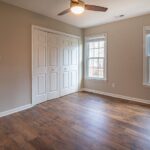

I’ve fought this exact battle in my century-old bungalow with oak floors so gapped you could lose a dime. Vacuum those cracks thoroughly, as dormant adults wake up with every pass. Dump that canister outside immediately. Hit baseboards and shadowy corners twice daily, steam clean slow and deep into the gaps, then use baking soda or salt overnight to dehydrate eggs. Wash every fabric on hot settings, keep pets out until they’re treated with vet preventatives. This takes weeks because pupae can remain dormant for five months. Check those hotspots monthly to prevent reinfestation.
Why Fleas Hide in Your Hardwood Floor Cracks
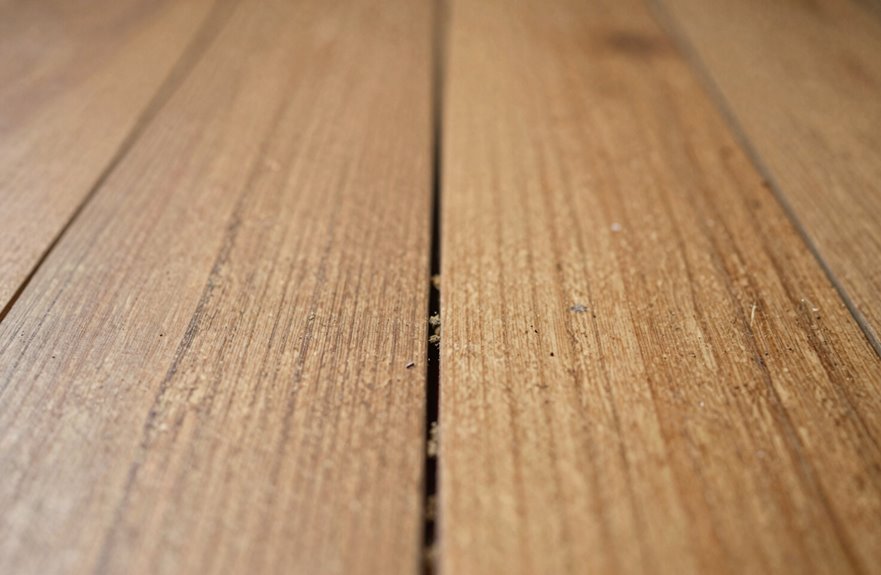
Why do these tiny terrors love my floor cracks so much? I’ve battled these pests and learned that fleas aren’t just annoying, they’re strategic. Those narrow gaps between floorboards provide perfect hideouts. Dark, humid, and shielded from brooms, they function as flea resorts where eggs hatch undisturbed. The baseboard edges collect dust and dog hair, serving as both food source and breeding ground. Vacuuming causes them to emerge like tiny zombies from vibrations. The cocoons sense movement, wait it out, then reinfestation occurs. Complete elimination requires attacking these refuge points directly through crevice tools, targeted heat, and persistent vacuuming. Your eclectic vintage floors deserve protection, and so do you.
Protect Your Skin Before You Start Cleaning
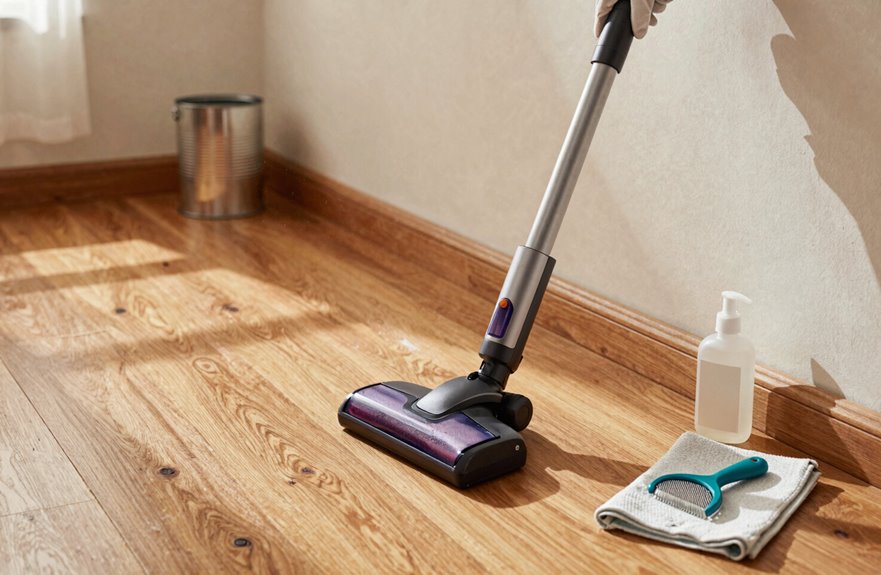
I’ve stared down enough flea battles to know that gearing up matters just as much as the attack plan itself. Nothing derails your flea control momentum faster than scratching your ankles raw while you’re still halfway through the job.
Here’s how I suit up every single time:
- Long sleeves, pants, gloves, closed-toe shoes – basically, cover everything you can, because fleas are jumpers and they don’t play fair
- Lightweight disposable mask – flea dust and diatomaceous earth look harmless floating in sunbeams, but your lungs disagree
- Tuck everything in – sleeves, pants, socks pulled up tight, creating a fortress against crawlies
- Save the petroleum jelly for after – it’s for soothing bites, not prevention, I learned that the itchy way
Wash contaminated gear separately in hot water when you’re done. No shortcuts.
Vacuum Hardwood Floors Deeply to Remove Fleas and Eggs
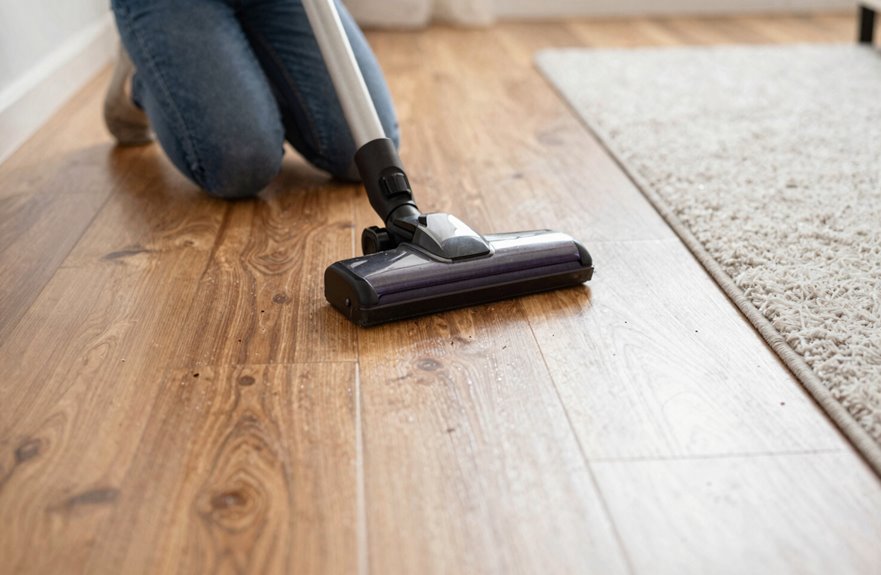
I’ll target those sneaky flea hideouts hard: cracks between boards, under the couch, along the baseboards where they think you won’t look. Don’t stop at one round because vacuuming actually wakes up dormant adults, so schedule repeat attacks. A weak suction machine just tickles these pests, so borrow a neighbor’s powerhouse if needed. Sprint outside to dump the canister immediately to avoid re-releasing them indoors. After three rounds in a living room, you’ll see why persistence beats perfection here.
Target Flea Habitats
The cracks between my floorboards are absolute flea condos, and I’m evicting every last tenant. When I’m vacuuming, I’m hunting hideouts.
My attack plan:
- Hit the cracks hard – I angle my vacuum’s crevice tool deep between boards, sucking out eggs like I’m deflating tiny balloons.
- Go under everything – That dusty space beneath my vintage credenza is prime real estate for larvae. I move it, I vacuum it, I win.
- Baseboard patrol – Those sneaky edges where wall meets floor get my full attention because fleas love the shadows.
- Bag it, banish it – I seal my vacuum bag and march it straight outside. No second chances for escape artists.
Steam cleaning helps too, catching what my vacuum misses.
Repeat Cleaning Sessions
Why stop at one victory when the war’s still raging. Vacuuming once simply isn’t enough. Those sneaky eggs hatch in waves, so I commit to vacuuming every few days for at least two weeks straight. I hit the cracks, the baseboards, under every chair leg; basically anywhere a flea might throw a tiny party. I always dump the bag outside immediately, because re-infestation won’t happen on my watch. When I’m feeling extra fancy, I’ll steam clean too. That heat murders what vacuuming misses. I throw on long sleeves (fashionable, I know), grab my clean machine, and get to work. This approach requires persistence and delivers results.
Steam Clean Floors to Kill Fleas Without Chemicals
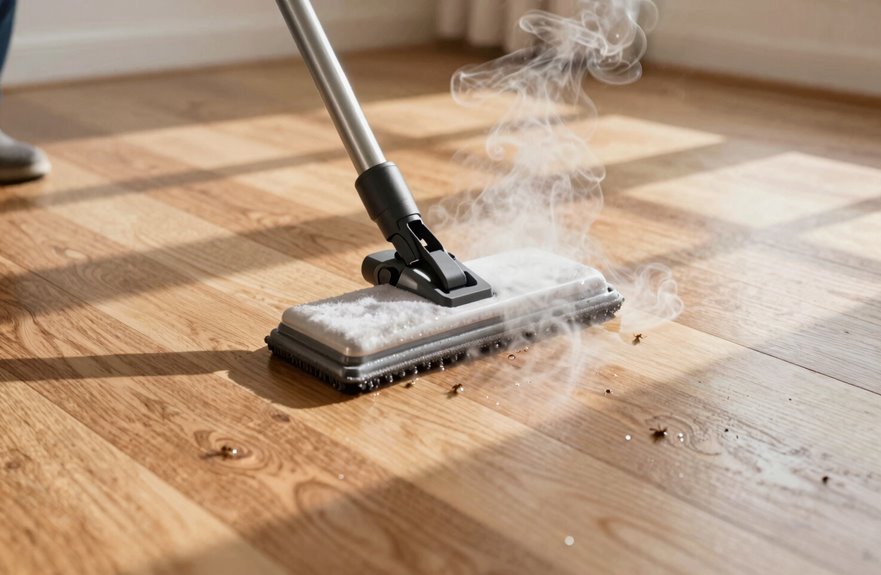
Ever wonder how hot it takes to make a flea actually give up? The answer is gloriously simple: steam. We’re talking temperatures that send those little jumpers straight to flea heaven, no toxic nonsense required.
Here’s how I tackle it:
- Vacuum first, sucking up the loose stragglers and debris so the steam can really penetrate.
- Crank up the heat until you see that satisfying visible plume. Cracks, gaps, and baseboards get the VIP treatment.
- Move slowly, like you’re painting a masterpiece, because rushing means survivors.
- Dry completely before your dog claims his territory again. Damp wood invites trouble, and you’re not hosting round two.
I’ve warped a floor learning this, so check compatibility first. Your hardwood deserves better, and so do you.
Kill Eggs Overnight With Baking Soda or Salt
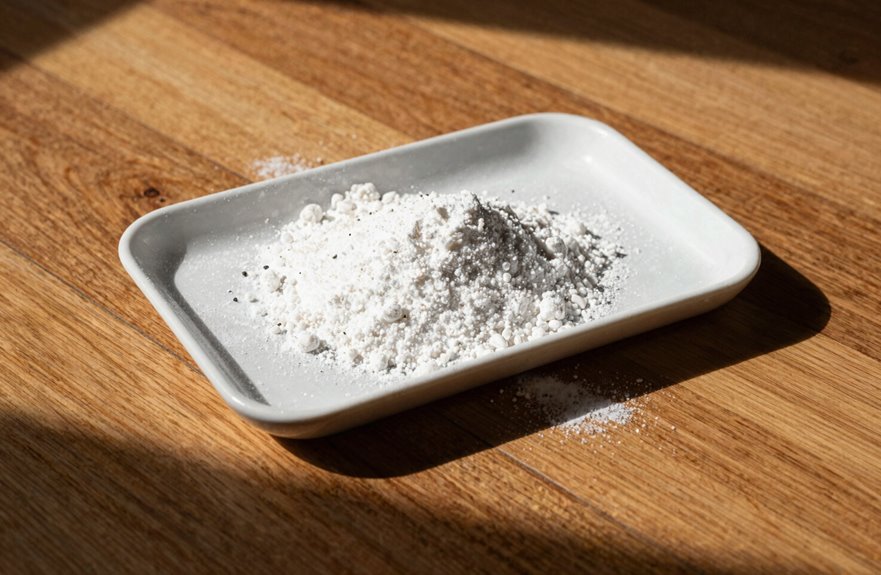
Adult fleas are the loud neighbors, sure, but eggs hide in floorboard cracks, plotting their comeback. I’ve stared at my hardwood at midnight, convinced they’re winning.
My secret weapon is baking soda. I sprinkle it deep into those gaps, like grout for pest control, where eggs think they’re safe. The stuff dehydrates them slowly. I leave it overnight, let it work while I sleep, then vacuum thoroughly.
Salt works too, but I prefer baking soda. It’s cheap, available everywhere, and requires no explanations at checkout. Repeat for several nights. Consistency matters because you need multiple applications to eliminate eggs at different developmental stages.
Use Diatomaceous Earth in Floor Cracks (Safely)
Baking soda’s great for eggs, but I’ve got another trick for the adults still hopping around. Food-grade diatomaceous earth is my secret weapon for those floor cracks where fleas love to hide.
Diatomaceous earth: my secret weapon for adult fleas hiding in floor cracks.
Here’s how I do it safely:
- Grab a mask first. You don’t want to inhale this stuff.
- Sprinkle a thin, even layer into gaps, baseboards, and cracks, avoiding piles that’ll poof into dust clouds.
- Keep everything bone-dry because DE turns useless when wet. Leave it for several days before vacuuming dead fleas and spent powder.
- Reapply every 1–2 weeks, especially after cleaning, pairing it with vacuuming and pet treatment.
Since we’re already handling flea eggs with baking soda, this one-two punch eliminates fleas at multiple life stages on your hardwood floors.
Spray Essential Oils That Actually Repel Fleas
So what do you do when you’ve got the cracks covered but still spot a flea doing the cha-cha across your living room floor? I grab my essential oils spray, that’s what. Peppermint, eucalyptus, citronella, and tea tree are my go-to scents, though their flea-fighting power varies wildly. I dilute them in water, spritz sparingly on floors (never on pets), and keep kids away since these oils pack real irritation potential. They don’t kill eggs or larvae, so I’m not fooling myself. I patch-test first; learned that after staining my oak trim. Essential oils work as supplementary tools, not primary solutions. Vacuuming, washing, and treating pets are the core methods that actually work. The fresh, minty smell does provide a pleasant environment.
Wash Every Fabric Fleas Could Have Reached
I learned the hard way that fleas don’t just live on floors. They’re hiding in every soft surface they can find, like that chunky knit throw I loved or my dog’s favorite overstuffed bed (you know the one, it’s basically a hair magnet). I’m hitting every fabric with hot water above 60°C because that’s the temperature that actually kills those eggs and larvae before they hatch into another generation. Don’t skip the high-heat dry cycle either. I’ve made that rookie mistake, and damp fabric becomes an ideal breeding environment for fleas.
High-Temperature Washing Protocol
While I used to think a quick spin cycle would do the trick, I’ve learned that fleas thrive in lukewarm water. They are essentially tiny organisms that flourish when you half-commit to washing. High-temperature water is necessary, and here’s the protocol:
- Crank your washer to 60°C+ (140°F). This temperature kills eggs and larvae effectively.
- Strip every removable fabric: rugs, curtains, cushion covers, pet beds. Everything that contacts air requires treatment.
- Steam or hot-wipe anything too delicate for machines, then dry completely. Dampness creates favorable conditions for flea survival.
- Vacuum immediately after washing, dump contents outside, and repeat weekly for 2–3 cycles. This breaks the flea life cycle.
Targeted Fabric Categories
Where exactly do fleas love to crash? Everywhere soft, warm, and vaguely pet-adjacent. Your entire textile collection is at risk, including rugs, pet bedding, curtains, and chair covers.
I strip every removable soft furnishing, including vintage throws labeled “dry clean only,” and wash them above 60°C. Hot water kills eggs and larvae. For non-removable cushions, I use damp cloths and scrub thoroughly. I wash everything separately to prevent cross-contamination and inspect baseboard-adjacent fabrics repeatedly. This requires a multi-week commitment across multiple treatment cycles.
Drying Cycle Importance
How hot does that dryer need to run? High heat is most effective. After I’ve washed every fabric those sneaky fleas touched, I crank that dryer to the highest setting. Here’s my approach:
- Bedding blitz – sheets, blankets, the works, on high heat until they’re completely dry.
- Curtain attack – those floor-skimming panels are flea highways, so I dry them on high heat.
- Pet bed purge – Fido’s favorite cushion gets the sauna treatment.
- Rug roast – small rugs tumble dry while I empty that vacuum bag outside immediately, with no exceptions.
Washing above 60°C kills plenty, but the drying cycle is the finishing move. Sun-drying works too, but high heat delivers faster results for a flea-free home.
Stop Pets From Reinfesting Your Clean Floors
I’ve scrubbed every inch of these floors until they gleam like a showroom sample. Watching my golden retriever, Biscuit, trot right back in and shake his coat like he’s sprinkling confetti at a parade I didn’t ask for stings.
Flea prevention starts with keeping your pets out during the deep clean, then treating them with vet-approved preventatives before they return. I wash every blanket, curtain, and that ridiculous donut bed he loves in water hot enough to scald my fingertips, then dry it all on high heat. I vacuum twice daily, hitting every baseboard crack and shadowy corner where fleas throw secret parties. I toss that bag straight outside like it’s radioactive. IGR barriers are effective tools for breaking the cycle.
Know Your Timeline: When Fleas Actually Die Off
Why does it feel like I’m winning the battle only to lose the war? I’ve scrubbed my floors raw, yet here come the bites again. Understanding the flea lifecycle prevents this frustrating cycle.
Here’s what we’re really dealing with:
- Eggs hatch in 2–14 days — those tiny white ovals hiding in floor cracks don’t quit.
- Larvae spin cocoons fast — think silk sleeping bags tucked against your baseboards.
- Adults emerge hungry — minutes to hours, and they’re biting your ankles.
- Pupae wait forever — up to 5 months, just chilling for a host.
That 17–26 day cycle is relentless. Success requires consistent treatment throughout this entire period, as new fleas will continue emerging from pupae even after visible adult fleas disappear.
Check These Spots Monthly to Catch Fleas Early
Monthly inspections are my hidden tool. I learned this the hard way after missing a colony living under my grandmother’s oak sideboard for three weeks straight. Now I check baseboards, under furniture, and those sneaky cracks where hardwood meets wall. Fleas love tight spaces. I hunt for flea dirt (those tiny dark specks that look like pepper), musty odors, and fresh bites on my ankles. Don’t skip loose floorboards or rug edges.
| Where I Check | What I’m Hunting For |
|---|---|
| Baseboard edges | Flea dirt, that telltale pepper dust. |
| Under heavy furniture | Musty smell, hopping shadows |
| Cracks between planks | Eggs hiding in dark crevices |
| Beneath area rugs | Bites, scratching pets |
| Loose floorboards | Live fleas, new activity |
I track bites, pet scratching, and visible jumpers after cleaning. My monthly checklist keeps vacuuming, mopping, and pet treatments consistent. Early detection prevents infestations from spreading and reduces the need for intensive treatments later.