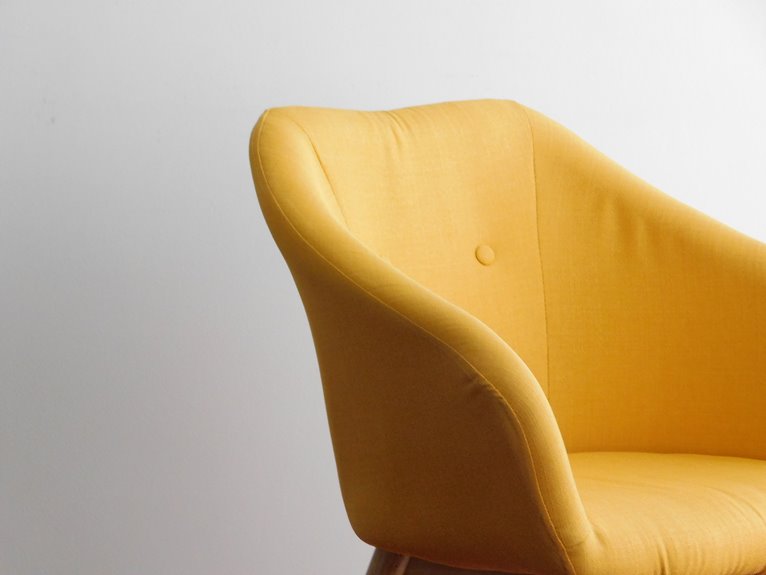
You’ll need about 6 yards for a standard armchair with one cushion, 12 yards for a cozy club chair, or just 2 yards if you’re only covering the frame without cushions. Dining chairs need roughly half a yard each. A directional stripe pattern can require 8 yards for one petite chair due to pattern matching requirements. Piping, tufting, and pleats will require extra fabric, so plan accordingly. Round up your measurements; having remnants is better than running short mid-project. Accurate measurements and accounting for the standard 54-inch fabric width are essential for successful reupholstering.
How Much Fabric to Reupholster Your Chair: Quick Estimates

Wondering how much fabric you’ll actually need to transform that sad, saggy chair into something spectacular? A standard armchair with one cushion typically requires about 6 yards of fabric, while those cozy club chairs demand roughly 12 yards. No cushions? You’re looking at maybe 2 yards. Dining chairs need just half a yard each.
Fancy details like piping, tufting, pleats, and ruffles consume extra yardage significantly. Pattern matching presents another challenge, as the repeat can affect your entire calculation. Adding extra yardage to your estimates provides a safety margin for these variables.
Measure Your Chair When Standard Yardage Won’t Work
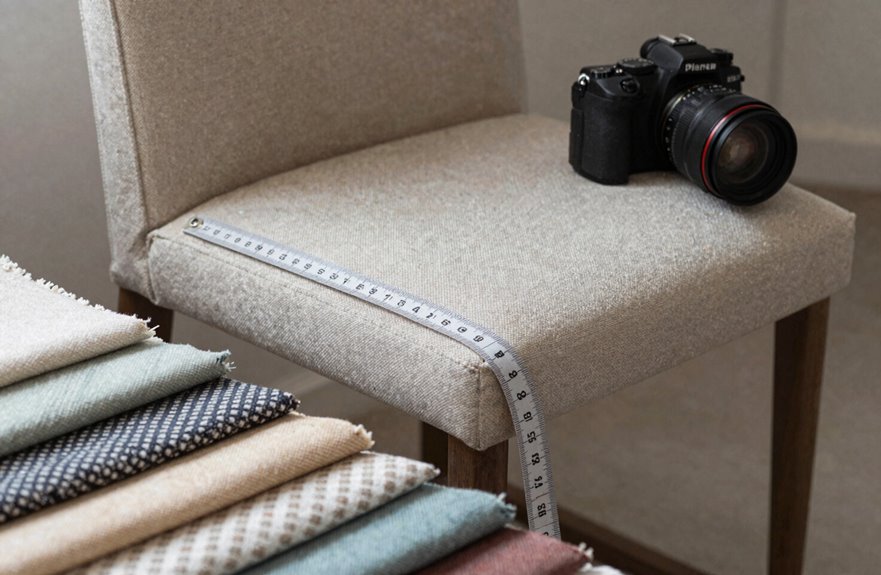
Why settle for guesswork when your chair is one-of-a-kind? Standard yardage charts often fall short, leaving you mid-project with exposed foam.
Your one-of-a-kind chair deserves better than guesswork—standard yardage charts leave you mid-project with exposed foam.
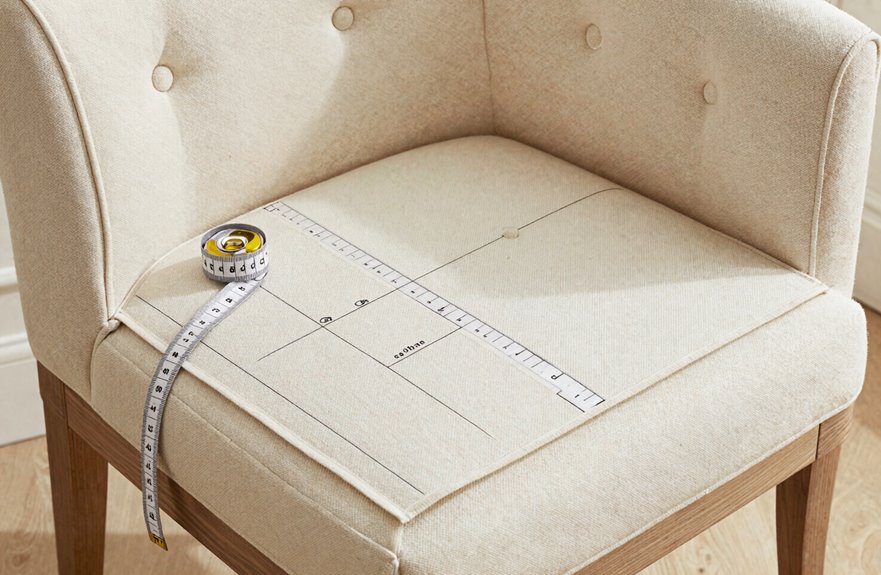
Grab your tape measure. For each cushion, measure length and width seam-to-seam, then add one inch all around for seam allowance. Plan for roughly two yards per cushion, but don’t forget the frame. The inside arms, outside arms, and seat deck require additional fabric.
Total every measurement, divide by thirty-six for yards, and check your fabric width, usually fifty-four inches. Verify this before purchasing.
Prints require extra consideration. A stripe or pattern you choose needs additional yardage to account for matching repeats; add ten to fifteen percent extra for this purpose. Precision in upholstery measurement prevents costly mistakes and material waste.
Add Yardage for Piping, Tufting, and Pattern Matching
I’ve measured my chair, I’ve got my numbers, and I’m feeling pretty proud, then I remember the details that separate amateur hour from “did you hire a pro?” Piping, tufting, that gorgeous floral I refuse to compromise on, they all demand more fabric, and I learned this the hard way when my stripe-matched wingback turned into a mismatched nightmare because I skimped.
| Extra Element | Yardage to Add |
|---|---|
| Piping (standard chair) | ¼–½ yard |
| Tufting (heavily buttoned) | 2–3+ yards |
| Pattern matching | 10–15% more |
| Multi-piece sections | Per panel, seriously. |
Piping wraps edges in crisp contrast. Tufting devours fabric with every button. That damask must flow uninterrupted across cushions or the pattern breaks at seams. I always verify with my upholsterer now; fabric width, cushion count, all of it. Guessing turns beautiful chairs into expensive regrets that cannot be fixed without starting over.
Convert Inches to Yards Using 54-Inch Fabric Width
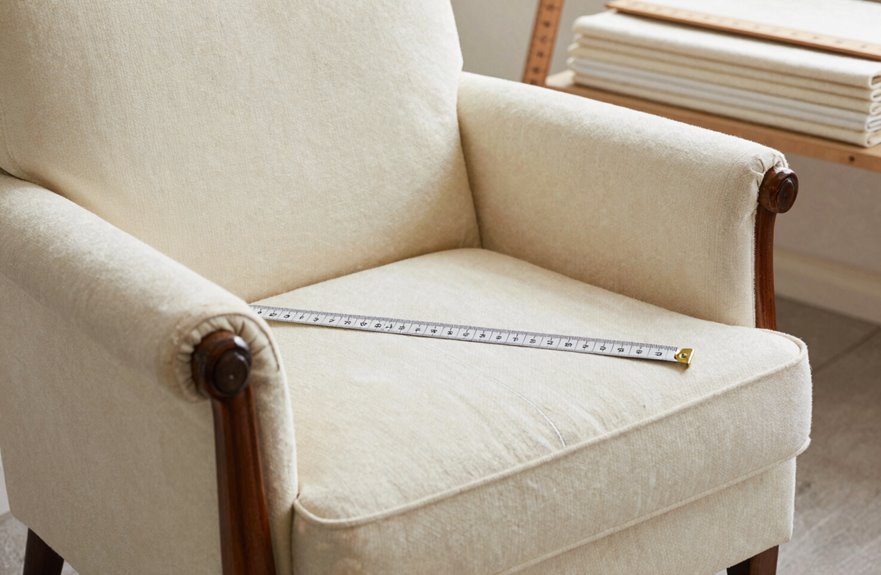
So how do I turn all those frantic inch measurements into actual yards I can buy? I’ve got my 54-inch fabric width, thank goodness, because that standard upholstery width saves us from nightmare math. Here’s my inch-to-yard conversion trick: I divide total inches by 36, since one yard equals 36 inches.
However, I learned the hard way. I measure my chair’s cushions, add seam allowances (one inch per edge, don’t skip this), sum everything for front and back, then divide. Directional patterns require extra inches for alignment, because nothing’s worse than upside-down florals.
I always round up to the nearest quarter-yard. That little buffer covers inevitable miscuts and future repairs. Calculating fabric yardage prevents project delays caused by insufficient material.
Find Cheap Fabric and Double-Check Before You Buy
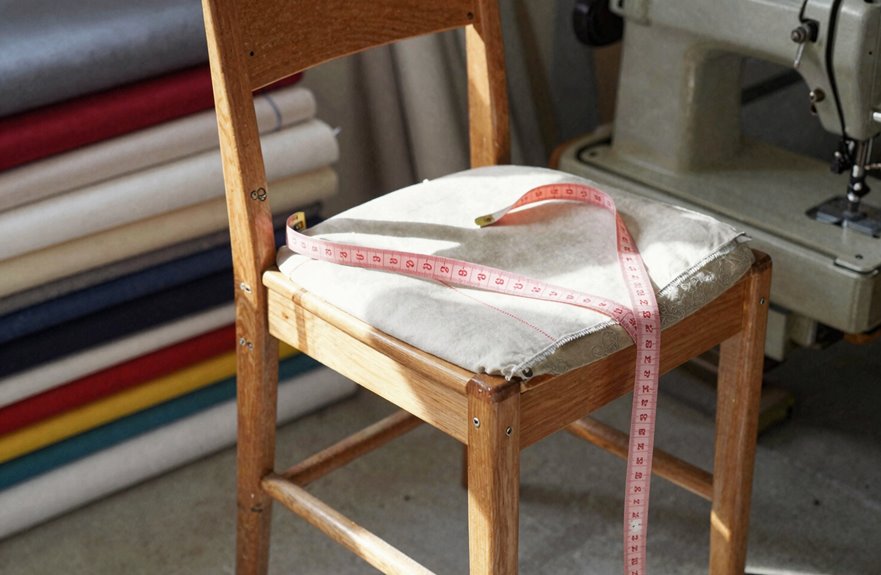
Because I’m always hunting for fabric that won’t demolish my wallet, I’ve developed a sixth sense for spotting deals that still look expensive. I found navy velvet for six bucks a yard at a garage sale, and it made my dining chair look like it came from a boutique hotel.
I scour clearance bins, thrift stores, and online retailers for cost-effective options. Simpler patterns slash my yardage needs since I’m not wrestling with matching stripes. I always double-check fabric width, usually 54 inches, so I’m converting inches to yards correctly. I made mistakes before that I’d rather not repeat. I stash remnants from old projects, too; they work perfectly for piping or tufting. I grab 10-20% extra yardage because mistakes happen, and nobody wants a half-covered seat.