
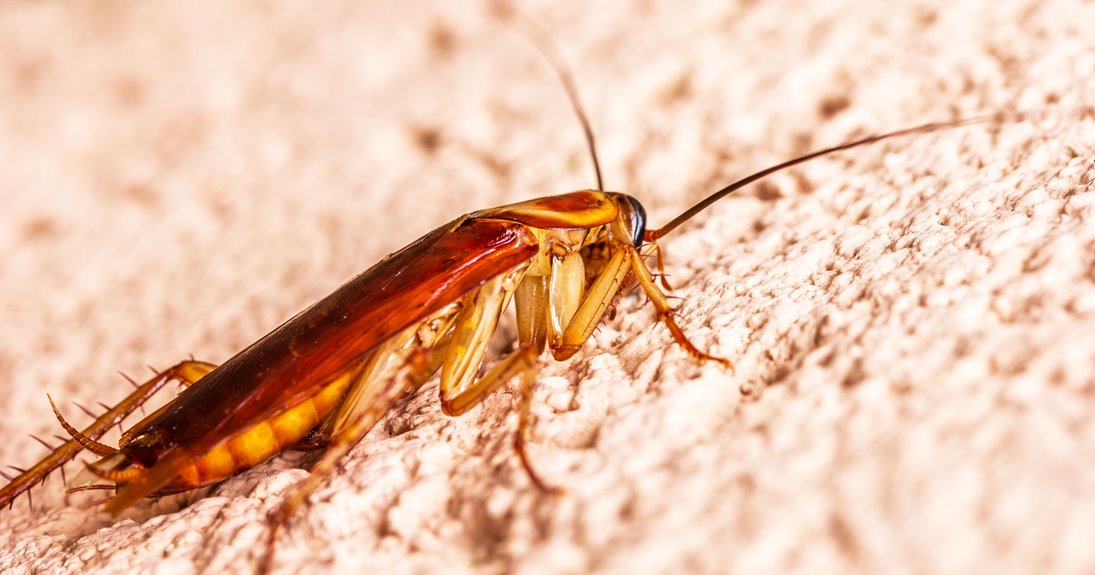
I walked into my bathroom at 2 a.m., flicked on the light, and watched a roach scatter like it owed me money. My steamy shower paradise was basically a five-star resort for these six-legged squatters.
Roaches crave the tropical humidity from your hot showers, plus they slip through gaps around pipes thinner than a credit card. That damp towel behind your door serves as both dinner and a bed.
Even spotless bathrooms hide moisture in wall voids and drain traps, and one female German cockroach can spawn 200 babies before you finish your morning coffee.
I’ve figured out exactly where they’re hiding, and I’m about to show you how to evict them for good.
Why Clean Bathrooms Still Attract Roaches
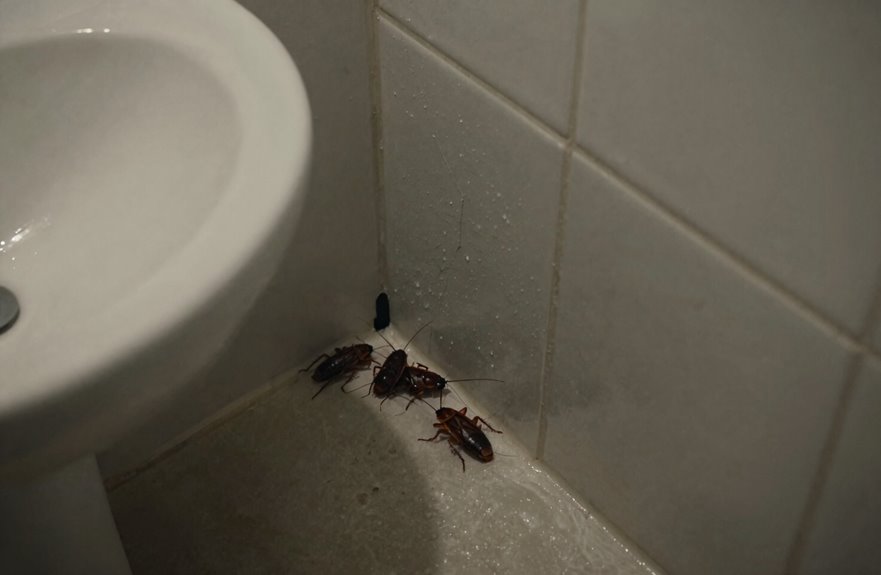
Why do roaches keep crashing my bathroom party even after I’ve scrubbed every surface? Bathroom roaches don’t care about sparkling counters.
Moisture from every steamy shower creates an irresistible, tropical environment they adore. I’ve found harborage behind my toilet, under the sink, and in those dark vanity corners. These spaces are warm and cozy, essentially a roach spa. And those hidden food sources? Toothpaste gunk, soap scum, and shed hair provide sustenance. It’s like I’m accidentally running a tiny café.
I’ve sealed entry points around pipes and caulked baseboard gaps, yet they still keep arriving. Water sources are everywhere, with condensation I can’t even see. I’ve exhausted my sanitation efforts. Clean isn’t enough when the entire bathroom environment actively attracts these pests through moisture, warmth, and food availability.
What Moisture Sources Draw Roaches Into Bathrooms?
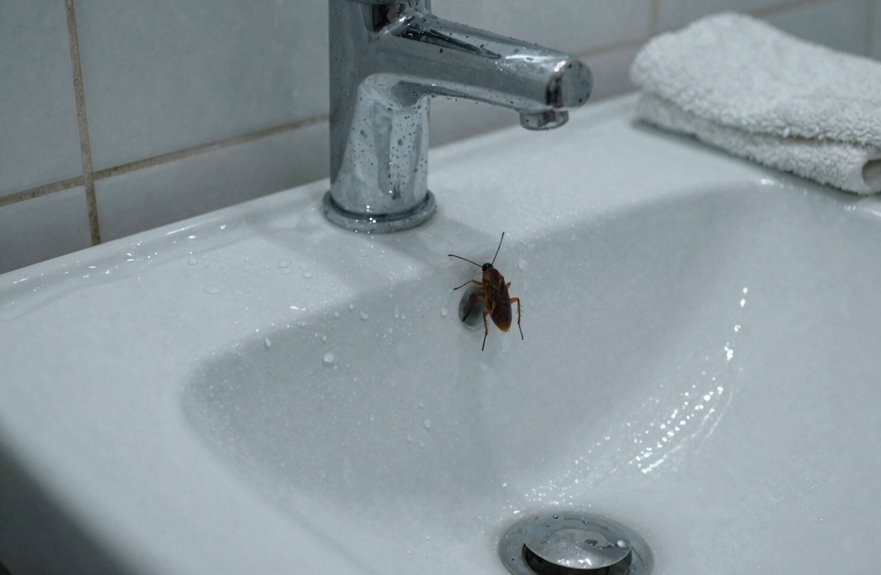
I’ve scrubbed every surface, sealed every crack, and yet they’re still coming. I was fighting the wrong enemy.
Those leaky faucets and dripping pipes I’d ignored are basically roach water fountains, providing constant moisture for drinking and breeding. The humidity from steamy showers creates ideal conditions behind damp cabinets and under sinks. Standing water in shower corners becomes a breeding ground. Even soap scum traps moisture like a sponge, and wet towels provide the environment they need to thrive.
I thought I was clean, but I was running a spa. Now I wipe down condensation, fix drips immediately, and hang towels dry. Eliminating these moisture sources removes the primary attraction that draws roaches into bathrooms.
How Do Roaches Use Drains and Plumbing to Get Inside?
| Entry Method | What I Found in *My* Bathroom | Quick Fix |
|---|---|---|
| Dry P-traps | Guest bath sink, unused for weeks | Run water weekly, no exceptions |
| Unsealed drains | Shower drain with cracked seal | Replace rubber seal, caulk edges |
| Pipe gaps under sink | Huge void behind vanity | Steel wool + foam sealant combo |
| Wall voids | Shared wall with neighbor’s plumbing | Alert building management as soon as possible |
| Exterior sewer lines | Old clay pipe connections | Professional drain inspection |
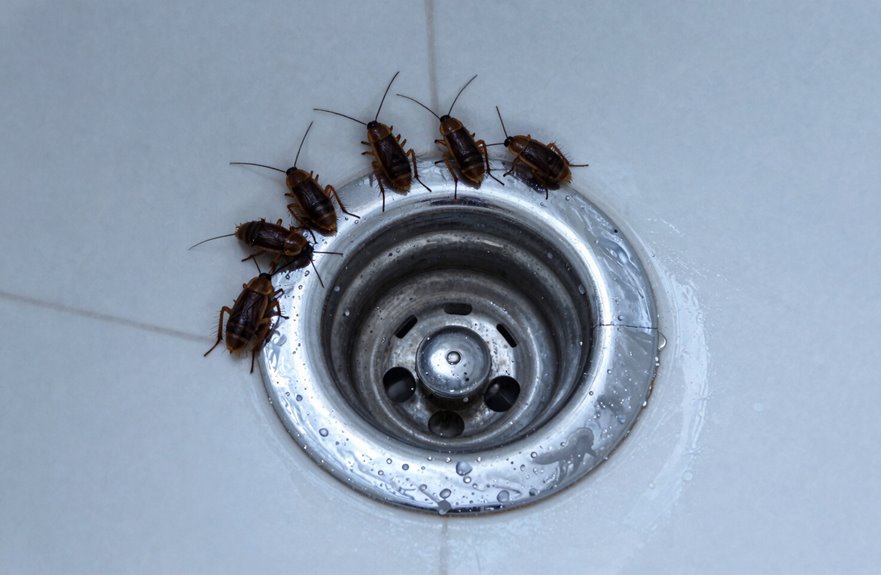
Those bathroom roaches weren’t after my moisture. They had already tunneled through drains, exploited every gap in my plumbing entry points, and colonized the voids I couldn’t even see. Check your seals regularly. Leaks aren’t the only invitation we’re accidentally sending.
Hidden Food Sources That Keep Roaches Alive in Bathrooms
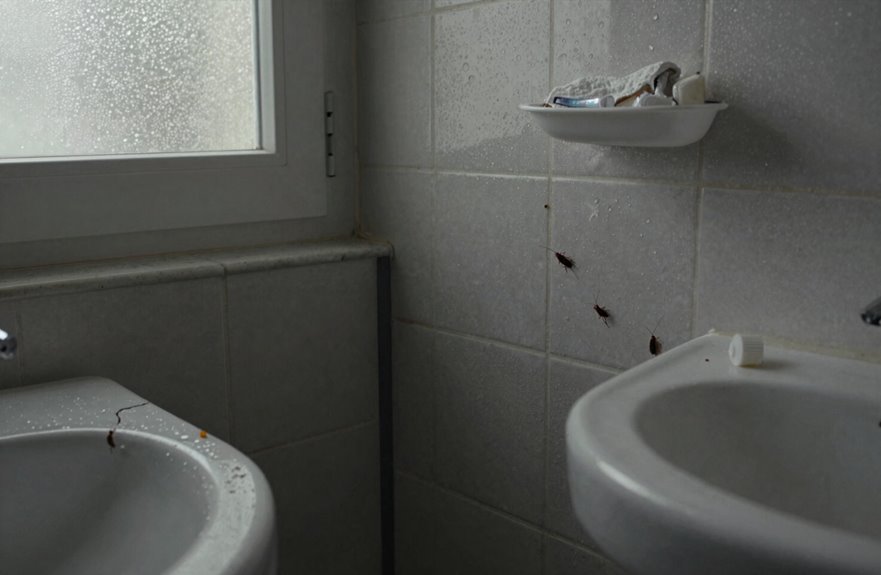
Where exactly are these roaches finding dinner in a room with no kitchen?
That toothpaste residue by your faucet is basically a roach buffet. Soap scum on shower walls provides food they consume. Your drains collect hair cells and shed skin, which feeds whole families. Damp towels behind your door remain wet and edible. Bathroom trash with used tissues becomes a significant food source. Those wet mats under your sink create ideal roach conditions.
Most people think “clean enough” means spotless. These pests survive on almost nothing. Once you start seeing your bathroom as a snack bar for them, you can finally cut off the supply. Eliminating these hidden food sources directly reduces roach populations.
Where Roaches Hide in Bathrooms (and Why You Miss Them)
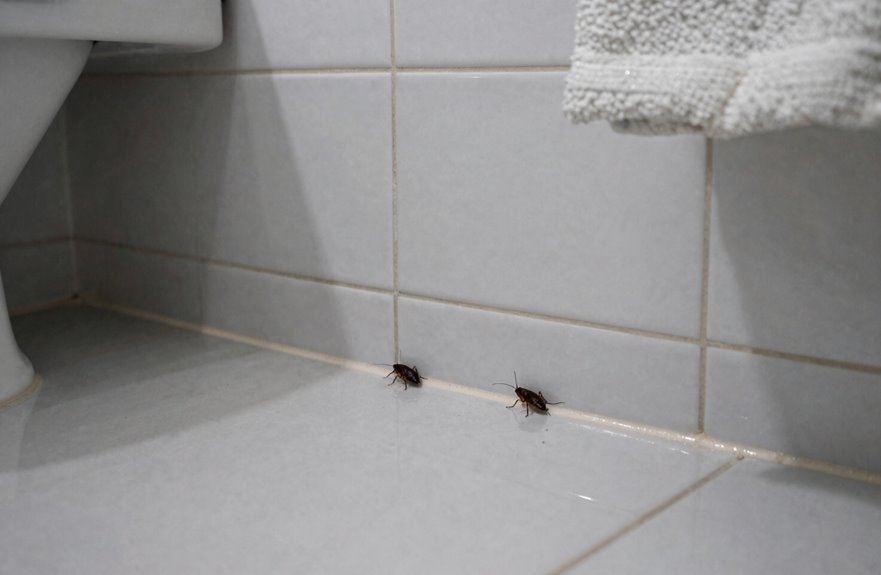
I’ve turned my bathroom upside down hunting roaches, and here’s what I found. Classic concealment zones include behind your toilet, under that sink cabinet, and any dark, humid corner that resembles a tiny roach spa. They also cling to plumbing lines because their survival depends on it. Additionally, overlooked structural voids exist in wall gaps and tile cracks. You won’t notice these until you’re on your hands and knees at 2 a.m. with a flashlight, wondering how you became this person. Roaches are absolutely thriving in these spaces.
Classic Concealment Zones
Three spots in my bathroom used to fool me every single time, and I’m betting they’ve fooled you too. Behind the toilet, under sinks, inside that vanity cabinet are classic concealment zones where bathroom roaches throw their little parties while we’re asleep. I used to shine my flashlight everywhere except these dark harborage goldmines, a rookie mistake.
Then there’s the sneaky stuff. wall voids hide entire colonies, baseboards have cracks so thin you’d swear nothing fits, and plumbing gaps function as roach highways. If you can’t see them, they’re probably winning. These narrow refuges aren’t just hiding spots; they’re travel routes, supply chains, and roach real estate. Check your tile cracks. They’re there.
Plumbing Proximity Havens
| Hidden Spot | Why They Love It |
|---|---|
| Behind drywall near pipes | Wall voids = roach condos |
| Under sink cabinets | Moisture + darkness = perfect |
| Around toilet base | Plumbing leaks we ignore |
| Floor drains | Direct highway from sewers |
| Vanity pipe gaps | Skin cells and soap for snacks |
I once found a German roach family behind my P-trap. Condensation kept them thriving for months. Plumbing leaks aren’t just annoying; they’re invitations. Check those gaps and seal those penetrations, or you’re sharing your bathroom with freeloaders who never pay rent.
Overlooked Structural Voids
Where do they vanish when you flip on the lights? Straight into wall voids and bathroom voids you’d never suspect.
Those plumbing gaps around your pipes are basically roach highways into wall cavities behind your vanity. I once found moisture intrusion so bad my drywall felt spongy, creating perfect concealed harborage. Behind toilets is another classic spot, especially where the seal’s questionable. I ignored that wobble for months, a rookie mistake.
Vent openings beneath fixtures lead to crawl spaces connecting everything. It’s like a roach apartment complex. Persistent dampness from condensation and minor leaks amplify the problem. You think you’re cleaning, but they’re thriving in their hidden spaces.
I’ve torn out baseboards and found colonies thriving in darkness. If you spot one roach, hundreds already occupy your wall voids.
Which Roach Species Is in Your Bathroom?
How do you even know what you’re up against when you spot something skittering across your tile at 2 AM? I’ve been there, squinting, flip-flop in hand, and identification changes everything.
German cockroaches, the tan bandits with those two dark racing stripes behind their heads, are the usual bathroom roaches. They’re indoor-only pests obsessed with wet habitats like yours, squeezing through entry points you didn’t even know existed. These prolific breeders, with a single female producing 200-plus offspring, love wall voids near your sink.
See something bigger, reddish-brown with a yellow figure-8. That’s an American roach, probably crawling up from drains. Dark, glossy, and sluggish. That’s an Oriental roach, indicating persistent humidity issues.
Knowing your enemy enables targeted gel bait placement and real moisture control for effective pest elimination.
Why Do Baby Cockroaches Signal a Serious Infestation?
Spotting a baby cockroach skittering across your tile floor is a clear warning sign that you’ve got a full-blown colony hiding somewhere behind that vanity or under the sink. These nymphs indicate that a mama roach is nearby, producing egg cases rapidly, and before long you’re looking at hundreds of offspring turning your bathroom into their personal breeding ground. I learned this the hard way when I ignored one pale, wingless speck near my toilet, thinking it couldn’t be serious. The result was very serious, and now I check every dark corner systematically with a flashlight.
Rapid Reproduction Cycle
A single baby roach is basically a tiny, six-legged warning siren. I learned this the hard way in my first apartment when I thought I saw one scurrying behind the toilet, told myself it was probably a weird beetle, and two months later I was hosting a full-blown convention.
Female German cockroaches drop up to eight oothecae, each cradling forty eggs. That’s 200-plus offspring per mama, and those babies start breeding too. Bathroom moisture cranks this rapid reproduction into overdrive, creating warm, wet, perfect conditions. Eggs hidden behind your caulk line mean you never see the population bomb ticking. Infestation growth can explode from “just one” to thousands in weeks. That single nymph isn’t lonely; it’s the advance scout for an army.
Hidden Colony Indicators
Why do those tiny, pale nymphs scurrying across your tile indicate an established colony breeding in your home? Baby cockroaches are not solo adventurers. They’re proof that reproduction is already underway.
What to watch for:
- Oothecae hiding in dark corners. These brown egg capsules, about 1/3 inch in size, mean reproduction is happening now, not tomorrow.
- Nymphs near drains and baseboards, which indicate breeding hotspots in wall cavities and plumbing voids.
- More babies on monitoring traps each week. Your sticky sentinels reveal whether the colony is growing.
Harborage locations are widespread: behind toilet bases, inside cabinet voids, and anywhere dark and damp. When nymphs continue appearing despite thorough cleaning, they have likely established themselves in the structure rather than simply visiting.
How to Find Roach Entry Points in Your Bathroom
Where exactly are these sneaky little invaders slipping through? They’re squeezing through plumbing penetrations where pipes meet walls, those tiny gaps you’d never notice until you’re on your hands and knees with a flashlight. Check your baseboards next, especially where caulk seams have cracked or pulled away from the tile. Roach droppings can accumulate behind baseboards, indicating an active infestation.
Don’t forget wall voids behind your toilet and vanity, plus those drain covers that might sit loose or damaged. Inspect grout lines around the tub and every pipe penetration where supply lines enter. These spots create highways for roaches. Identifying these entry points allows you to take targeted action against the infestation.
Seal These Gaps to Stop Roaches From Getting In
The gaps I’ve mapped out aren’t just cracks in your bathroom. They’re express lanes for roaches, and sealing them is the difference between victory and watching another scuttler dash behind your toilet at 2 AM.
Here’s my battle plan for sealing gaps:
- Hit those plumbing penetrations first – pipe openings under sinks, behind toilets, anywhere water lines punch through walls. I caulk cracks with 100% silicone, no exceptions.
- Baseboard gaps are sneaky – that 1/16-inch space allows roaches to squeeze through. I run fresh caulk along every edge.
- Go big with expanding foam for larger bathroom entry points, then seal the surface. You’re cutting off their highways one gap at a time.
Fix Moisture Problems That Attract Bathroom Roaches
I’ve learned the hard way that a single drip under my sink attracts roaches. Let me break down how I tackle standing water and humidity, because once you see a roach skitter across your wet shower tile at 6 AM, you’ll understand why drying those walls matters. Running fans, fixing leaks fast, and eliminating puddles are non-negotiable. Your bathroom will become the driest, most roach-repellent zone in the house.
Eliminate Standing Water
A single drip from my bathroom faucet at 2 AM became my personal roach beacon last summer. I counted seven of those glossy brown freeloaders treating my tub like a spa day. Eliminating standing water isn’t just cleaning; it’s survival.
Here’s my battle plan:
- Fix leaks immediately. That persistent drip under your sink is basically a roach cocktail bar. Damp areas are their favorite hangout.
- Dry those wet surfaces. I wipe down tubs, sinks, and anywhere moisture collects, because even condensation on pipes becomes a water source for these pests.
- Check bathroom drains weekly. Dry traps and unsealed floor drains hide moisture and create secret entry points, so I keep them maintained.
Together, we’re cutting off their supply one puddle at a time.
Control Humidity Levels
Fixing drips helped, sure, but my roach problem didn’t truly back off until I tackled the real monster: humidity. I run my bathroom exhaust during every shower, then let it hum another 20 minutes. This is non-negotiable. No fan? Grab a dehumidifier. It changed everything for me.
I wipe walls with a squeegee now, dry towels fast, and scrub drains weekly because soap scum creates sneaky moisture sources. Fixed my running toilet too. Those tiny leaks were basically roach room service.
| Quick Win | Time Investment | Roach Impact |
|---|---|---|
| Run bathroom exhaust | 20 min post-shower | Drops humidity fast |
| Squeegee walls | 2 minutes | Removes standing moisture |
| Fix leaks ASAP | One afternoon | Eliminates water sources |
| Use dehumidifier | Set and forget | Maintains humidity control |
Keep it dry, keep them gone.
Clean Drains and Remove Food Sources the Right Way
The bathroom drain is a slimy, mysterious portal that serves as a roach highway when food sources remain available. Those plumbing openings under your sink provide moisture and shelter. Roaches cruise through drains hunting food sources like soap scum and hair.
Your bathroom drain is a roach highway—moisture, shelter, and soap scum await their midnight cruise.
Your weekly maintenance plan:
- Scrub away soap residues and hair with an old toothbrush.
- Run water in every drain regularly, checking for slow drains or gurgling that indicate compromised P-traps.
- Install drain covers smaller than 1/16 inch to block roach access.
Wiping drains weekly eliminates hidden food sources and harborage areas. This removes the conditions that attract roaches to your plumbing.
Where to Place Bait and Traps in Your Bathroom
Where exactly do roaches skitter when I’m not looking? I’ve learned they’re cramming into voids behind toilet bases, huddling near pipe entry points, and gathering in vanity cabinets.
Here’s my battle plan, tested through plenty of late-night bathroom stakeouts. I squeeze gel bait in tiny dots along cracks under the sink, around the toilet, and where pipes punch through walls, using pea-sized amounts rather than globs. Enclosed bait stations hug my bathroom walls, especially near drains where plumbing creates roach highways. Sticky monitoring traps slide inside vanity cabinets and perch by drains, catching evidence so I know what’s working.
I check weekly, tracking activity levels like a detective. No foggers, as they just scatter everyone. After three weeks, I’m tracking if bait uptake drops activity. This method eliminates roaches one strategic dot at a time.
When Does DIY Roach Control Work?
I’ve had luck tackling roaches myself, but only when I caught them early. Spotting just one roach behind the toilet is manageable, whereas a whole family reunion at 2 a.m. requires professional intervention.
DIY control works when you’ve got limited entry points to seal, such as a single cracked vent or a gap around the pipes under your sink. When entry points are scattered throughout the house, you’re playing whack-a-mole and the effort becomes ineffective.
If you’re seeing egg cases or a squad of five or more weekly, call in the pros. I learned this after three weeks of attempting to handle an infestation myself, which ended in a very unpleasant shower encounter.
Early Infestation Stages
How soon can you tell if that one skittery shadow behind your toilet is a fluke or the very first scout of a full-blown bathroom takeover? I’ve been there, frozen mid-toothbrush, and early infestation stages are when DIY interventions work best.
Your early-action checklist:
- Seal those plumbing gaps. Use a flashlight to spot entry points where pipes meet walls, then caulk these openings. This prevents pest access.
- Deploy gel bait strategically. Place tiny dots behind the toilet, under sinks, and in any damp areas where bathroom roaches hide before populations establish.
- Set monitoring traps. Sticky traps near drains reveal exactly what species you’re dealing with. Identification prevents wasted effort on ineffective treatments.
When you catch infestations early, you can stop colonies before they spread. However, if you spot five weekly visitors or egg cases after a month, professional pest control becomes necessary rather than optional.
Limited Entry Points
Why does sealing one tiny crack feel like playing whack-a-mole with a microscope? Because bathroom roaches squeeze through gaps around plumbing thinner than a dime. DIY pest control works when entry points stay limited, not endless.
| Common Entry Point | My Sealing Solution | Effectiveness |
|---|---|---|
| Gaps around plumbing under sinks | 100% silicone caulk | High, if gaps under 1/16 inch |
| Cracked tile grout | Re-grouting with sealant | Medium, stops surface harborages |
| Drain openings | Fine-mesh covers | High, blocks crawl-up access |
Sealing is effective, but it has limitations. When roaches nest in wall voids, caulk cannot reach them. In those cases, professional pest control becomes necessary. For early invasions, however, sealing entry points with caulk provides a practical first step.
What Happens During Professional Roach Treatment
Imagine this: you’re standing in your bathroom at 2 AM, flip-flop in hand, ready to wage war against a skittering shadow that just ducked behind your toilet. We’ve all been there, friend, and it’s exhausting. That’s when I finally called in the pros. Here’s what actually happens:
- They hunt the hideouts – We’re talking wall voids, plumbing lines, every sneaky entry point where roaches throw their gross little parties.
- They bait and trap – Gel bait goes deep in cracks, monitoring traps slide under sinks, and suddenly you’re not alone in this fight anymore.
- They fix the foundation – Moisture reduction, sealing gaps, IPM-based approaches that mean business.
If you’re still seeing 5+ weekly after a month, it’s time to escalate treatment, because you need a bathroom that’s actually yours again.
How to Keep Roaches Out of Your Bathroom Long-Term
First, I tackle bathroom moisture by running my exhaust fan during showers and twenty minutes after, keeping humidity under 60%. Then I seal entry points around pipes with silicone caulk and expanding foam for plumbing gaps.
Here’s my battle plan:
| Problem | My Fix | How Often |
|---|---|---|
| Drains as highways | Fine-mesh drain covers | Check monthly |
| Under-sink chaos | Clear clutter, wipe residue | Weekly |
| Sneaky survivors | Gel bait near hotspots | Replace as needed |
I install drain covers smaller than 1/16 inch and keep floor drains filled. If I spot five roaches or egg cases, I call a professional. Consistent maintenance prevents infestations.