
Behind-door storage can be as simple as a hook rack you hang yourself or as involved as a screw-mounted Elfa system that carries spice jars and cleaning supplies for years.
What picks one over another is the gap your door leaves when it swings and whether you own the door or answer to a landlord.
A fabric organizer with mesh pockets adds bulk behind the door, enough to bump the wall if your swing is already tight, while adhesive bins on a cabinet door need nothing but rubbing alcohol and a clean surface to stick.
1. Over-the-door Organizers

An over-the-door organizer turns the back of any door into vertical storage without a single screw.
The fabric version with mesh pockets sized for diapers tells me the frame needs to clear standard hinges by a couple of inches to hang flat.
I would check my door’s width against the organizer’s hooks before buying; a hollow-core door handles less weight across the whole unit than a solid door does.
These work best for light, bulky items that clutter drawers: diapers, accessories, cleaning cloths. The organizer adds several inches behind the door, so it bumps if your door already swings close to a wall.

AWARD WINNING: Winner of the 2026 Good Housekeeping Cleaning Awards recognizing excellence and innovation in home organization

AWARD WINNING: Winner of the 2026 Good Housekeeping Cleaning Awards recognizing excellence and innovation in home organization

🧸 CONVENIENT STUFFED ANIMAL STORAGE - The perfect stuffed animal organizer to easily store and organize your favorite toys in our over the door storage unit. Easy to setup, durable, and allows kids convenient access to their toys. Equipped with breathable mesh pockets keeping your stuffies fresh and clean
2. Hooks and Racks

A wrought-iron hook rack hangs on the door itself and holds what you grab on the way out.
The black finish and curved hooks suit a wooden door without clashing, and a short row of hooks manages a hoodie, keys, sunglasses, and a small bag without crowding.
I would measure the gap between my door and the frame; the rack needs to sit inside it or the door will not close.
These run cheap and install fast, but they rattle when the door moves and they mark the door face over time.
For a rental, I would stick with the over-the-top style rather than screw-in hardware; the hook version leaves no holes to patch later.


No hardware is required for the simplest way to organize and make use of un-used door space
3. Tall and Narrow Shelves

A shallow wire shelving unit slips into the dead space behind a door that opens flat against a wall.
The white finish and tall, narrow proportions suit a bathroom or pantry where floor space is tight and the door swing leaves a gap.
I would measure my door’s arc and buy a unit that clears it; a standard interior door swings a set distance from the hinge, so the shelf wants that same depth or less.
These need leveling feet on tile or they rock. You reach around the open door to get anything, so I would store items I use weekly, not daily.
The five-tier shelf measures about 63 inches tall, 17.5 inches wide, and 3.75 inches deep, and there’s plenty of space between each shelf, so even those weirdly tall hairspray bottles are welcome.

[Wall Mount & Over Door]This over the door organizer can be installed on the wall or hung on the door. Pre-drilled holes and included screws can fix the hanging door organizer to the wall. And the attached door hooks for hanging on the door. You can choose the installation according to your needs.

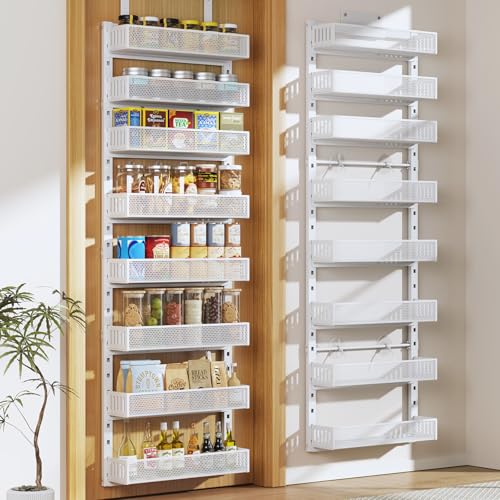
Maximize Your Space: Our 9-Tier over the door pantry organizer is designed to make the most of your storage space, allowing you to store more items in a smaller area such as spice and some jars. Perfect for small kitchens or those with limited storage space.

𝗔𝗗𝗝𝗨𝗦𝗧𝗔𝗕𝗟𝗘 𝗦𝗛𝗘𝗟𝗙 𝗛𝗘𝗜𝗚𝗛𝗧𝗦 𝗙𝗢𝗥 𝗩𝗘𝗥𝗦𝗔𝗧𝗜𝗟𝗘 𝗦𝗧𝗢𝗥𝗔𝗚𝗘: With 5 baskets measuring 9/5 inches in height and 3 baskets measuring 16/5 inches in height, our over the door organizer is perfect for storing different-sized spice jars, snacks, and more. The 3 taller baskets are specifically designed to secure taller items and prevent them from falling.
4. Elfa Utility Pantry Over the Door Rack

The Elfa Utility Pantry rack mounts to the inside of a pantry door with a top track and vertical standards, not hooks, so it carries more weight without swinging.
The white wire baskets hold spice jars and small bottles at eye level, which frees shelf depth for boxes and cans.
I would check that my pantry door is thick enough for the screws; most systems need a minimum depth that a standard panel door has but a louvered or hollow-core door may not.
I would match the rack width to my door, leaving clearance for hinges. This costs more than fabric organizers but holds serious weight and lasts through a move if you patch the screw holes.

MORE REPLACEMENT OPTIONS : We will provide 4 adhesive stickers(more than normal), with 2 as replacements for backup, this allows you to quickly replace the adhesive sticker when it loses its adhesive force or when you need to change the installation location

【Versatile Multi-use Storage Solution】Sinnsally cabinet door storage organizer is great for storing and organizing food container lids, tumbler lids, scrub brushes and other kitchen essentials. Ideal for small homes, bathroom, RVs, or apartments. It is a versatile storage solution that can be used in a variety of ways.

【Increase the Storage Capacity】4 pack storage bins and 6 Pcs extra storage hooks, creates extra storage, making them suitable for homes, apartments, dorms, and RVs, ensuring clutter-free organization. Perfect for bathrooms, kitchens, dresser, office or inside cabinets.
5. Gift Wrap Station
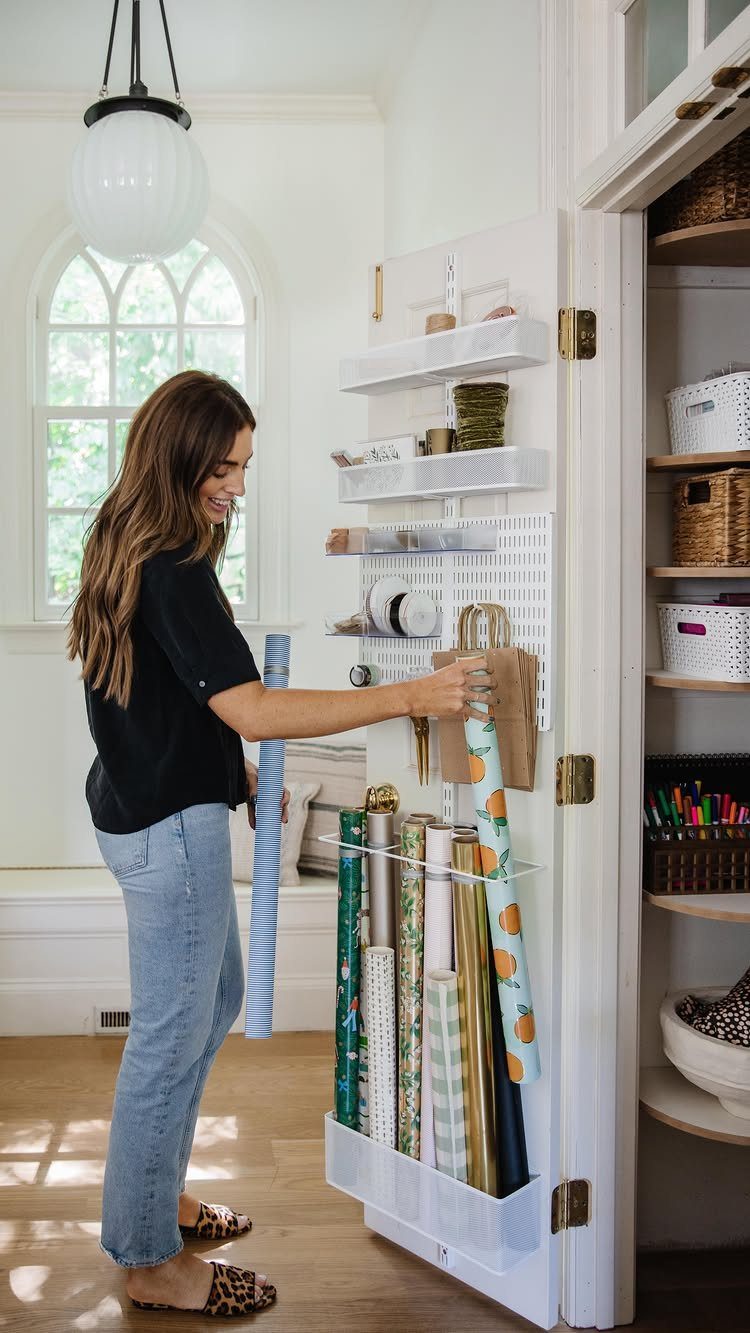
A gift wrap station hangs over a closet door and stores rolls upright in deep pockets, with shallow ones above for ribbon and bags.
I would count my paper rolls first; most organizers hold 6–8, and I would rather know I need two than discover it mid-project.
These work best on a closet you open seasonally, not daily, since the loaded organizer adds 6 inches behind the door and the paper rustles when you move it.
I would buy one before December rather than after, when stock runs thin.

Please ensure the width of the door is greater than 15.7 inch(40cm) excluding the handle. Ensure enough space in your pantry >5.6 inch.

Maximize Your Space: Please measure the width of your door before purchasing to see if it can fit a 16.5"W shelf. Our 9-Tier over the door pantry organizer is designed to make the most of your storage space, allowing you to store more items in a smaller area such as spice and some jars. Perfect for small kitchens or those with limited storage space.

Measure Before Purchase: Overall Dimensions: 18"W x 50"H x 5"D. Ensure enough depth for the pantry: >5.2 inches, and door gap >0.06 inches. Please measure pantry depth and factor in obstructions (dividers, compartments, etc.) Our over the door spice rack features door hooks sized 1.6“ (Recommended door thicknesses<1.6”).
6. Cabinet Door Storage Bins

Adhesive bins on a cabinet door turn the back surface into storage for flat items: wipes, sponges, a folded towel.
The white plastic version uses sticky backing, not screws, which suits a rental cabinet or one you do not want to drill.
I would clean the door face with rubbing alcohol first; adhesive fails on grease or dust, and a bin of cleaning supplies lands on the floor if it lets go.
These bins work for light, flat goods but bulge if you overfill them, so I would leave some slack. The bin sits proud of the door, so tall bottles on the inner shelf may not let it close fully.

Ample Storage Space: Our over door organizer boasts a spacious 42.5”x13.8”x5.5” dimensions, featuring 4 roomy inner pockets and 6 mesh side pockets, suitable for keeping all your essentials neatly arranged and easily accessible

Declutter & Maximize Space: This 5-tier over the door organizer transforms unused vertical space into practical storage in seconds. Whether you need a hanging closet organizer, a back of door organizer, or behind-the-door storage space, it keeps toiletries, snacks, toys, and everyday essentials neatly arranged. Ideal for small homes, apartments, and anyone seeking small closet organizers and storage that make limited space feel bigger.

AWARD WINNING: Winner of the 2026 Good Housekeeping Cleaning Awards recognizing excellence and innovation in home organization
7. Behind-door Jewelry and Perfume Organizer

A shallow cabinet hung on the back of a door stores jewelry on small hooks and perfume on narrow shelves, all behind a mirror or plain panel that closes flat.
I would check my door’s weight rating first; a loaded cabinet swings on the hinges and a hollow-core door may sag over time.
The mirror version suits a bedroom or bathroom where floor space is gone and wall space is spoken for.
Mounting hardware needs a solid door or a backing plate, and I would leave a gap at the hinge side so the door closes fully.
The small items disappear when the cabinet shuts, which keeps dust off bottles and tangles out of chains.
For a rental, I would rather this than a wall-mounted jewelry armoire; one patch job behind the door beats several in open sight.


EXCLUSIVE LIFETIME PEACE OF MIND - Handcrafted Metal Matte Boho Decorative Hooks for Any Home Aesthetic. Farm House Vintage or Modern Home Design. Smart Secure Vertical Storage Coat Rack Wall Mount & Display

FIVE-PEG WALL RACK – Keep keys, key rings, car fobs and lanyards together near the door. Five rounded pegs offer separate hanging spots on one compact rail.
Installation Tips
Hooks, screws, adhesives, and hinge-side brackets each handle weight differently. Over-door hooks need a door thin enough for the bracket to clear; most fit doors up to about 1 3/8 inches thick, like the YouCopia DoorStash, with no tools at all.
Adhesive pads work as stabilizers to stop rattle and lateral movement, not as primary support against gravity.

【Two Installation Options】 Comes with 6 strong adhesive pads for no-drill wall mounting—just peel off the backing and stick. Expansion screws are also included for customers who prefer drilled installation for extra stability.

【Heavy-Duty Metal Construction】Our VyGrow Over The Door Organizer is crafted from high-quality heavy-duty metal, ensuring maximum strength and durability compared to ordinary fabric products. This sturdy door organizer hanging is designed to withstand high weights without deforming, making it perfect for your closet, pantry, or bathroom.

[Wall Mount & Over Door]This over the door organizer can be installed on the wall or hung on the door. Pre-drilled holes and included screws can fix the hanging door organizer to the wall. And the attached door hooks for hanging on the door. You can choose the installation according to your needs.
Weight Capacity
Weight capacity depends on what holds the organizer to the door. Over-door hooks and adhesive pads handle light, bulky items; screws into solid wood carry far more.
Fabric organizers with pockets distribute weight across hooks but still add several inches behind the door, enough to bump a wall if the swing is tight.
I would rather underfill than overload; a sagging organizer warps the door face and strains hinges over time.
For heavy items like spice jars or paper rolls, I would choose screw-mounted brackets on a solid door and leave clearance at the hinge side so the door closes flat.
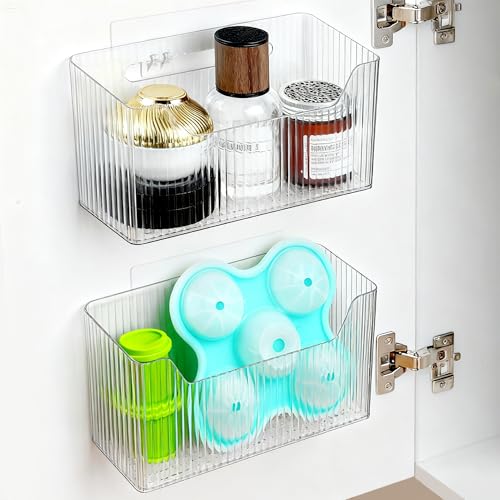
Designed for Inside Cabinet Door Storage: This cabinet door organizer is specially designed to hang inside cabinet doors, creating instant storage for bathroom or kitchen essentials. Keep items hidden yet easily accessible.

WALL MOUNTED STORAGE – Maximize storage space and organize home essentials with a wall mount shelf organizer; the wall mounted storage box can be used as a spice rack wall mount, to store gadgets, medications, toiletries, craft supplies, and more

Durable and Easy to Maintain: Constructed from food-grade PET plastic, these kitchen organizers are shatter-resistant and built for longevity. Measuring 4.33 x 3.55 x 4.53 inches, they are easy to clean with mild soap and water, offering versatile storage solutions
Versatility
A single organizer type moves between rooms if its mounting method fits the door. Over-door hooks work on bedroom, bathroom, pantry, and closet doors equally, provided the door thickness clears the bracket.
Fabric pocket organizers store diapers in a nursery, accessories in a bedroom, or cleaning cloths in a bathroom. Wire racks with baskets suit pantries for spices, but the same rack on a closet door holds accessories or folded items.
Hook racks by the front door manage keys and bags; the same rack on a bedroom door handles tomorrow’s clothes.
Plastic bins survive bathroom steam better than mesh fabric; metal wire lasts longer in a pantry than adhesive plastic in a kitchen that sees grease.
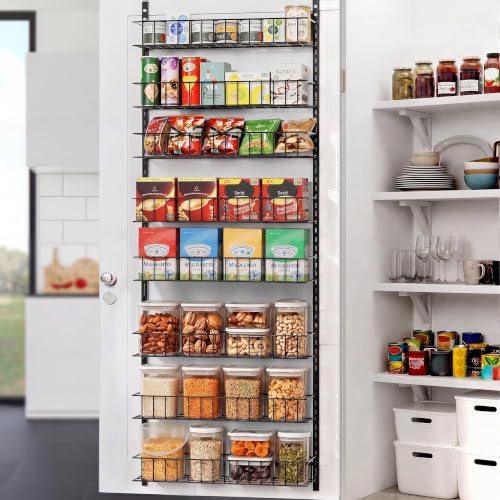
Note: Ensure that the door width is greater than 17 inches (about 43.2 cm) to guarantee stable installation of the basket,Check that there is more than 6.3 inches (about 16 cm) of space behind the door to prevent the basket from hitting the wall or other objects when in use
Dual Installation: Hang it over the door or mount it to the wall. Perfect for kitchens, pantries, bathrooms, bedrooms, nurseries, and laundry rooms.

Dimensions & Compatibility: Overall dimensions 5"D x 12"W x 52.1"H. Recommended pantry depth: >7 inches; door width: ≥12 inches (excluding handle). Our cabinet door organizer comes with two sets of different size door hooks, 1.65 in and 1.22 in, suitable for the thickness of most doors
Frequently Asked Questions
What is the difference between types of organizers?
Fabric organizers with mesh pockets suit light, bulky items like diapers or cleaning cloths and hang from hooks without screws.
Metal wire racks with baskets carry more weight and mount with screws into solid doors, which makes them better for spice jars or paper rolls.
Hook racks hold what you grab on the way out and install fastest, while adhesive bins stick to cabinet doors for flat items like wipes or sponges.
Each type differs in how it mounts, how much it projects behind the door, and what weight it can handle without sagging or rattling.
Do behind-door organizers need to be screwed into the door?
No. Sticky pads cut down on rattle and keep things from sliding, though they are not doing any real lifting on their own.
Will a behind-door storage rack stop my cabinet door from closing?
The rack only blocks the door if it sticks out farther than the open gap inside the cabinet or behind the door’s swing path.
Most over-door units stick out 4 to 7 inches, which clears a pantry door fine but will jam in a shallow cabinet or where the door already nearly kisses the wall.
Before I would order anything, I check 3 spots: the gap between the closed door and any shelf inside, the full arc the door travels, and the tight side by the hinges, since a loaded rack adds thickness the door has to swing past to lie flat.