
This water-thin spray smells faintly of vinegar and dries on its own in minutes, but only if you mist it after the last shower of the day and step carefully while the floor stays slick.
The rinse aid matters more than most people expect: without it, hard water still beads on glass.
Daily Shower Cleaner

A daily shower cleaner is a thin, watery spray you mist over tile, glass, and fixtures after the last person showers, then leave alone to dry on its own. It is not a cleaner in the usual sense.
The chemistry is too mild to lift existing soap scum or kill established mildew; it works by making the surface less hospitable to fresh buildup between the scrubbings you still have to do. Think of it as maintenance, not replacement.
The no-rinse part matters. You spray, you walk away.
The floor stays slick for a few minutes, so step carefully. Used properly, the spray buys you longer intervals between real cleanings and keeps the grout from darkening as fast.
A batch mixed from the standard recipe keeps for six months in a labeled spray bottle, longer than most people expect from a homemade product.
That shelf life assumes plain tap water and no contamination from dipping a used cloth into the bottle.
If the solution starts looking cloudy or smells off, dump it and mix fresh; the ingredients are cheap enough that caution costs almost nothing.
I would not bother with this if I already wiped the shower down daily with a squeegee. For everyone else, the thirty seconds of spraying is the easier habit to keep.

SUPERIOR PROTECTION: Delivers 5x better water-spot protection than leading daily shower cleaners for longer-lasting shower cleanliness

360 Mist Sprayer - With our empty spray bottles, you can spritz and mist hard-to-reach areas! Release long-lasting bursts of mist with just a gentle squeeze with our continuous spray bottle!

1: EFFORTLESS CLEAN – Wet & Forget Shower’s no-scrub formula prevents soap scum, grime, and body oils. Use weekly on shower doors, tiles, tubs, and basins. Just spray once a week for a clean, fresh bathroom with minimal effort.
What You Need

A daily shower cleaner only works if you keep it simple enough to actually use. I keep these ingredients under the kitchen sink and mix a fresh batch every two weeks.
- 1/2 cup white vinegar – the workhorse that cuts soap scum before it hardens
- 1/2 cup rubbing alcohol – 70% works fine; 91% evaporates faster if you live somewhere humid
- 1 teaspoon liquid dish soap – Blue Dawn is what I reach for because it breaks oils without sudsing out of control
- 1 tablespoon dishwasher rinse aid – Jet-Dry or the store brand, whatever is cheaper; this is what lets water sheet off glass instead of beading
- 3 cups distilled water – tap water leaves mineral spots in hard-water areas, so the extra dollar is worth it for me
- 10–15 drops essential oil – tea tree or lemon if you want to mask the vinegar smell; skip it if cats share your bathroom, since concentrated oils can bother them
Pour everything into a dark spray bottle, not a clear one.
Light degrades the essential oils and, over time, the hydrogen peroxide some people substitute in. A 24-ounce bottle holds this recipe with room to shake.

【𝐅𝐢𝐧𝐞 𝐌𝐢𝐬𝐭/𝐏𝐨𝐰𝐞𝐫𝐟𝐮𝐥 𝐒𝐭𝐫𝐞𝐚𝐦】Mister spray bottle has been completely upgraded. The spray bottle has an adjustable nozzle, so you can easily control the spray mode. The latest technology is adopted to make the spray particles smaller and the Stream range longer.

Adjustable Spray Nozzle: The spray bottles are equipped with an adjustable spray nozzle which allows 3 spray settings - mist, stream and off.

【HDPE Eco-Friendly Material】Empty Spray Bottles for Cleaning Solutions are Manufactured With Strong HDPE, the BPA-Free Plastic Durable and Chemical Resistant. Cleaning Spray Bottle Unlike Glass, No Longer Need to Worry About the Bottle Shattering If It Accidentally Falls.
How to Make It

- Pour 1 cup white vinegar and ½ cup rubbing alcohol into a quart-sized spray bottle. The alcohol helps the solution dry fast so water spots do not set.
- Add 1 teaspoon liquid dish soap. I reach for Blue Dawn when I have it; the degreasing formula cuts body oils better than bargain brands I have tried.
- If you want extra protection on glass doors, add 1 tablespoon rinse aid. The Jet-Dry leaves a slick surface that beads water, though I skip it on acrylic or frosted panels where it can leave visible film.
- Fill the bottle to the shoulder with distilled water, not tap. Minerals in hard water defeat the purpose of a daily spray.
- Add essential oils now if you use them. Fifteen drops lemon and fifteen drops tea tree is the standard; the tea tree adds actual mildew resistance, not just scent.
- Shake gently. Too vigorous and the soap foams, which clogs the nozzle.
- Mist shower walls, door, and floor after each use. Let it air dry; there is no rinse step, so the routine actually saves time.

#1 RINSE AID: Finish Jet Dry Rinse Aid is the NUMBER 1 dishwasher rinse aid product.*

GET PERFECTLY SPOTLESS DISHES: Lemi Shine's Shine & Dry Rinse Aid removes residual hard water deposits like iron, calcium, lime, and rust during the final rinse cycle leaving a streak free clean
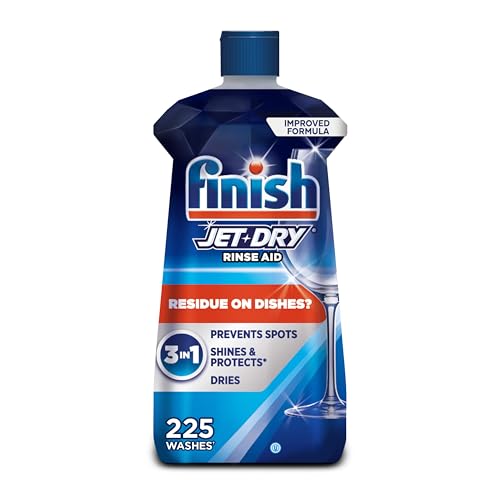
RINSE AID: Finish Jet Dry Rinse Aid is dishwasher rinse aid product.
What Each Ingredient Does
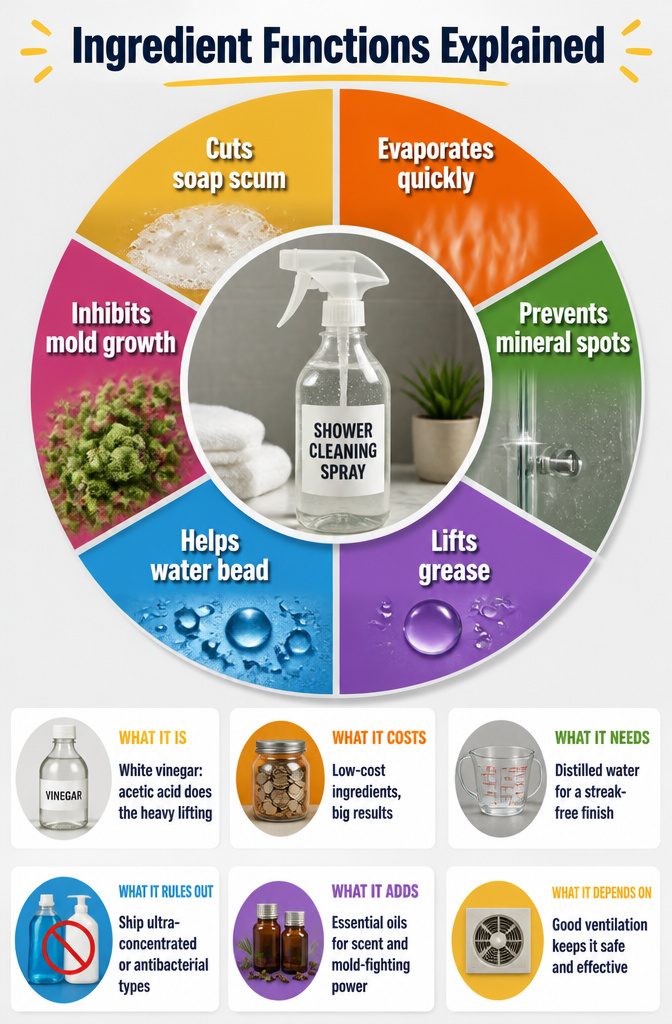
White vinegar is the heavy lifter in this mix: the acetic acid cuts soap scum and keeps mold from taking hold between deep cleans.
Rubbing alcohol, either 70% or 91% isopropyl, serves a different purpose; it evaporates fast so the spray dries on its own and leaves glass streak-free.
Distilled water matters more than most people think, since tap water carries minerals that can deposit fresh spots while you’re trying to prevent them.
- Dish soap: a teaspoon of a mild liquid variety like Blue Dawn breaks surface tension and lifts grease, but skip ultra-concentrated or antibacterial types; they leave residue behind.
- Rinse aid: a splash of Jet-Dry or similar helps water bead and run off glass and tile, which is what prevents the hard-water spotting that vinegar alone can’t quite solve.
- Essential oils: tea tree and clove both inhibit airborne mold, while lemon adds scent and a modest cleaning boost. Fifteen drops per oil is the working ratio, though I tend to cut back if the shower is small and the ventilation poor.

What You'll Get: One 32oz spray bottles of Scrubbing Bubbles Foaming Bleach Bathroom Cleaner. Bottle Made from 30% recycled content (excluding dye, trigger, and label)

Powerful grout & tile cleaning formula: Goo Gone Grout & Tile Cleaner effectively removes tough stains, dirt, mold, mildew, soap scum, and hard water stains from bathroom and kitchen surfaces. Perfect for deep cleaning shower tiles, bathroom floors, tub surrounds, and countertops without harsh scrubbing.

REMOVES SOAP SCUM & GRIME: Dissolves soap scum, hard-water film and body-oil buildup on shower walls, doors, tiles, tubs and fixtures, so surfaces rinse clean and stay brighter longer.
Surfaces That Work and Surfaces That Don’t

Glass, tile, and any sealed surface in your shower will take this daily spray without complaint.
The alcohol and soap cut through body oils and soap residue before they set, and since there is no vinegar or lemon juice in the mix, you are not slowly etching the finish while you clean.
Fiberglass and plastic handle it fine too, since those non-porous surfaces do not absorb moisture or react with the cleaner.
Natural stone is where I would stop. Marble, granite, and travertine can be sealed, but vinegar etches the stone itself, and even a pH-neutral daily cleaner is not worth the risk on a surface that costs thousands to refinish.
One competing recipe swaps in rubbing alcohol for stone specifically, yet I still would not make this my everyday approach for those materials.
The peroxide version also carries a warning about darker grout; it can fade over time, so leave the peroxide out if your grout is anything but white.
Hard water stains are not this cleaner’s main target.
The daily spray prevents soap scum and mildew buildup, but mineral deposits from spray already baked on need a separate acidic treatment or a scrub. Use this recipe for maintenance, not rescue.

2X CLEANING POWER ON LIME & CALCIUM**: Cuts through stubborn limescale, calcium, and hard-water buildup fast—ideal for deeper bathroom cleaning with less scrubbing.

DEEP CLEANING ACTION: The Pink Stuff Bathroom Foam Cleaner is specially formulated to tackle tough bathroom stains and grime, leaving your bathroom surfaces sparkling clean with minimal effort
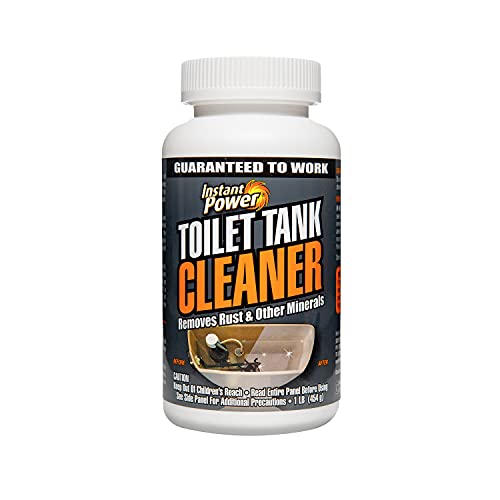
REMOVES STAINS: Put less elbow grease in cleaning your bathroom toilet tank; Thanks to its strong citric acid formula, Instant Power's Toilet Tank Cleaner removes hard-water deposits and other stains in your toilet tank
Storage and Shelf Life

Hydrogen peroxide breaks down in light, so the bottle matters more than the label.
I keep my daily shower cleaner in an amber or cobalt glass bottle, or any opaque plastic that blocks light entirely. A clear bottle left on a sunny ledge will weaken the mix within weeks.
Use the batch within six months for full strength.
After that window it does not turn dangerous; it simply quits working as well, and you will notice soap scum returning faster than it should. There is no refresh trick or booster shot worth the effort.
When the bottle runs low or the six months pass, I make a new batch. Some people halve the recipe and mix fresh more often, which keeps every spray at peak potency without any guesswork about age.

EFFORTLESSLY STYLES HAIR – Our Continuous Spray Bottles for Hair effortlessly tame and style hair. Simply pump the trigger to build pressure; the continuous mist activates after the 2nd pull and extends with each additional pump, ensuring even distribution for salon-worthy results every time.

SPRAY AND WALK AWAY: Clorox Plus Tilex Daily Shower Cleaner helps you spray your way to a clean and radiant shower without scrubbing, leaving behind a fresh scent

ULTRA-FINE MIST FOR EFFORTLESS HAIR STYLING: This continuous spray bottle delivers a smooth, clog-free, ultra-fine mist for even coverage without soaking hair. Ideal as a spray bottle for hair, it refreshes curls, waves, and second-day styles with ease—perfect for plopping, styling, and daily hair routines.
Essential Oils and Pet Safety

Tea tree and lemon oils give the spray its sharp, clean scent and a little extra antifungal punch, but they come with two catches worth weighing before you add them.
First, any essential oil can leave a faint film on glass and tile if you go heavy on the drops; ten drops of each is the ceiling I would use in a 16 ounce batch, and I would cut that in half if your shower already runs toward slick.
The bigger concern is pet safety. Tea tree oil in particular is not safe to use around cats, and some dogs do not tolerate it well either.
If your animals walk the shower floor or you know they lick stray water, I would skip the oils entirely rather than guess at which ones are harmless.
The spray works fine without them; you lose the fragrance and a marginal boost in cleaning power, but you keep the peace of mind.
If you do want scent and you do not have pets, lemon pairs cleanly with the vinegar base, though I would store that mixture in glass; citrus oils can degrade plastic over time.


Simple, clean ingredients that is safe for the whole household!

Easy to use, all you have to do is to spray the desired area. For external use only. Not for ingestion.
Frequently Asked Questions
Can I use daily shower cleaner on natural stone surfaces?
No. Vinegar in the recipe can etch marble, granite, and travertine, even if the stone is sealed.
The risk to a surface that costs thousands to refinish is not worth the convenience of a daily spray. Stick to pH-neutral cleaners made specifically for stone.
How long does homemade daily shower cleaner last?
A batch keeps for six months in a labeled spray bottle, assuming you use plain tap water and do not contaminate it by dipping used cloths inside.
Store it in a dark or opaque bottle; light degrades the mixture over time. If it turns cloudy or smells off, mix fresh.
Can I add essential oils to my daily shower cleaner?
Yes, but keep the total to about 10–15 drops per 16 ounces. Tea tree and lemon are common choices; tea tree adds mild antifungal properties, while lemon masks the vinegar smell.
Too much oil leaves a visible film on glass and tile. Skip oils entirely if cats use your bathroom, since concentrated tea tree oil is toxic to them.
Do I need to rinse after spraying daily shower cleaner?
No. The entire point of the product is that you mist it on and walk away.
Let it air dry on its own. The floor stays slick for a few minutes after spraying, so step carefully until it dries.
What is the best homemade cleaner for showers?
A no-rinse daily spray of white vinegar, rubbing alcohol, dish soap, and distilled water works best for maintenance between deep cleans.
It prevents fresh soap scum and mildew buildup rather than removing established grime. For heavy soap scum or baked-on hard water stains, you will still need an acidic scrub or dedicated descaler.
What is daily shower cleaner made of?
The standard recipe calls for half a cup each of white vinegar and rubbing alcohol, one teaspoon liquid dish soap, one tablespoon dishwasher rinse aid, three cups distilled water, and optional essential oils.
Everything mixes in a quart-sized dark spray bottle so light does not degrade the contents.
What is the most effective daily shower cleaner?
The most effective one is the one you will actually use every day.
A simple vinegar-and-alcohol spray that requires no rinsing or wiping beats a stronger formula that sits under the sink because the routine is too much work. The 30 seconds of misting after your last shower buys you longer intervals between scrubbings.