
I’ve wrestled that ammonia punch myself, friend, and here are the solutions that finally worked. First, hunt down hidden urine sources by checking the toilet base, flange, and sneaky grout lines with a flashlight at unusual angles. Then scrub everything bone-dry with stiff brushes and enzyme cleaner, letting it sit ten minutes to destroy the odor molecules. Sprinkle baking soda overnight on grout, steam-clean tiles for deep-set stink, and blast fans everywhere moisture hides. Daily ventilation and quick blot-spray-sprinkle routines keep bathrooms genuinely fresh rather than just masked. These seven moves transform the space by addressing the root causes of urine odor instead of temporary solutions.
Check the Toilet Base and Floor for Hidden Urine Sources
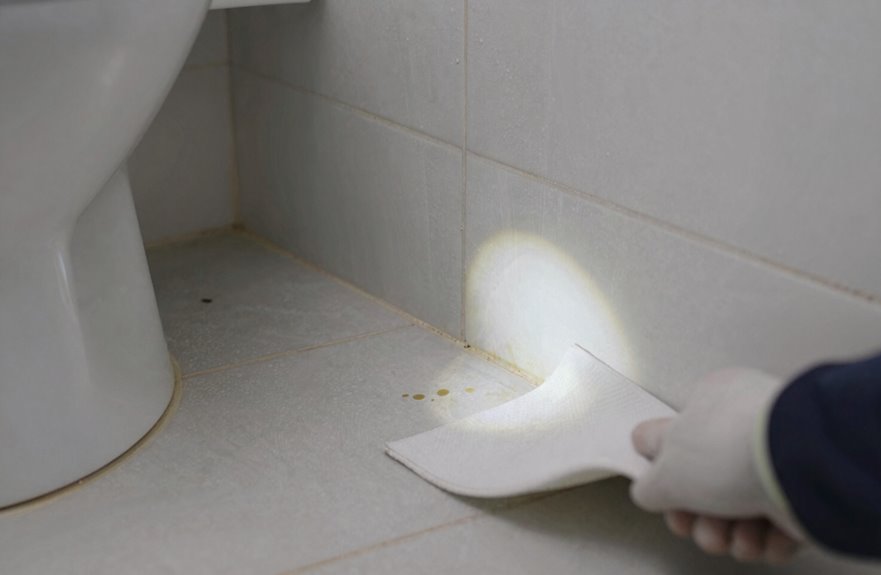
Ever wonder why that bathroom still reeks even after you’ve scrubbed every visible inch? The answer is simple: urine odor hides where we don’t look. It sneaks into grout lines, caulking seams, and that shadowy gap between toilet and floor.
Grab a flashlight, get low, and inspect the flange, those mysterious ring deposits underneath, and the damp patches behind the bowl. Porous grout is basically a sponge for smells. A stain can hide for months without notice. If that wax ring is failing, you’ve got hidden leakage causing the persistent odor. Reseal, replace, and eliminate the problem. These spots are commonly missed during standard cleaning routines.
Start With a Thorough Clean to Remove Surface Urine Residue
I grab my rubber gloves, enzymatic spray, and an old toothbrush, the crusty one my partner retired, to tackle this systematically. I’ll hit the obvious spots first: that yellowed baseboard behind the toilet, the grout lines that look more like a Jackson Pollock than tile, and the wall splatter. Once I’ve scrubbed, rinsed, and fan-dried everything bone-dry, you’ll actually see your bathroom again, not just smell it.
Gather Essential Cleaning Supplies
Where do you begin when your bathroom smells like a subway station at 3am. You need the right arsenal before tackling those stubborn urine odors, or you’re just pushing stink around like a sad game of musical chairs.
Here’s what I grab every single time:
- A sturdy scrub brush with stiff bristles for grout warfare
- Non-diluted Pine-Sol and baking soda for my miracle paste
- Microfiber cloths that actually absorb instead of smearing
- A reliable fan or open window because moisture is the enemy
Don’t skip the ventilation. Trapped humidity turns yesterday’s accident into tomorrow’s nightmare. I’ve learned this the hard way, staring at foggy mirrors while wondering why my bathroom still reeks. Gather these supplies and you’ll make measurable progress on odor elimination.
Target Visible Urine Areas
Now that I’ve got my supplies locked and loaded, I’m ready to hunt down every last drop of pee that’s been stinking up my bathroom like a crime scene I didn’t sign up for. I’m talking floors, walls, tiles, that sketchy toilet base, everywhere urine residues think they can hide. I mix water with gentle cleaner and scrub like my nose depends on it.
| What I’m Fighting | Why It Gets Me |
|---|---|
| Grout that drinks pee like a sponge | The betrayal. I thought grout was my friend. |
| Mystery splashes on walls | Who even aims like this. Not me, I hope. |
| Creepy crevices around the toilet base | It’s like a pee cave back there. |
| Porous spots pretending they’re clean | Liars. All of them. |
I hit moisture-prone zones with my brush, reassess any stubborn hotspots, and repeat if I’m still getting whiffs. We’re in this together, and our bathrooms will smell fresh again.
Rinse and Dry Surfaces
Three rounds of scrubbing later, my bathroom’s finally ready for the rinse-and-dry victory lap. I grab clean water, splash those tiles, floors, walls, and that sneaky toilet base. I need to wash away every soap trace, or I’m basically inviting urine odor to a moisture party. Grout is my nemesis; those tiny trenches hoard secrets like a gossip’s diary.
Here’s my battle-tested rinse-and-dry ritual:
- Rinse every scrubbed zone with fresh water, no residue left behind
- Attack vertical and horizontal spots equally. Urine splashes everywhere
- Towel-dry fast, then deploy my hair dryer (yes, really) for stubborn corners
- Fan-blast porous zones, maybe crank a dehumidifier, because dampness breeds that urine odor comeback
Dry means done. Moisture is the enemy we’re not entertaining.
Apply Enzyme Cleaner to Destroy Urine Odor at Its Source

Enzyme cleaners are an essential tool for eliminating urine odor. These enzymes attack urine proteins and uric acid, destroying stink at its source instead of just covering it up like some cheap air freshener. Blot fresh spots first, then spray generously and wait ten minutes to let those enzymes work. Test hidden spots first to avoid damaging surfaces like delicate rugs, let enzymes sit long enough to catalyze, and boost with steam cleaning using distilled water only. Finish with fans blasting for thorough drying, because moisture brings odors back. Skipping these steps allows odors to return; rushing the process compromises results.
Use Baking Soda or Charcoal to Absorb Lingering Odors
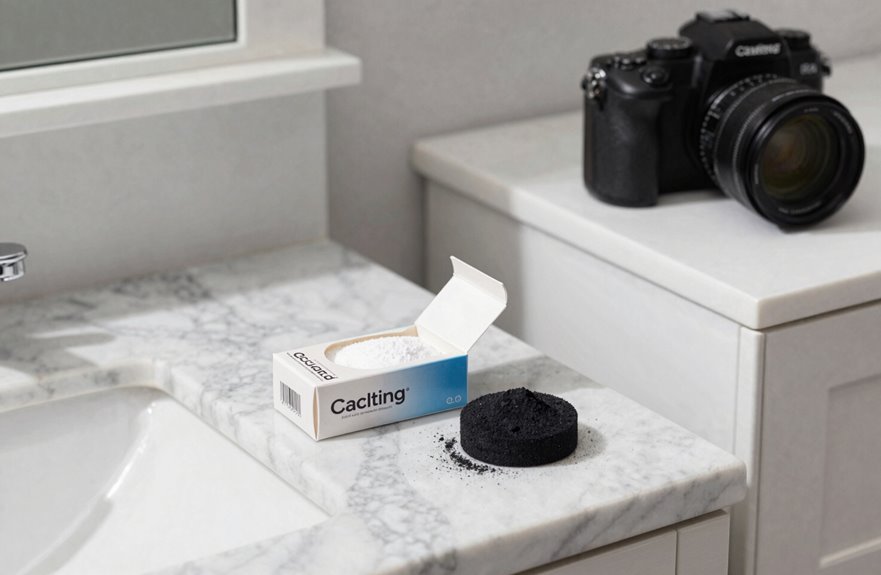
I’ve found that sprinkling baking soda over grout lines and caulk, those sneaky porous spots where urine loves to hide, works effectively for soaking up whatever stench enzyme cleaners missed. I leave it overnight because patience yields results. If you’re still catching whiffs after vacuuming up that white powder, just grab some activated charcoal powder, dust it over the same spots, and let it work while you sleep. This one-two punch eliminates odors that linger in porous surfaces.
Baking Soda Application
Why stop at scrubbing when you can let chemistry finish the job. Baking soda, that humble box hiding in your fridge, can banish those stubborn pee smells that linger after cleaning.
Here’s how to make it work:
- Prep first with an enzymatic cleaner or thorough rinse, because baking soda can’t tackle raw urine, just the lingering funk
- Mix a paste with water for grout lines, or sprinkle dry powder across tile and let it sit. Patience pays off.
- For nightmare odors, layer it thick before bed and vacuum in the morning, like tucking your bathroom in for the night
- Ventilate while it works. Moisture is the enemy, and dry surfaces keep smells from resurrecting.
This approach works through basic chemistry: baking soda absorbs and neutralizes odor molecules rather than masking them.
Activated Charcoal Method
What happens when baking soda meets its match? You bring in activated charcoal. I’ve been there, still catching that ammonia whiff after scrubbing everything twice. Frustrating, right? Here’s my fix: I dust a fine layer of activated charcoal through a sieve (think powdery snow, not clumps), leave it 8–12 hours overnight, then vacuum thoroughly. The charcoal literally traps odor molecules through adsorption, not absorption. It sucks up sulfur compounds baking soda missed. Pro tip from my own disaster: dry the surface first. Wet charcoal clumps like bad coffee grounds and provides zero help. I pair both methods. Baking soda handles moisture, charcoal grabs stubborn stink. Together, your bathroom smells like yours again, not a gas station restroom. This combo works.
Steam Clean Tiles and Grout for Deep Odor Removal

Sometimes you need to bring out the big guns, and for me, that’s my handheld steam blaster. It makes cleaning feel powerful and effective.
I crank that baby up and aim it at grout lines like I’m performing surgery on my floor’s pores, watching years of hidden grossness bubble up like a science fair volcano. Here’s my battle plan:
- Blast around the toilet base where urine odor loves to hide in microscopic crevices
- Hit those grout trenches hard. Porous gaps are basically tiny stink bunkers
- Follow with enzymatic cleaner while everything’s loose and vulnerable
- Reassess carefully, re-blasting any spot that still has odor
Rinse thoroughly and dry completely. Moisture creates conditions where odors return.
Get Air Moving to Dry Surfaces and Stop Bacteria Growth
After all that scrubbing and steaming, I’m standing in a bathroom that smells like a wet dog in a sauna. Progress, sure, but not exactly victory. Moisture is basically a welcome mat for stinky bacteria, so I crank up the ventilation. Windows fly open, exhaust fan roars to life, and I position a fan to blast air under the toilet base where sneaky puddles hide. Sometimes I roll in a dehumidifier too, because preventing mold growth requires comprehensive moisture control.
| Airflow Tool | What It Actually Does |
|---|---|
| Exhaust fan | Sucks humid, odor-heavy air straight out—your MVP! |
| Portable fan | Drives air into shadowy corners where mildew parties |
| Dehumidifier | Pulls invisible moisture from walls, stopping smells before they start |
I add a HEPA purifier to grab lingering particles. When moisture levels drop and bacterial colonies stop spreading, the bathroom stays fresh and clean.
Build a Daily Routine to Prevent Urine Odor Return
How do I keep this fresh victory from slipping away? I build a daily routine, that’s how. No one wants that urine smell creeping back like an unwelcome guest.
Here’s my battle-tested sequence:
- Blot, spray, wait, sprinkle — I hit fresh spots fast, apply enzymatic cleaner, wait ten minutes, then baking soda absorbs what’s left
- Steam and dry — I steam around the toilet after pretreatment, then blast fans because moisture creates conditions for odor to develop
- Ventilate daily — windows open, exhaust fan roaring, I’m pushing humid air out before bacteria proliferate
- Check and refresh — I swap out charcoal absorbers, reapply cleaners in stubborn zones, staying ahead of the game
This rhythm keeps my bathroom genuinely fresh, not just masking. Consistent daily maintenance prevents bacterial regrowth and odor recurrence.