
Kitchen furniture aluminium is cabinetry and storage built from lightweight metal rather than wood or engineered board, used in everything from rental-grade modular systems to high-end full-panel installations.
The thing to watch is that aluminium only earns its keep when the finish and form match how hard you will use the space: a glossy mirror front looks dramatic but demands daily wiping, while a brushed grain hides the same smudges and survives real living.
At 2.71 g/cm³, roughly a third of steel’s weight, these are cabinets you can haul up a staircase yourself and still expect to last 15 to 20 years.
Modular Aluminium Systems
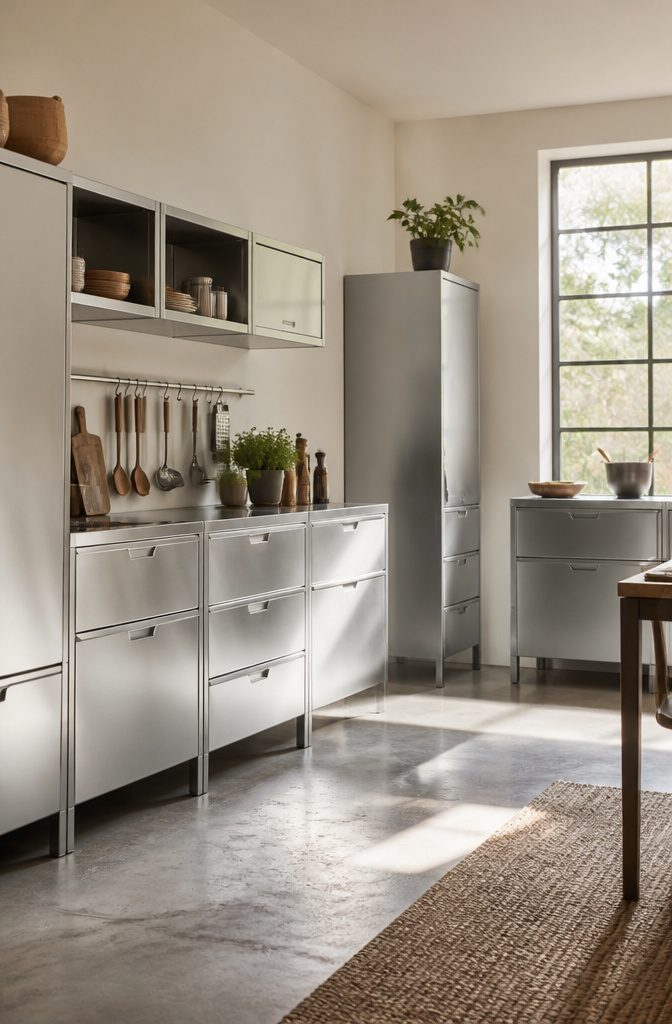
Modular aluminium systems arrive as pre-made units, drawers, and cabinets that lock into whatever footprint your kitchen demands.
That flexibility matters most to renters and first-home owners, who make up the bulk of people searching kitchen furniture aluminium with a few hundred dollars and a weekend to spend.
You are not committing to a built-in run of cabinetry; you are assembling a layout you can reconfigure when you move or when your needs shift.
The real advantage is easy replacement or upgrade of individual units rather than tearing out a whole bank.
One drawer box fails, one cabinet door dings, you swap the module. Sources note these systems run 15 to 20 years with proper maintenance, which is serious lifespan for something you bolted together yourself.
I would pick modular over custom-built aluminium every time for a first kitchen, because the cost of a mistake is one unit, not the whole room.
What you give up is the look: joints and seams where pre-made boxes meet will never read as clean as a full-panel installation. For a rental refresh or a starter home, that compromise is worth taking.

Angled Trapezoid Under-Cabinet Power Access: Trapezoid aluminum housing with angled receptacles keeps outlets clearly visible and easy to reach when mounted under cabinets,...
Full-Panel Aluminium Cabinets
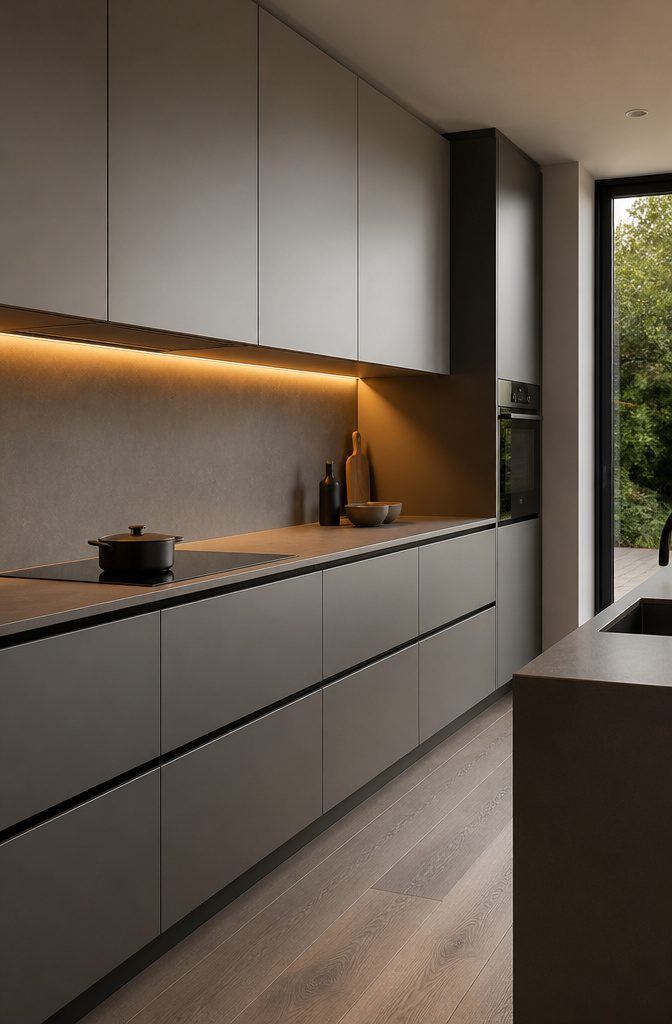
Solid aluminium panels form the entire face of full-panel aluminium cabinets, giving a clean, uniform surface that reads as one continuous plane rather than a frame with an insert.
That seamlessness is what draws people to them in modern kitchens where every line matters.
The material earns its keep in ways framed cabinets cannot match.
Because the shutter and carcass are both aluminium, the finish stays consistent edge to edge, and the whole unit shrugs off the water and pest issues that slowly destroy standard box construction in high-use kitchens.
You are paying for that integrity, though. Full-panel construction sits at the higher end of the aluminium cost spectrum, and the benefit only lands if you are keeping the kitchen long enough to outlast the premium.
For a first home or a rental flip, I would likely look elsewhere and spend the difference on hardware that gets daily touch.
But for the house you plan to stay in, the durability and the uniform look justify the step up.

MEASUREMENTS: Measurements are EXACT. This replacement raised panel kitchen cabinet door measures 24-inches Wide, 12-inches high, and 3/4-inches thick

【Sturdy and Stable】Cabinet door is made of high quality density board material, strong and sturdy, long time to use. Special surface treatment, smooth and full, easy to clean.

Solo Installation Helper: Functions as a "third hand" to support door weight during solo projects. The stable base ensures hands-free alignment, making cabinet mounting a manageable one-person task.
Glass-Front Aluminium Cabinets

Glass-front aluminium cabinets pair slim aluminium frames with glass inserts to create display storage that reads as lighter than solid fronts.
The aluminium keeps the structure rigid without bulk, while the glass, whether clear, frosted, or tinted, lets backlighting pass through to highlight whatever sits inside.
I would mount these only on upper runs or a single bank at eye level; full walls of glass read as showroom, not kitchen, and lower cabinets with glass force you to keep pots and dish towels staged like props.
The real trade-off is visibility demands tidiness. Every mismatched mug and cereal box shows through clear glass, so budget for consistent dishware or commit to frosted panels that blur the contents while keeping the airy feel.
In an open-concept layout, these cabinets work best as a transition piece between kitchen and living space, carrying the eye without blocking light. Aluminium’s light weight makes them practical for top-mounted shelves where heavier materials would strain wall support.
Skip them entirely if you are not willing to curate what sits behind the glass; a solid aluminium front hides the clutter and still gives you the moisture resistance that makes aluminium worth considering in the first place.

Durable & Modern Brushed Nickel Finish: Crafted from high-quality aluminum with excellent rust and corrosion resistance, these pulls offer a premium brushed nickel finish that stays elegant through daily use in kitchens, bathrooms, bedrooms, and living spaces

Modern Style Brushed Stainless Steel Finish 3-5/32 inch (80mm) Center to Center and 3-15/16" (100 mm) Overall Length Drawer Pull

Package---12Pcs Back Mount Finger Edge Pulls and some screws. Overall Length : 300mm/11.8", Width: 32mm/1.26", Center to Center: 224mm/8.8".
Handleless Kitchen Cabinets
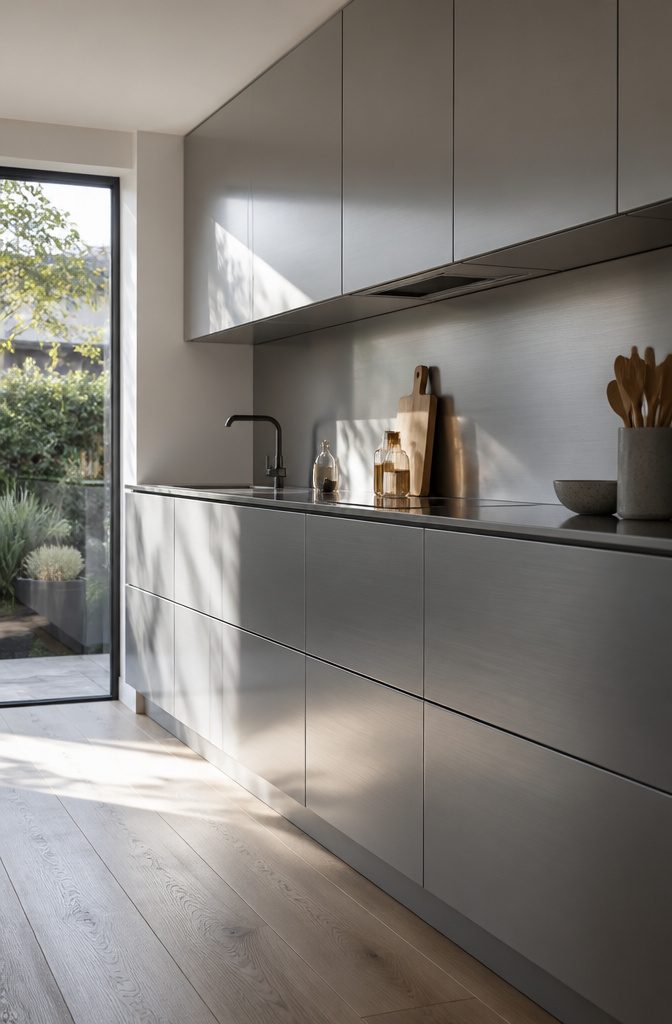
Handleless aluminium kitchen cabinets rely on two mechanisms to keep the face free of pulls and knobs.
The first is a push-to-open latch mounted inside the door; a light press on the corner releases the catch and the door swings open.
The second is an integrated groove routed into the top or side edge of the door itself, giving your fingers a place to grip without adding hardware.
Both options preserve the flat plane that makes aluminium read as modern rather than utilitarian.
The real benefit shows up in maintenance. A cabinet face with no protruding hardware has no ledge to trap grease or collect the flour dust that settles during a weekend baking project.
Wiping down a continuous run of matte or brushed aluminium takes about half the time of working around four pulls and two hinges per door.
For compact kitchens, the uninterrupted visual line also matters: the eye travels across one continuous surface instead of stopping at every break, which makes a narrow galley feel less chopped up.
Push-to-open latches cost more and can fatigue over a 15- to 20-year lifespan, so I would reserve them for uppers you open dozens of times a day.
The integrated groove is the simpler bet for base cabinets and pantries, where the door weight is higher and the mechanism stays out of the load path entirely.
Either way, the absence of hardware is what sells the look, but only if you commit to the full run; mixing one handleless bank with conventional doors on the adjacent wall breaks the effect entirely.

Instant Wall Art Gallery: Nature-inspired geometric patterns transform kitchens (behind sinks!), bathrooms & living rooms with self-adhesive focal points installed in minutes without requiring a designer

5-piece set: Includes 5 matching black and gold cabinet pulls with 10 cut-to-length 45mm mounting screws (2 per handle). This selected variation is the 5-pack, 96mm hole-center handle.

Spacious 3-Mirrored Door Design: Features three fully mirrored doors for a sleek, modern look that doubles as a full-length vanity mirror, perfect for daily grooming while maximizing bathroom space.
Wood Grain Finish Aluminium
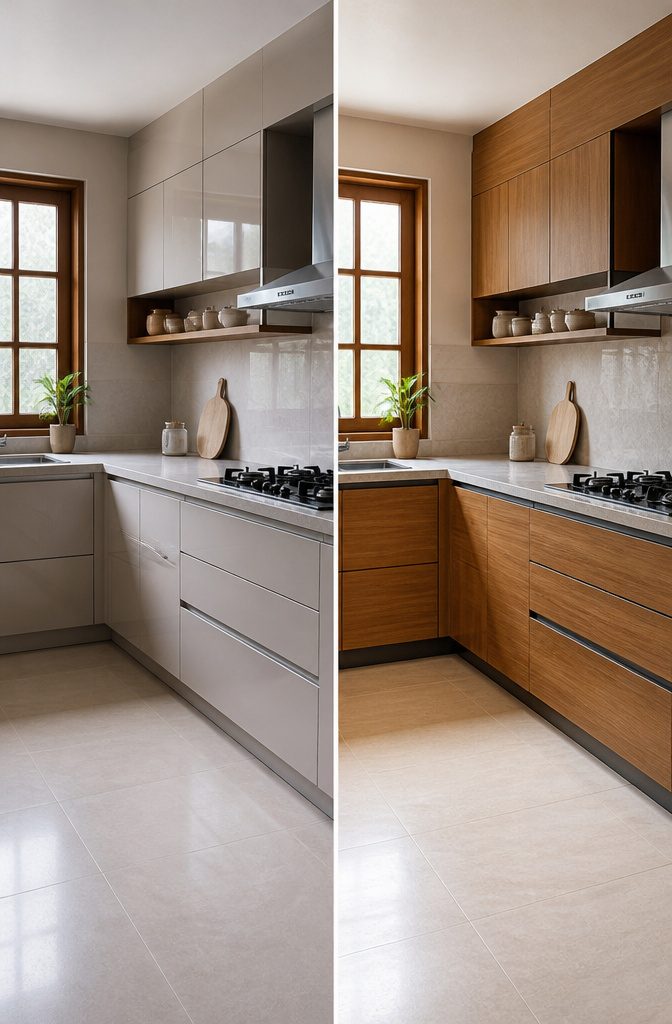
Powder-coating and sublimation printing let aluminium carry the grain pattern of oak, walnut, or ash without any of the maintenance actual wood demands.
The texture is pressed into the surface at high heat, so the result looks and feels like timber until you get close enough to notice the seam at a joint.
I would pick this finish for a kitchen that opens to a living area where you want warmth but not the swelling and warping that humidity and heat eventually cause in plywood or compressed-wood cabinets.
The aluminium underneath stays dimensionally stable, and the finish itself resists the water damage, termite damage, and bacterial contamination that real wood invites.
What you give up is in the edge: a routed aluminium edge will never quite match the end grain of a solid-wood stile, so I would keep the cabinet frames simple and let the broad faces do the work.
For a weekend project under a thousand dollars, wood-grain aluminium offers the look you are after with a lifespan that outlives the trend.

Excellent quality: Our metal storage cabinet are made of thick cold-rolled steel, coated with electrostatic powder, durable and stable.

Space-Saving Vertical Storage with Multi-Functional Use: With dimensions of 11.8"D x 23.6"W x 31.5"H, this black small cabinet with glass doors offers ample storage while occupying minimal floor space. It seamlessly adapts to diverse uses, serving as a dining room buffet, kitchen sideboard, bathroom cabinet, living room display cabinet, TV console, or entryway cabinet—meeting all your storage needs across different spaces

**Stylish Display Cabinet**: The PAOFIN Locking Display Cabinet features an elegant glass door design, making it the perfect curio cabinet for showcasing collectibles and decor in your living room, kitchen, or home office. This glass display cabinet is equipped with 3C-certified high-definition tempered glass, not only the items inside are clear at a glance, but also not easy to break, scratch resistance, high transparency and high clarity.
Powder-Coated Finish Aluminium

Powder-coated aluminium cabinets get their color from dry pigment particles that are electrostatically charged and sprayed onto the metal surface, then baked in an oven until the powder melts and cures into a continuous skin.
The process leaves a finish that is much harder to chip than liquid paint, because the cured powder forms a thicker, more uniform layer without the runs or thin spots that brush or spray applications tend to leave behind.
That matters in a kitchen, where cabinet edges take contact from vacuum hoses, grocery bags, and the occasional corner of a cast-iron skillet.
The color range runs wide.
Manufacturers can match most standard palettes and produce custom tones, so powder-coated aluminium works whether you want a matte navy island, warm greige perimeter cabinets, or something brighter on a backyard kitchen setup where the cabinets need to hold up against both humidity and sun exposure.
The finish also resists fading from UV better than conventional paint, which is why you see it on outdoor furniture and why it translates well to kitchens with strong morning light.
For my own money, powder coating is the finish I would pick for any aluminium cabinet that sits near a sink, a window, or an exterior door.
What you give up is lead time; custom colors and small-batch orders can stretch delivery compared to stock anodized or brushed options.
If the supplier has your tone in a standard catalog, that delay disappears, and you get the durability without the wait.


Angled Trapezoid Under-Cabinet Power Access: Trapezoid aluminum housing with angled receptacles keeps outlets clearly visible and easy to reach when mounted under cabinets, furniture edges. Rated 125VAC 60Hz, 20A, 2500W. Designed for concealed yet accessible power in kitchens, workshops, and workspaces

[HEAVY-DUTY METAL] This heavy-duty metal storage cabinet is built with high-quality cold-rolled steel and a powder-coated surface that resists rust, scratches, and corrosion. The reinforced frame makes the tall storage cabinet extremely stable and durable for long-term daily use. The steel surface is also magnetic-friendly, so you can attach magnetic hooks, baskets, or spice racks to the sides and doors for extra storage (magnetic accessories shown in images are for display only and not included).
Glossy Finish Aluminium

Glossy finish aluminium cabinets get their mirror-like surface from either a high-polish lacquer coat or an anodized treatment that electrochemically hardens the metal while leaving it reflective.
In a small galley kitchen or a space with a single window, that reflectivity bounces what light you have across the room and keeps the walls from feeling like they are closing in.
I would put them in a rental where I could not add a window, but I would think twice before installing them in a house with kids or a household that cooks every night.
The same polished surface that catches light also catches every fingerprint, every water spot, and every grease particle. You will wipe these doors daily, not weekly, and the maintenance is non-negotiable if you want the high-end look to last.
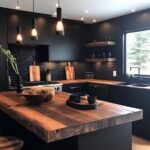
The black-and-white kitchens that show glossy aluminium at its most luxurious only stay pristine because someone is cleaning them constantly.
For a weekend project on a real budget, that trade-off is the deciding factor: the look is dramatic, but the upkeep is a part-time job.
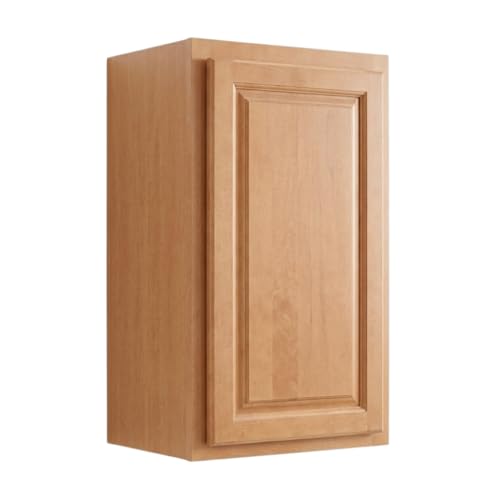
DIMENSIONS: Width 12" | Height 30" | Depth 12", and includes One Raised Panel Style Door, and Two Adjustable Shelves for efficient storage without sacrificing room space

Customizable Size: Order the exact width (7" to 36") and height (7.5" to 80") you need for a perfect cabinet door replacement or new installation.

EXACT REPLACEMENT FOR CLASSIC CATHEDRAL CABINETS: Designed specifically to replace broken, water-damaged, cracked, or missing doors in established American homes. The Liberty profile features the traditional peaked cathedral arch top rail and raised center panel common in kitchens and bathrooms built over the past several decades.
Brushed Aluminium Cabinets

Brushed aluminium cabinets carry a lightly textured, linear grain that runs in one direction, the result of sanding the metal with an abrasive belt rather than polishing it smooth.
That matte surface does the practical work polished aluminium won’t: it hides the minor smudges and fine scratches that accumulate in daily kitchen use, and it breaks up light instead of throwing it back at you.
The look sits naturally in two places.
In a mid-century kitchen, the soft metallic tone and subtle grain read as period-appropriate without trying too hard for vintage cred; the finish was common enough in the original era that it feels authentic rather than themed.
In an industrial kitchen, the same texture picks up the utilitarian honesty of exposed hardware and factory lighting, adding a subtle metallic edge that reads as functional, not decorative.
I would skip brushed aluminium if the rest of the kitchen runs high-gloss or ornate; the finish needs some restraint around it to avoid looking like a missed match.
But for a renter or first-home owner working through a weekend project with a few hundred dollars, this is the aluminium cabinet finish that forgives real living.

Durable & Modern Brushed Nickel Finish: Crafted from high-quality aluminum with excellent rust and corrosion resistance, these pulls offer a premium brushed nickel finish that stays elegant through daily use in kitchens, bathrooms, bedrooms, and living spaces

Mini padlocks with keys:owning the strong wear and break resistance ability, very practical, with excellent texture,small lock with key

Contemporary cabinet and drawer handle for kitchens and bathrooms
Compact Aluminium Cabinets

Compact aluminium cabinets are built for kitchens where floor space is measured in inches, not feet. Standard depths run 12–15 inches instead of the usual 24, and heights typically top out around 30 inches rather than stretching to ceiling lines.
That shallow profile lets you park one along a studio apartment wall or at the dead end of a galley without the unit projecting into your only walking lane.
What you give up is storage volume. A 12-inch-deep cabinet holds dinner plates at a squeeze; anything deeper and you are into full-size territory, which defeats the purpose.
I would use these for mugs, spice jars, and the tools you reach for daily, not for the stand mixer you use twice a year.
Wall-mounted versions free the floor entirely and work well above a narrow counter or a slim appliance garage.
Finish matters more on compact units because the eye lands on every surface.
A brushed face hides the fingerprints you will leave in tight quarters; high-gloss shows every smear and every dent from a hip or elbow in a narrow kitchen.
I would skip the glossy option here unless you enjoy wiping down cabinets as a hobby.
Depths below 15 inches are what separate these from standard aluminium cabinets, and that number is the first thing to check when a supplier calls something "compact."
Some makers label 18-inch units compact, which tells me they have never cooked in a 70-square-foot kitchen.

5-piece set: Includes 5 matching black and gold cabinet pulls with 10 cut-to-length 45mm mounting screws (2 per handle). This selected variation is the 5-pack, 128mm hole-center handle.

【Stepless Dimming & Color Temperature Control】Enjoy perfect lighting every time. This lighted medicine cabinet offers stepless brightness adjustment from 10% to 100% and stepless color temperature adjustment from 3000K to 6000K. Whether you need a warm glow for relaxation, natural light for daily routines, or crisp cool light for precision tasks, the LED medicine cabinet adapts seamlessly to your lifestyle, creating the ideal atmosphere in your bathroom.

2-piece set: Includes 2 matching black and silver cabinet pulls with 4 cut-to-length 45mm mounting screws (2 per handle). This selected variation is the 2-pack, 128mm hole-center handle.
Aluminium Cabinets With Shutters

Aluminium cabinets with shutters solve a specific storage problem that solid doors ignore entirely.
The louvered slats or roll-up tambour fronts let air move through, which matters when you are storing onions, garlic, or anything that rots faster in still, humid air.
I would put these where ventilation beats dust protection: above a prep counter near a window, or in a pantry zone that already runs warm.
The roll-up design saves swing space in tight galley kitchens, though the track needs cleaning or it sticks. Louvered doors look busier but tolerate neglect better.
This style appears most often in Indian-influenced and tropical kitchen designs, where the climate makes airflow a functional necessity rather than a stylistic extra.
The shutters read as traditional there, but the aluminium construction keeps them from warping the way wood does in those same humid conditions. I think the combination works anywhere muggy summers are normal, not just as an imported look.
What you give up is visual noise. Solid aluminium panels read as calm; shutters add texture you might not want as the dominant cabinet face.
I would use them for one bank of cabinets, not the whole kitchen, and pair them with solid doors on the visible walls.

【High-Strength Glass】Greenvelly display cabinet with glass is made of the latest toughened glass, which has passed 3C certification. Compared with other cabinets the glass will be stronger and wear-resistant. At the same time, the glass is 2 pieces of whole glass, and the door of the glass display cabinet adopts the metal frame, with the glass, it will have a good view when displaying collectibles!

【Sturdy Construction】 Made from high-quality metal, this garage cabinet ensures durability and strength for long-lasting use in any environment.

【Ample Storage Capacity】This locker storage cabinet features 3 storage compartments and 2 adjustable shelves, allowing you to customize the height to suit your needs. Versatile and practical, it’s perfect for storing books, files, decor, tools, spice jars, and more. This multi-functional small storage cabinet helps keep your home tidy and organized. You can also place your printer on top.
What the Material Actually Gives You

Kitchen furniture aluminium carries a specific weight of 2.71 g/cm³, roughly one-third of steel, which matters when you are hauling cabinets up a staircase yourself or fitting them to a wall that was never designed for solid wood.
That lightness does not cost you lifespan: properly finished, these cabinets run 15 to 20 years without the structural failure modes that end wood early.
The material is non-organic, so termites, ants, and the moisture-loving pests that thrive in humid climates have nothing to feed on.
In kitchens where steam and spills are daily events, aluminium does not warp, swell, or grow mold the way organic substrates do.
A powder-coated or anodised finish adds corrosion resistance on top of that inherent waterproofing, though the base metal already solves the core problem that destroys most cabinet boxes in this price range.
Maintenance That Actually Works
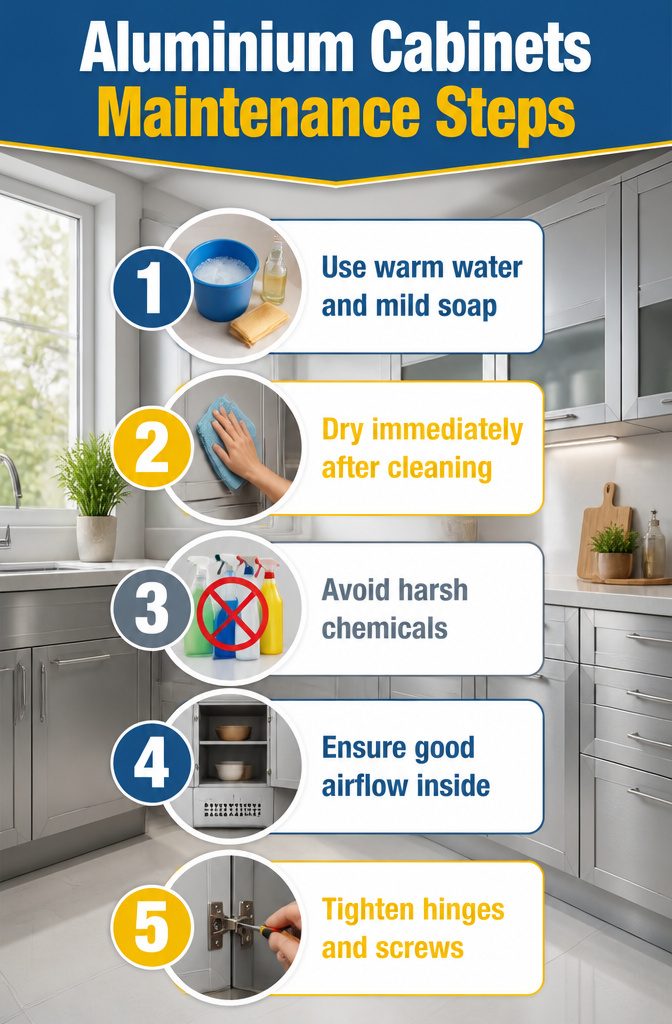
Aluminium kitchen cabinets stay presentable with almost no effort, but the wrong cleaner will etch the surface faster than you’d think.
Warm water and a mild soap solution on a soft cloth handles daily grime; dry the surface right after, because standing water leaves spots that outlast the cleaning.
I skip anything abrasive or acidic, including the multipurpose sprays most of us already own. The finish holds up fine against ordinary use, but it does not forgive harsh chemicals.
The inside of the cabinet matters too.
Without decent airflow, moisture collects behind closed doors and works on the hardware before the panels show any damage. I would rather see a vented toe-kick or a cabinet back with a gap than deal with swollen shelving later.
While you are at it, tighten hinges and screws when they loosen, which they will, especially on the doors you use hardest. The cabinet itself does not warp, but the alignment goes off fast if the hardware drifts.
The Recyclability Factor
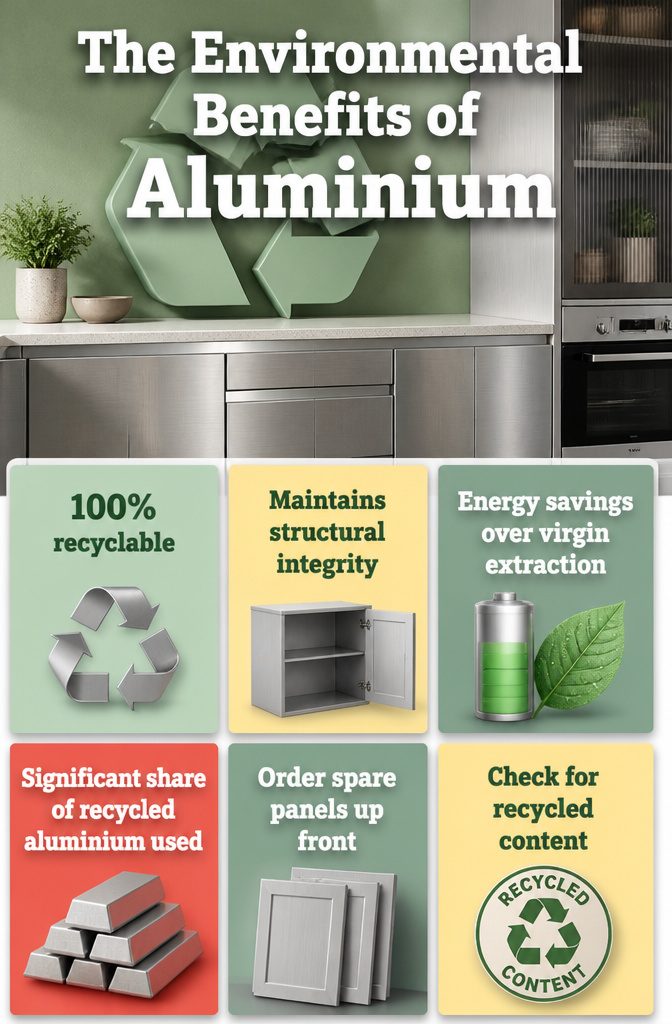
Aluminium kitchen cabinets carry a practical environmental edge that matters more than the marketing usually lets on. The metal is 100% recyclable, and that is not a downcycled compromise; it can be reprocessed repeatedly without losing structural integrity.
For a renter or first-time owner who replaces cabinets once and wants the material to have another life afterward, that closed loop is rare in kitchen materials.
Recycled aluminium already makes up a significant share of what gets used in furniture-grade production, though the exact ratio varies by supplier and batch.
The energy savings over virgin extraction are substantial enough that the difference shows up in lifecycle assessments, not just green claims.
I would look for suppliers who state their recycled content plainly; the ones that do usually have cleaner traceability, and the ones that do not are often leaning on the general reputation of aluminium rather than their own practice.
The downside is that recycled-content aluminium sometimes runs in narrower color lots, so matching a replacement door five years later can be harder than with virgin stock.
For a weekend install where you are buying the full run at once, that risk is minimal. For a phased kitchen build, I would order spare panels up front and store them flat.
What Brands and Warranties Look Like

Alumatek sets the benchmark with a 10-year warranty on its aluminium cabinets, which tells you how long a manufacturer trusts its own seams and hardware to hold up in real kitchen humidity.
That kind of coverage is rare enough in this market that I treat it as a floor, not a ceiling, when I compare brands.
Speciality Panels and Spyder Craft also turn up in searches for aluminium kitchen systems, though neither matches that warranty length in the materials I reviewed.
A decade of coverage matters because aluminium’s real selling points, the ones that justify the switch from wood, play out over time.
Termites and rot are non-issues with aluminium, as any non-organic metal would be, so the warranty isn’t covering pest damage.
It is covering whether the cabinet box stays square, whether the hinge plates stay tight, whether the finish chalks or chips after five years of steam and grease.
Alumatek’s bet is that it won’t, and that confidence costs them nothing unless they are wrong.
For a renter or a first-time owner doing one project a year on a tight budget, I would rather pay slightly more upfront for that warranty than save money on a brand that offers two or three years and leaves me guessing about year six.
The exception is if you plan to move within five years, in which case the next owner gets the benefit, not you.
Frequently Asked Questions
Are aluminium kitchen cabinets waterproof and rustproof?
Aluminium kitchen cabinets are naturally waterproof and will not warp, swell, or grow mold the way wood does.
A powder-coated or anodized finish adds corrosion resistance on top of that built-in waterproofing, though the base metal already resists the moisture damage that destroys most cabinet boxes.
Can aluminium kitchen cabinets withstand extreme temperatures?
Aluminium cabinets are highly heat-resistant and will not burn, catch fire, or deform under typical kitchen heat near ovens or stoves.
You should still avoid setting extremely hot cookware directly on the surface, since that can damage the finish or cause discoloration.
Are aluminium kitchen cabinets resistant to pests?
Aluminium is a non-organic metal, so termites, ants, and other moisture-loving pests have nothing to feed on. That immunity makes these cabinets especially popular in humid climates where wood cabinets would be destroyed.
What are the disadvantages of an aluminum kitchen?
The main drawbacks are cost, especially for full-panel construction, and the visual compromises of modular systems where joints and seams will never look fully continuous.
Glossy finishes demand daily wiping to stay clean, and push-to-open latches can fatigue over a 15- to 20-year lifespan. Recycled-content aluminium can also run in narrower color lots, making future color matching harder.
Is aluminum good for a kitchen cabinet?
Aluminium works well for kitchen cabinets because it weighs about one-third of steel, resists water and pests, and lasts 15 to 20 years with basic care.
It is 100% recyclable without losing structural integrity, and finishes like powder coating or wood-grain sublimation let you match almost any kitchen style.
Is aluminium furniture good?
Aluminium furniture holds up in kitchens because the metal stays dimensionally stable through humidity and temperature swings that warp wood.
It needs only warm water, mild soap, and a soft cloth for cleaning; abrasive or acidic cleaners will etch the surface.
The lightness also matters if you are hauling units upstairs or mounting them on walls not built for heavier materials.