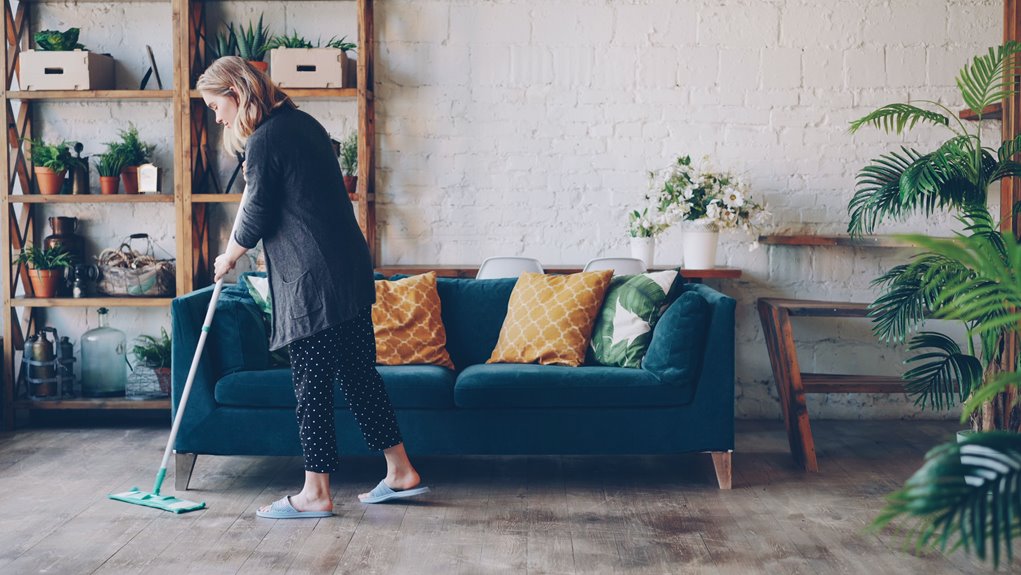
I’ve rescued too many laminate floors from swampy mops and vinegar floods to let yours stay dull.
First, I sweep thoroughly with a soft broom because crumbs hide everywhere. Then I pick my fighter: cheap vinegar-water (1:10) or pH-neutral cleaner like Bona, both barely damp on a microfiber mop. I mist ahead, glide with the planks, never against, as water pools damage the surface. Immediately I dry-buff with a fresh microfiber using straight strokes to achieve that crisp shine.
Daily dusting keeps it alive. No steam, no wax, just that barely-damp microfiber method. Your floor will look noticeably better with consistent maintenance.
Dry Clean Dull Laminate Floors to Remove Surface Buildup
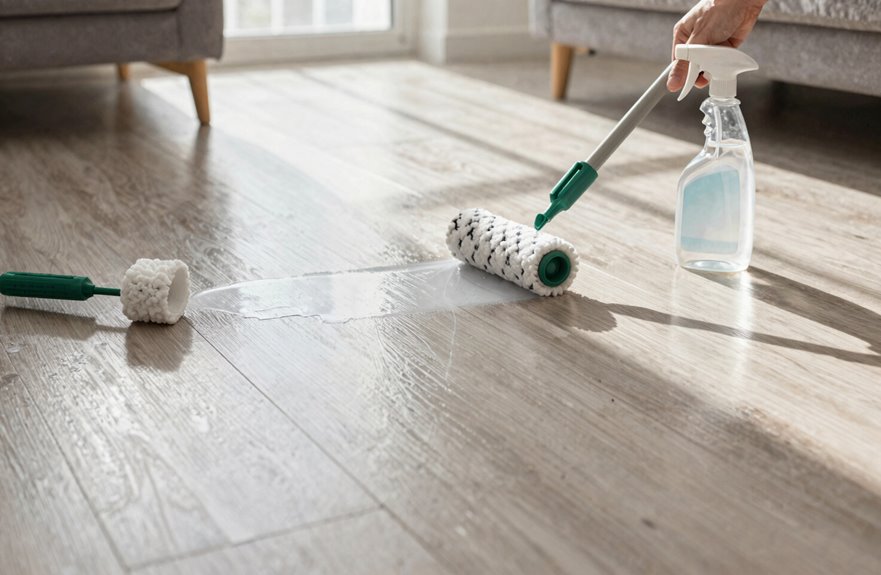
Nothing kills that cozy living room vibe faster than floors that look neglected. Dry cleaning is an effective method for rescuing laminate floors before any damp mop touches down.
I grab my soft-bristled broom first, sweeping thoroughly to remove crumbs and debris. Dust removal is critical because that gritty material acts like sandpaper and will scratch your protective wear layer. For tight corners where my broom cannot reach, I use a microfiber cloth to wipe baseboards and remove accumulated dust.
Surface buildup hides in plain sight, dulling what should shine. Skipping this step means you’re just pushing dirt around rather than removing it. Your floors will look noticeably better after proper dry cleaning.
Compare DIY Vinegar Solutions and pH-Neutral Cleaners
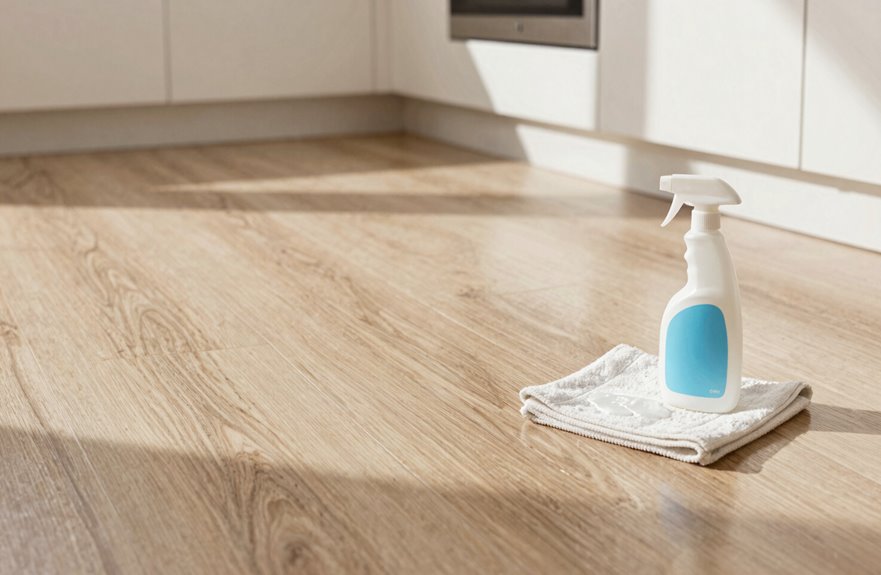
Once I’ve swept away every last crumb and my floors are actually clean, not just “clean-ish,” I need to decide between vinegar from my pantry or a store-bought pH-neutral cleaner.
| DIY Vinegar Solutions | pH-Neutral Cleaners | My Honest Take |
|---|---|---|
| One part vinegar, ten parts water; cheap, effective, fights waxy buildup | Bona, Zep, or dish soap in warm water, no residue stress | Vinegar is budget-friendly, while pH-neutral feels more reliable. |
| Damp microfiber mop only; avoid pooling water | Same rules: damp microfiber mop, never soaking wet | Both require restraint. I’ve learned this through trial and error. |
| Gloss maintenance works best when I dry fast and skip bleach and steam | Zero waxy buildup risk, consistent shine every time | For laminate floors, I use both methods depending on circumstances. |
I choose whichever cleaning solution fits my mood and schedule.
Mop Lightly With Minimal Water, Following Plank Direction
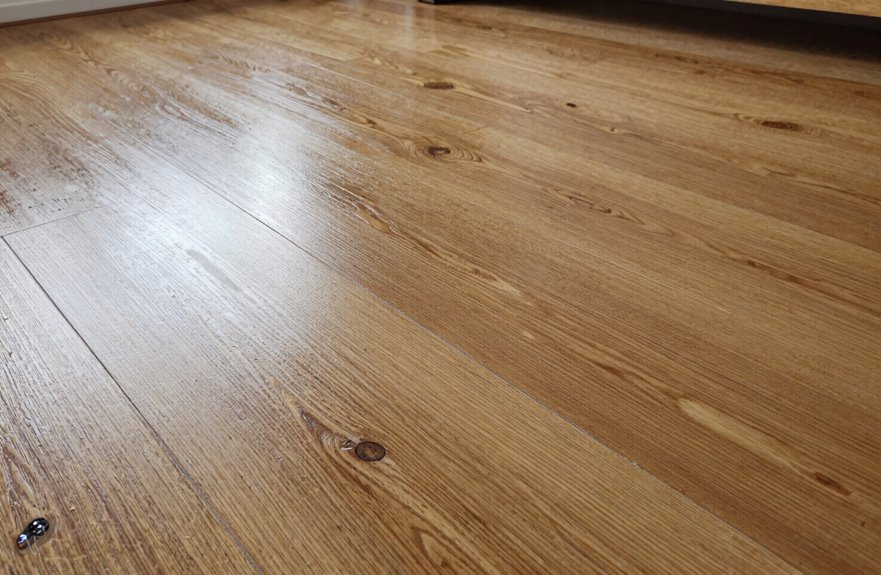
Water management is critical for laminate floors. Soaking them causes warping damage. Use a damp microfiber mop, wringing it thoroughly to remove excess water. Minimal water is essential, not optional.
A spray mop works better than buckets. Mist the floor ahead, gliding along the plank direction to follow the wood lines. Apply cleaning solution to the mop, not directly to the floor, for better control.
Work in small zones and dry floors quickly. Keeping moisture minimal protects your floors and maintains their shine.
Dry Immediately and Buff to Restore Shine
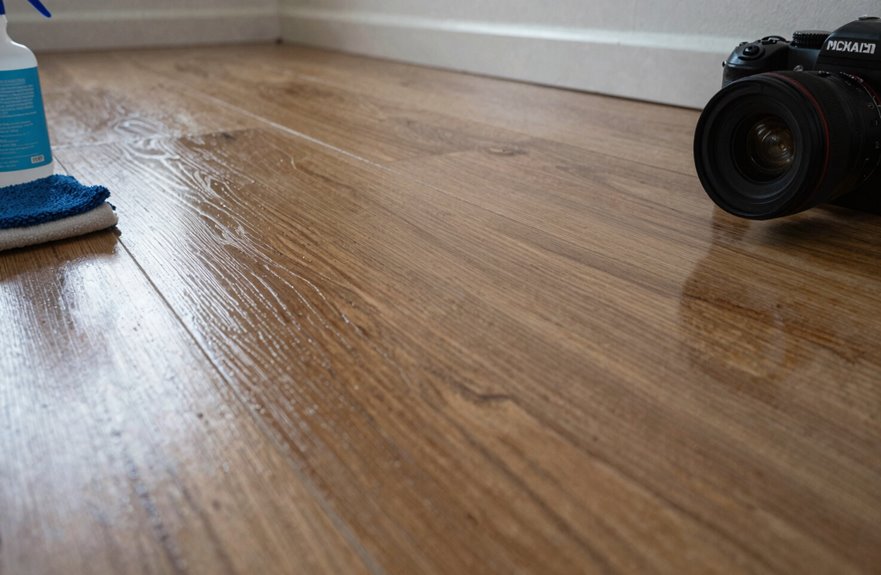
I’ve wrung out that mop for the last time, and now I’m staring at floors that look more “soggy dog” than “showroom shine.” Let’s fix this fast. I grab my dry microfiber mop because wet laminate floors are how dullness develops, like that one relative who overstays their welcome. I buff in straight strokes, following the planks, thinking of combing hair rather than scribbling crayons. No pooling, no drama. Light dullness responds to a quick dry buff that restores the shine. Stubborn residue requires barely dampening the microfiber mop, then dry buffing again with a fully dry mop between passes. This cleaning routine delivers results, and your laminate floors will show noticeably improved appearance with this approach.
Maintain Results and Prevent Future Dulling
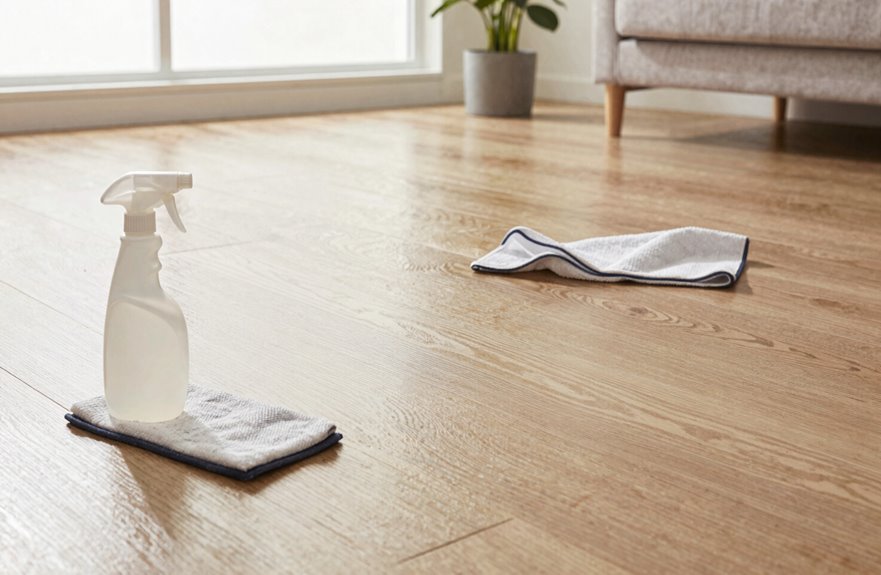
So how do I keep this gorgeous shine from pulling a disappearing act on me next week? I dry-dust my laminate flooring daily, yes daily, because grit is basically sandpaper in sneakers. I grab my damp microfiber mop, spritz a pH-neutral cleaner, and mop in planks, following those gorgeous lines like I’m painting a masterpiece. Moisture prevention is my obsession; I’m talking barely-damp. Then I attack with my dry microfiber mop in small sections with no streaks left behind. I buff with dry microfiber like I’m polishing my grandma’s silver, using elbow grease and care. I avoid steam cleaners completely; they’re basically floor-dulling villains in disguise. No wax, no ammonia, just me and my microfiber army, keeping that glow alive.